“Het ‘Rosebud’-moment komt voor iedereen”
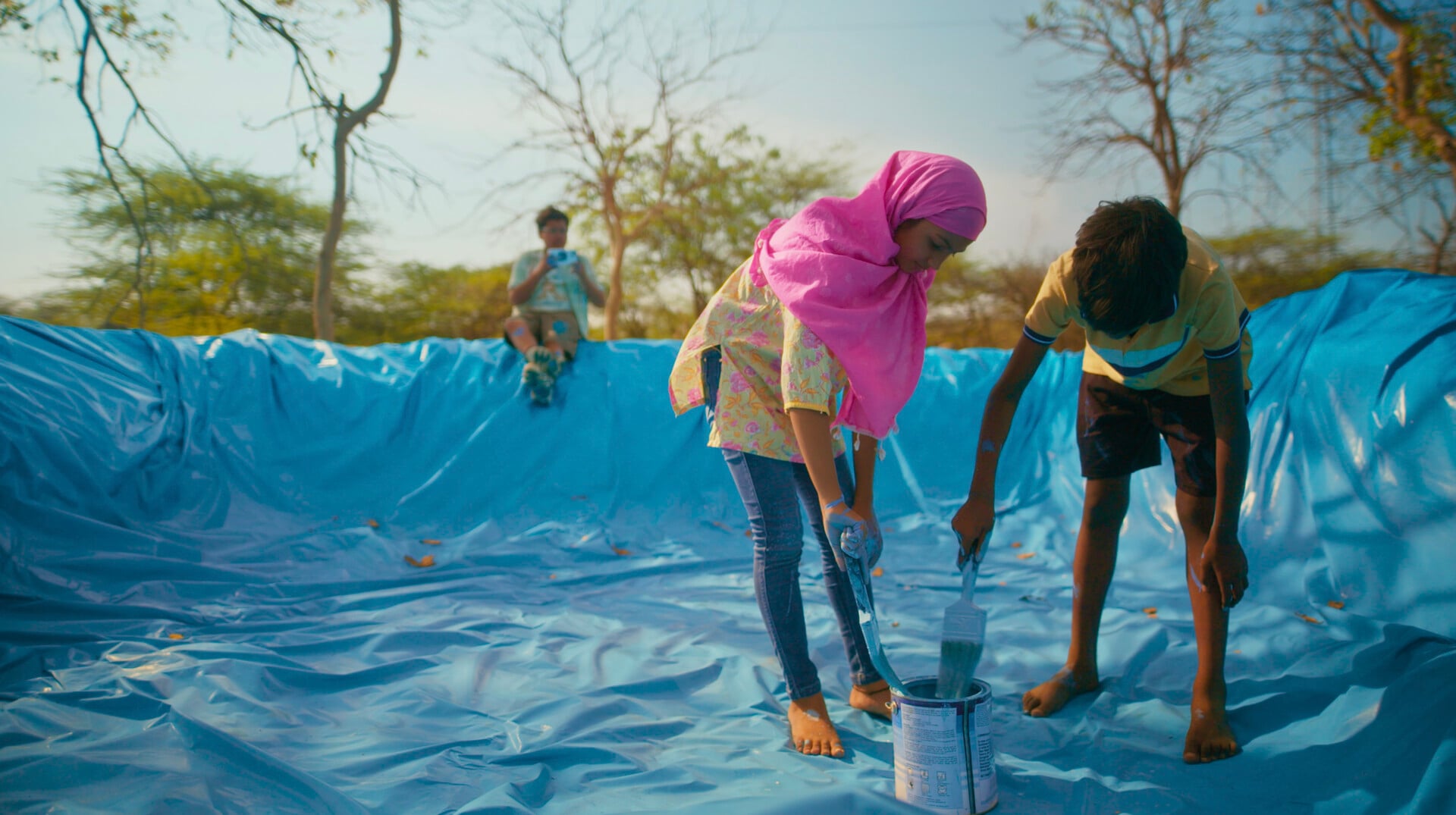
Santu wil graag een zwembad, maar in Delhi is er nauwelijks stromend water. Aan de overkant van het steegje woont Vivaan die een stage wil verdienen in de VS, terwijl Fiza ervan droomt om voor het nationale cricketteam te spelen. Met TO FETCH A PAIL OF WATER (ook bekend als PUKAM PUKAI) schildert de Indiase regisseur Abhay Punjabi een sprankelende zomer op het witte doek, in een film die bol staat van vriendschap, kattenkwaad en wilde dromen.
If you could sum up the film in one word, what would it be?
Abhay Punjabi: Friendship is love.
That’s more spiritual than my pick. I had: water management. Many of the film’s events are set in motion by water scarcity: the dream of a swimming pool, the communal toilet, the death of someone who drinks contaminated water…
Punjabi: One key difference between privileged and underprivileged classes is their access to water. I come from a privileged background, and in our family, water was always easy to get, at least by Indian standards. My co-writer Manish, who grew up without a permanent home, had a very different experience. What felt normal to me wasn’t for him. People still die from contaminated water, but it’s not recognised as a major issue by the community. But it is! Through water, we explore those inequalities.
Do the blue lorries in the film provide extra water distribution?
Punjabi: Those “tankers” deliver water to areas where the mains supply is temporarily or permanently cut off. In those neighbourhoods, the government is supposed to provide free water twice a day, morning and evening. However, this opens the door to black-market sales, suppliers charging for water, delayed deliveries, and so on. Such practices are very common.

From your film, I get a strong sense of your love for stories and for your people.
Punjabi: TO FETCH A PAIL OF WATER draws on two important encounters in my life. There’s my friendship with co-author Manish (who plays the character of Mangal). And there is my (ex) life partner, who happened to be a half-Muslim while I come from a Hindu background. Somewhere in that wondering, the film started writing itself. I build on Mahatma Gandhi’s ideas of pluralism and interfaith harmony – he lived and died for Hindu–Muslim unity. That’s why the character of Fiza is normalising the Muslim hijabi girl and her family as smoothly and comically as possible.
Class differences run throughout the entire film.
Punjabi: We’re exploring the caste system, without ever using the word “caste.” I come from an upper-class background, while Manish comes from a “scavenger family,” just like Santu. The district where Santu lives is called Valmiki Basti, which literally means “scavengers’ colony.” Some 10 years ago, I was shooting a sketch for which we needed someone to bash up. That’s when Manish landed up on the set. He was thrilled: “I will get beaten up at least 10 times today”. Afterwards, I invited him to join our theatre group. That same day, he quit his job – he was 21, working as a salesman for mosquito repellents in local shops – and started doing street plays with us. While working together, we began imagining what our friendship might have looked like if we’d met at 12. I believe most of life’s inciting moments happen around that age. That’s why I only make children’s films – whenever I want to tell a story, I always go back to that age.

That class status is sometimes exploited in pretty humiliating ways.
Punjabi: When Santu says that Fiza should be sent back to Pakistan, he is alluding to a common accusation levelled at Muslims. “I’ll ask someone to get you dropped off in Pakistan.” She fires back by teasing his lisp. Santu struggles with the ‘r’ and ‘s,’ which is why he calls her “Fida”; in some scenes, this leads to a funny, but hard-to-translate, mix-up.
Those subtleties can be hard to grasp, especially for a Western audience. Can you live with the idea that not everyone will catch every detail and will just take what they can from the story?
Punjabi: That’s exactly how I wanted it. Four of us worked on the script, each with very different mindsets and backgrounds – from quite conservative to very left-leaning. We argued constantly about every detail, which sometimes turned into real fights. Big fights! But we were making the film first and foremost for an Indian audience; we never imagined it traveling abroad. We wanted to capture those funny nuances that resonate among Indian audiences. I was inspired by the Hindi director Rajkumar Hirani and his film 3 IDIOTS. I love his sense of humour and always wanted to make a comical film myself. TO FETCH A PAIL OF WATER tells a political story, yet it is a child-driven film introducing a wide mix of characters, young and old, and we want everyone in the audience to relate to at least one of them.

Even to a thumbsucking politician or a drunken old lady?
Punjabi: Someone in my family sucked his thumb until he was 30! That was before I’d even heard of the Freudian idea of infantile regression. The character of Bebo is a common archetype in Indian cinema, and I hope people see something in her – an old woman who was once an idealist, but turned to drinking when she started to feel redundant.
Your three main characters describe themselves as “garbage, gutter, and mosquito”. How would you qualify?
Punjabi: I’m gutter, definitely, and Manish would be garbage. That analogy came from the young actors. Raj Kumar (playing Santu) described the gutter and sewer as the main water sources in his neighbourhood.
Who was the driving force among those young actors?
Punjabi: Raj, for sure! Until he was six, he worked as a rag picker on the streets of Delhi. He lived on the streets with his father, collecting plastic bottles and recyclable waste. At six, his dad placed him in an orphanage. One night, when he was five, his father told him to guard their bag of collected items while they slept. The bag was stolen, and his father gave him a beating. After that, he never lost anything again. That made him the best continuity supervisor I’ve ever had; he remembered every detail! During the writing process, we learned to see the world through Raj’s eyes; he showed us the streets he used to live on. He now wants to become an archaeologist; it reminds him of his rag-picking days, sifting through rubbish for something valuable.

How did the girl Fiza fit in?
Punjabi: Zoie Aggarwal Ahmed joined at the last minute. Our first actress couldn’t bowl well enough for the cricket scenes, so Zoie trained for a month until she could. Fiza’s father wonders in despair when his daughter will start behaving properly. In a Muslim neighbourhood, girls with a hijab are not expected to be playing cricket with Hindu boys. The kids live barely 300 metres apart, but in these different communities, completely different rules and customs apply.
Still, there’s this scene in which the boys walk through the neighbourhood, and everything feels threatening. Five minutes later, they walk the same street with Fiza, and suddenly, nothing seems scary anymore – they already feel at home.
Punjabi: As kids, we were told not to enter the Muslim neighbourhood, because of the people, and because of the meat shops, which we didn’t have in the Hindu area. It felt dangerous, and we were scared off by stories about bloodshed and slaughter.
Could this film only be set in Delhi?
Punjabi: Not at all; this story could take place anywhere in India, in cities or rural areas. Problems with water supply and class divisions are part of everyday life, and audiences everywhere in India can relate to them.

There’s a vibrancy to Delhi’s streets that must have been hard to capture.
Punjabi: Delhi is chaos, 24/7. We often had to move locations, once because someone had been murdered. On the day we planned to shoot Bebo’s death, someone actually died in that area; that felt like a bad omen. Sometimes people threw stones at us for blocking the street. And people – drunk or high – would wander onto the set looking for trouble, even during the day. Still, we shot for 33 days and never had to cancel a single day.
A sheer mix of vehicles is typical of Indian cities: cars, scooters, motor rickshaws, tankers… Which was the hardest to handle?
Punjabi: The motor rickshaw. We had to shoot the rickshaw scene in the streets, with three vehicles racing through narrow alleys. These rickshaws are full of handmade electrical stuff that can malfunction at any moment. Even navigating a water tanker through the streets, blocking traffic, was tricky.
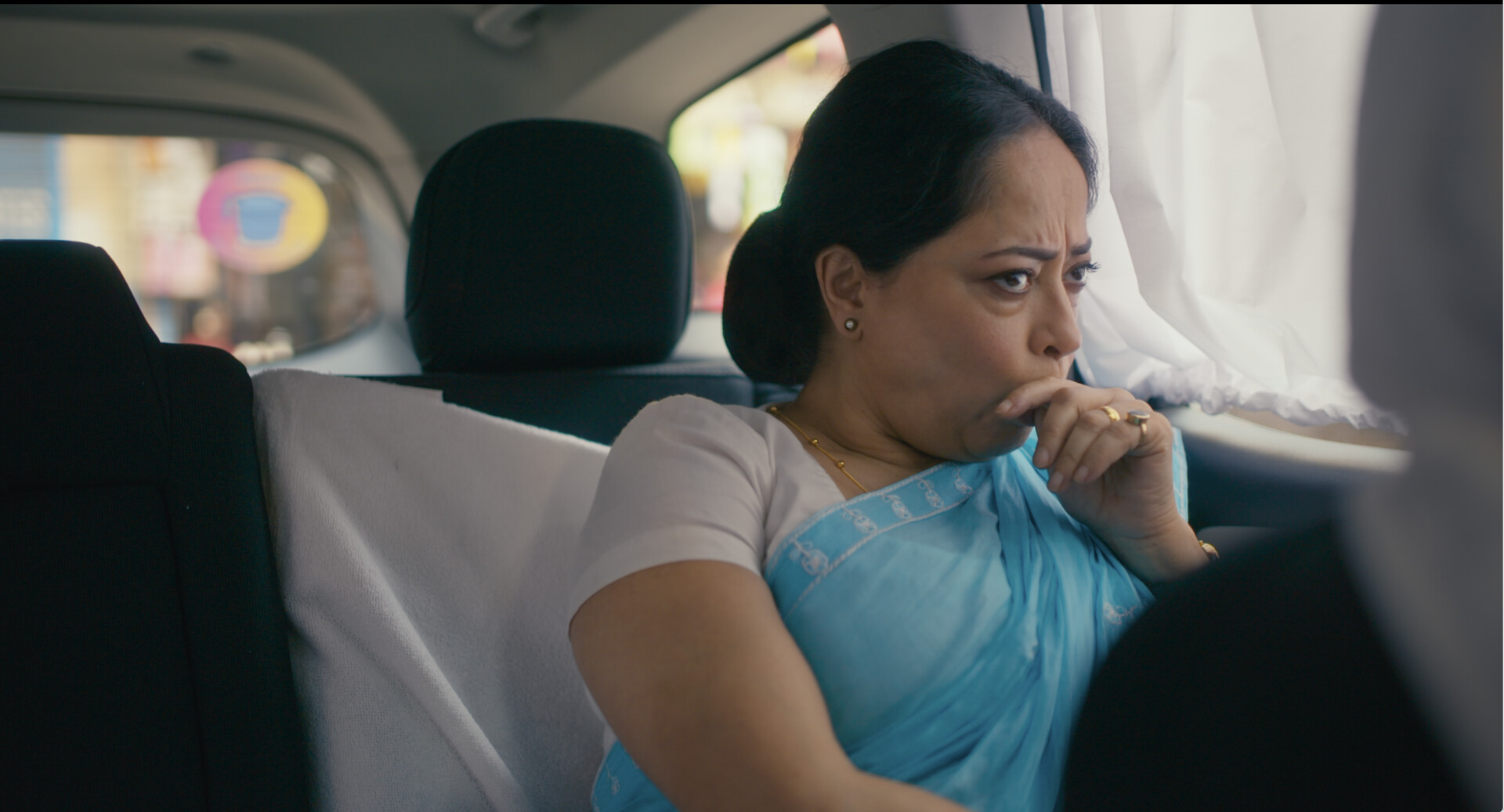
A political layer is added through an encounter with the ambitious politician, Rani Devi.
Punjabi: Her character is inspired by Citizen Kane; we wanted Rani Devi to have her own “Rosebud moment,” taking us back to when she was still a true idealist. No one is evil by default; it often comes down to how life unfolds. People forget where they started, and then, at some point, they face a choice: carry on, or make a clean break. If every politician had their own Rosebud moment, things might just change.
Indian films often feature songs, more or less prominently. What about your film?
Punjabi: Everyone told me that including songs would alienate Western audiences. But I was stubborn: I wanted songs! It’s the cinema I grew up with, and the kind I want to make. In general, I went for local Rajasthani folk music.

What would be your ultimate ambition with TO FETCH A PAIL OF WATER?
Punjabi: To foster more acceptance between people of different beliefs. That’s why I want every child – at least in my country – to see it. These ideas need to take root early. The Rosebud moment comes for everyone, but children can learn they have a choice in how they respond to it and who they become. Adults, however, are often too resigned and cynical to see that.
Copyright: ECFA
Published in ECFA Journal May 2026