Categorie: Nieuws

Marjolijn Prins over FANTASTIQUE

“Hun lichamen en hun kracht betekenen alles voor hen”


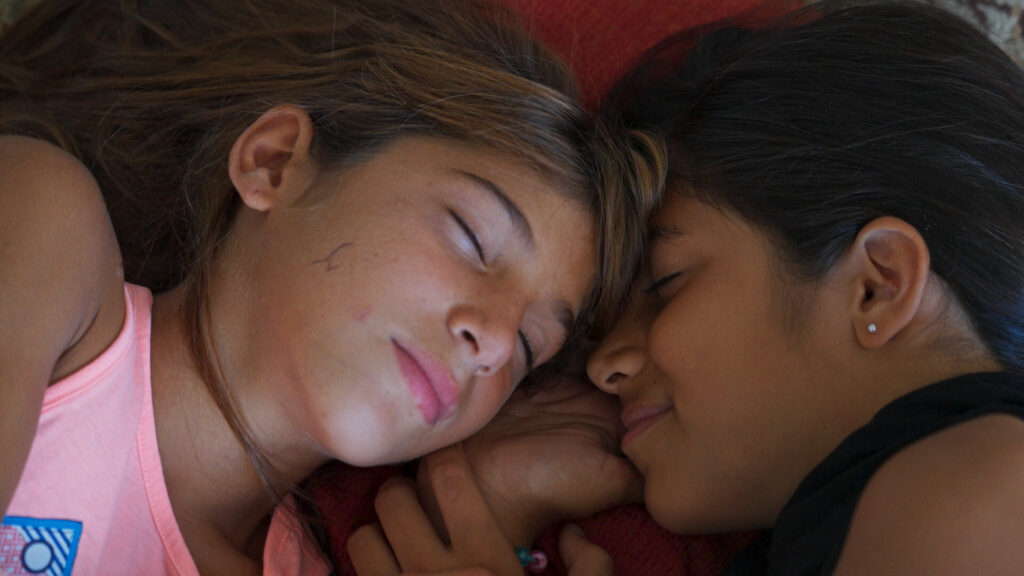
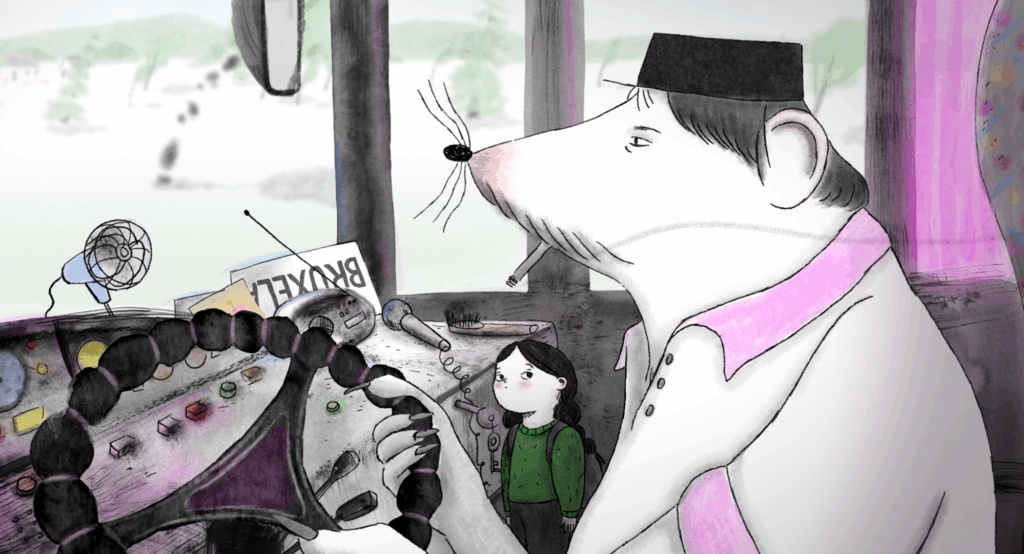
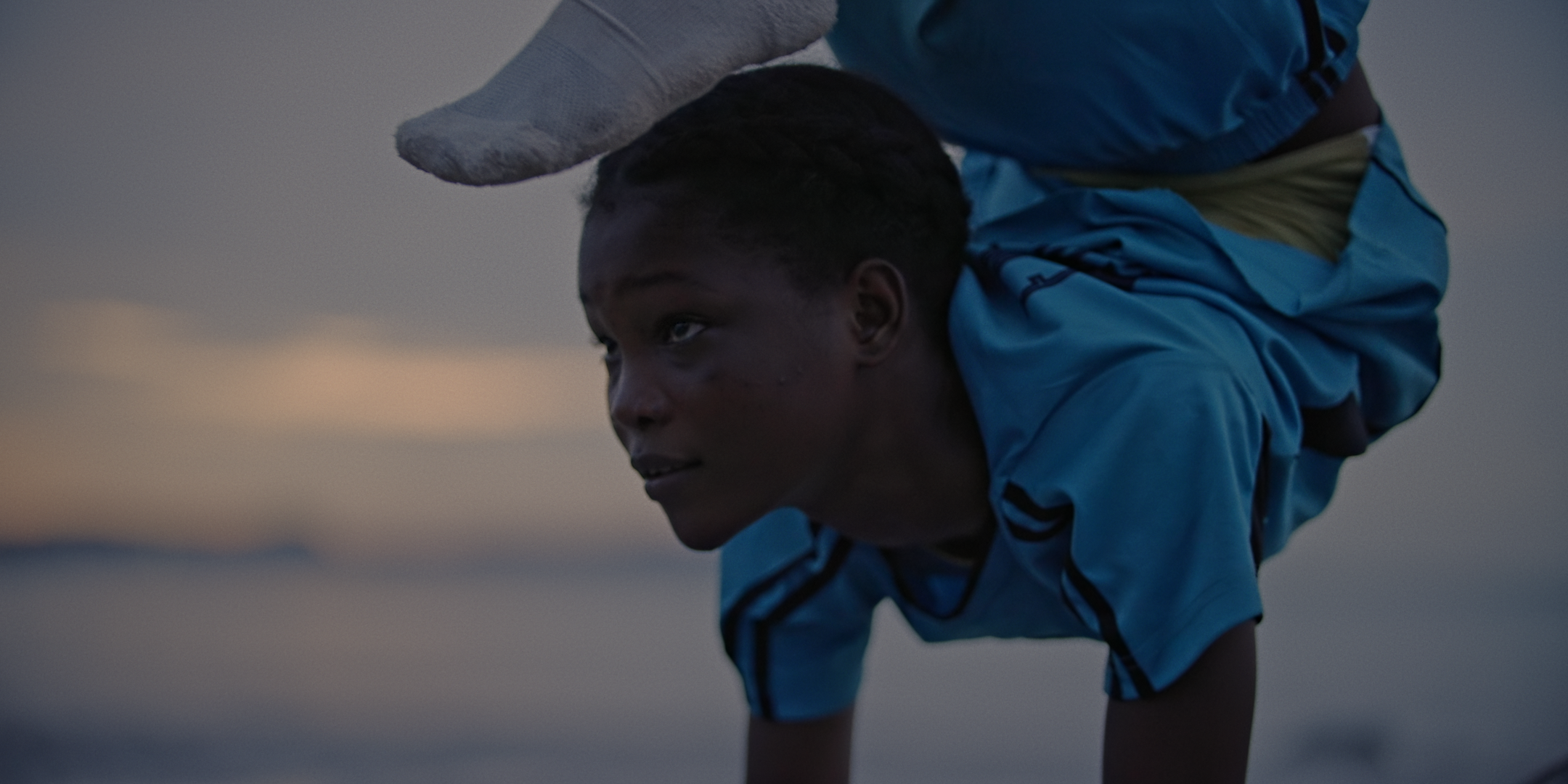
Fanta, een 14-jarige slangenmeisje, woont in Conakry, Guinee. Samen met haar vriendin Makhissa zijn ze de enige meisjes die meetrainen met het circus. Net wanneer Fanta de kans krijgt om door Europa te gaan toeren, wordt haar moeder ziek. Ze komt niet meer aan trainen toe, en vraagt zich af of het circusleven wel iets voor haar is. In FANTASTIQUE volgt de Belgisch-Nederlandse documentairemaakster Marjolijn Prins een jonge artieste die op zoek is naar haar eigen stem en die moet beslissen wat echt belangrijk voor haar is.

In de openingsscène is er wind, water en gefluister… Fanta’s moeder voert een spirituele ceremonie uit om haar dochter te beschermen, en ze wast haar met kruidenwater. Dit zet de toon voor FANTASTIQUE: het ene moment zitten we midden in de chaos van het circus, boordevol kleur, beweging en geluid; het volgende moment trekken we ons terug in afzondering. Doorheen de hele film wisselen momenten van hoge en lage energie elkaar voortdurend af.

Marjolijn Prins: We noticed it during filming: it was either calm and serene, or very hectic; there was almost no in-between. Often, that calm was imposed by circumstances: the need to rest after a tough workout, or yet another power cut. We shaped the balance in the edit, moving from group dynamics to intimacy.

What exactly happened seven years ago?

Prins: That’s when I first met the acrobats of the Amoukanama circus association. Based in Matam, Guinea, they travel all over the world. Their energy felt truly inspiring. They told me about their lives back home, and I was fascinated by how these world-class performers grew up under difficult circumstances. When they invited me to Guinea, I jumped at the chance. After that, I kept going back, at least four times.

Was Fanta immediately the one in focus? 

Prins: Not at all. We travelled to Guinea intending to make a film about the youngest member of the group. He was 14 at the time and about to go on his first European tour, and we wanted to follow that journey. But during one of the training sessions, this girl suddenly walked in, the very first girl to join the group. She looked so confident, pulling off these incredible tricks, and I was completely blown away. At that moment, I knew: Fanta is the one.

Circus seems like a national sport in Guinea. 

Prins: The energy is everywhere, especially in Matam, the district of Conakry where these artists come from. In the past, this very physical discipline was mainly for boys; girls were expected to fulfill their household duties. But now, more and more girls are joining circuses and acrobatic groups.

Let’s be honest: There are some impressive physiques on display! Those guys look super fit and not shy about showing it.

Prins: From a young age, they train their fitness, day in, day out. Their bodies and strength mean everything to them; it’s what should secure their future, and what they’re most proud of. 

What exactly attracted Fanta to the circus?

Prins: Her mother says she was doing acrobatics before she could even walk. She must have been born with very flexible joints. One day, a nephew introduced her to the group. They immediately noticed her talent and invited her to join. Her father was somewhat opposed to the idea; he didn’t want his daughter drawing so much attention by training with boys. But her mother fully trusted and supported her.

The film brims with female confidence, but the real strength, for me, lies with Fanta’s mother.

Prins: She has complete faith in her daughter and combines great wisdom with worldly knowledge. When she speaks, it’s like poetry. She gave the project her blessing; without it, the film would never have been made. Perhaps she saw in me an example of a woman charting her own course. Things got harder for her when she fell ill. We show Fanta’s mother in both moments of strength and vulnerability.  

As for Fanta herself, I found it harder to grasp who she really is. She seems introverted, and her expression is often slightly skeptical.

Prins: Working with such an introverted main character is challenging. While reviewing the footage, we found very few scenes in which she speaks. But that’s also part of her strength; it gives her an almost mystical presence that drew me in. Not everything needs to be said; her actions speak for themselves, and her great dedication is proof of her ambition. If you were to meet Fanta in person, you’d likely have the same impression.
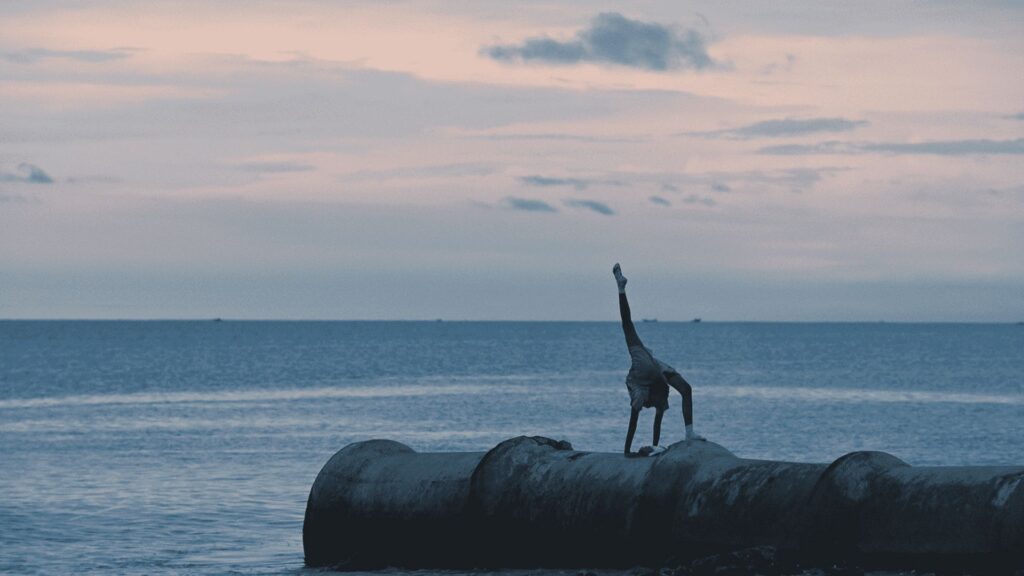
The contortionism acts can be hard to watch. Their bodies are so flexible that I’m constantly afraid they might hurt themselves.

Prins: During screenings, we often hear the audience literally groan – “ouch”. Especially when Makhissa cracks her neck. She can move her head like an owl! I’m deeply impressed by what the human body is capable of. The foundation of what they do is yoga. Fanta never skips a day doing her yoga exercises.

At a certain point, it seems like she’s losing interest.

Prins: Besides the pressure from school, I think the main reason is the physical pain. As a child, your body is flexible, but as you grow older, it becomes more demanding. The only answer she gets from the acrobats is: “You just have to push through.” I’ve never met a circus artist who didn’t deal with pain. It’s like Olympic gymnastics: the older you get, the tougher it becomes. Fanta and Makhissa would benefit from proper coaching. The men’s acrobatics rely heavily on force, while the girls might benefit from a softer type of training.

Circuses in Guinea come with live music!

Prins: Yeah, those drums… every filmmaker’s nightmare, as they make it impossible to capture any sound other than this pulsating beat. 
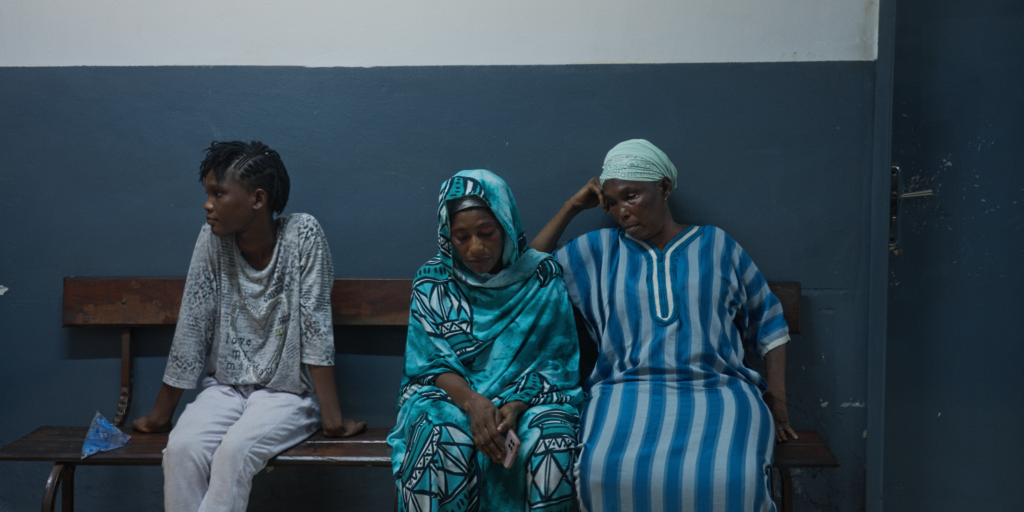
What is typical of Conakry?

Prins: We mostly filmed in the Matam district, where we spent most of our time. At night, the streets fill with music and the smell of food. Conakry stimulates all your senses; from the intense heat to the smells, sounds, colours, and the way the light falls. For me, Conakry represents above all the warmth of a community where you can find peace when the hustle and bustle of the city becomes too much. With a bit of luck, you might witness the flying foxes returning to their night-time roosts against a magical sunset, whilst fishermen haul in their nets in the last light of day.

You include small glimpses of wildlife: close-ups of animals and nature. This must have been done with a purpose.

Prins: As a documentary, FANTASTIQUE holds a touch of magical realism. When we first arrived in Guinea, I sensed something spiritual in the air. Stories and myths feel very present; there is a deep respect for the supernatural, and every animal, even a butterfly or insect, is treated with respect. I wanted to weave those elements into a magical storyline in which nature plays an active role. These images highlight that unique connection.

Mami Wata is a part of that magical layer – the spiritual power of the sea? 

Prins: Yes, and it’s very strong. There are many vivid stories about Mami Wata in Guinea. The sea is seen as a feminine, almost feminist force, and all the rituals in the film take place near the coast.  It’s a strong, natural force from which fishermen bring in food. Wherever you go in the world, people find solace in the sea.

In that sense, you slightly push beyond the boundaries of traditional documentary. 

Prins: But we didn’t push very hard, not as much as in the scenario phase. We had Fanta, Makhissa, Fanta’s mother, and then, on top of it, we suddenly had her grandmother joining in too! There were plenty of strong female presences. We didn’t feel the need for an additional female character in the form of the sea, so we focused instead on the poetic power of water. That magical layer brings a sense of tranquility to the film. Everyone is constantly telling Fanta what to do – in those magical moments, we give Fanta space to listen to herself and speak up about what she wants.

Why would FANTASTIQUE qualify as a children’s documentary?

Prins: It was conceived that way from the start. In fact, the film, which was initially planned as a short documentary, grew alongside Fanta. Children get swept up in the film’s rhythm, which is very much alive and kicking. And I hope that touch of magical realism helps them connect more deeply with the story. I noticed that many stories about West Africa don’t reflect reality—I hope FANTASTIQUE can challenge those stereotypes. Fanta and her group are incredibly proud of the film, which was always our main ambition. 

You took the script to the Young Horizons script lab. Did that help shape the structure?

Prins: A lot! Discussing the script with people from across Europe is incredibly valuable; it pushes you to work hard, time and time again, to fix flaws, foster a better understanding, and bring the audience closer to the story. At first, I was a bit sceptical: how to write a scenario for a documentary when you don’t know what will happen? But it helps you define the core strength of the project. The foundation of the film was in that scenario, even if reality led us to make some minor changes.

In the end, the circle closes, and we are treated to a circus performance. It felt like a gift to the audience: the cinema vibrates with an explosion of sound and motion.

Prins: Even after seeing the film probably 200 times, I still get goosebumps at that moment. My editor and I really struggled to find the right ending until we realised we needed to go out with that burst of energy. We also owed it to the group to show how their hard work paid off. Young people hate open endings, so this was the only right way to do it. 
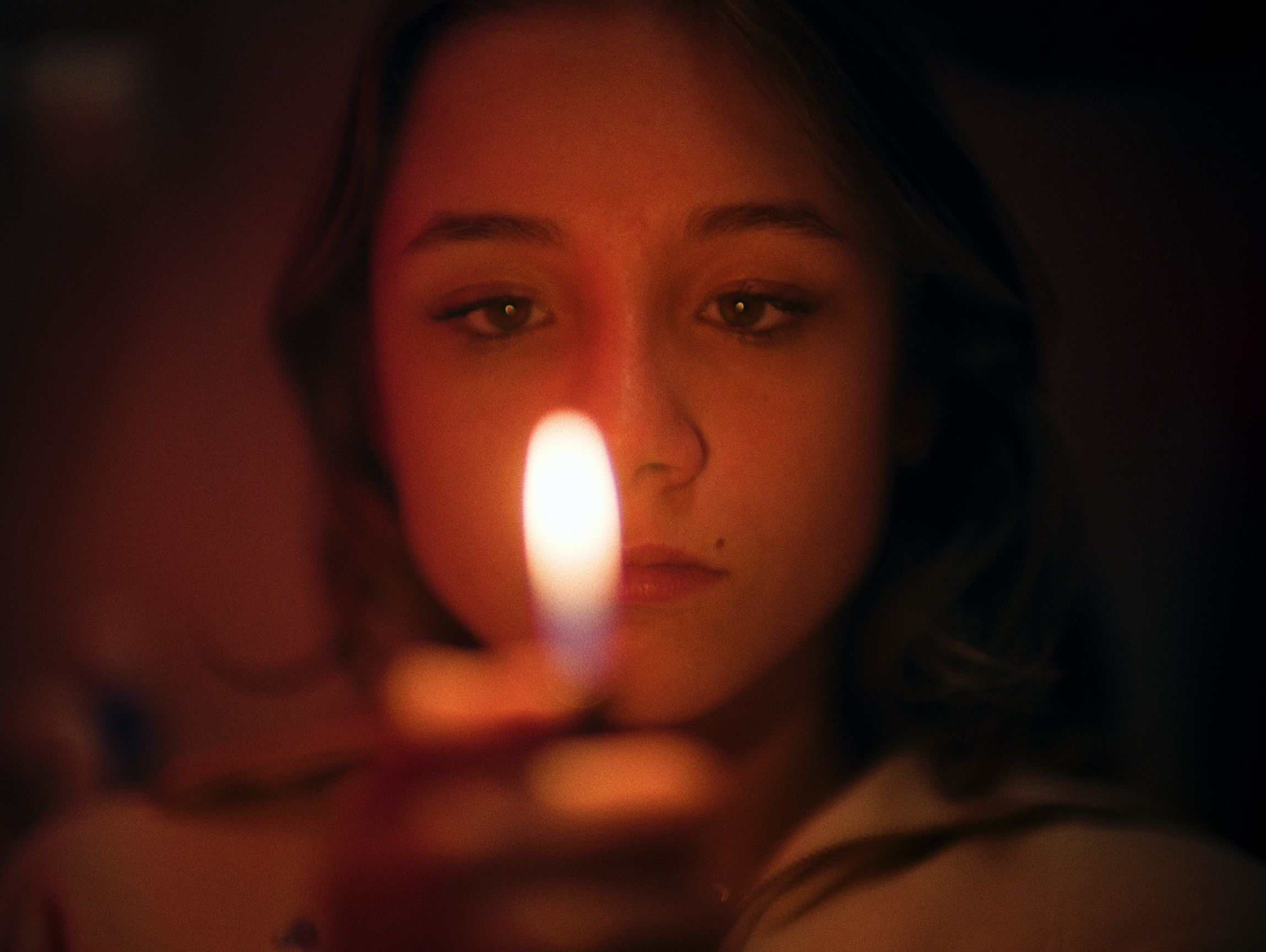
 

Award winnaar Daphne Lucker over VLAM

“Een vertekend beeld van liefde krijgen en liefde geven”


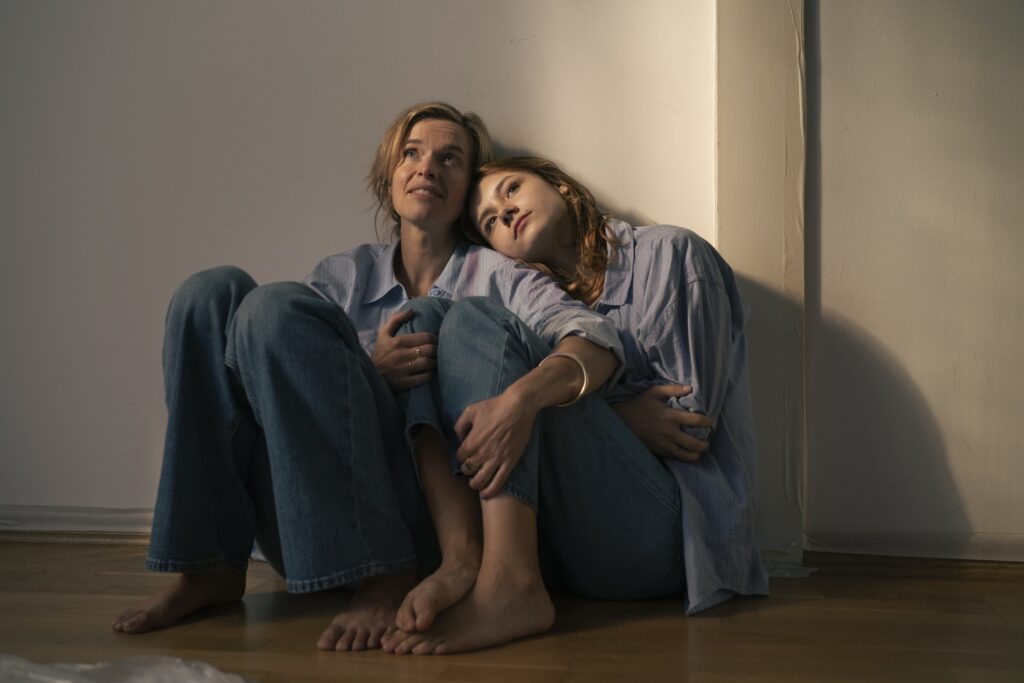
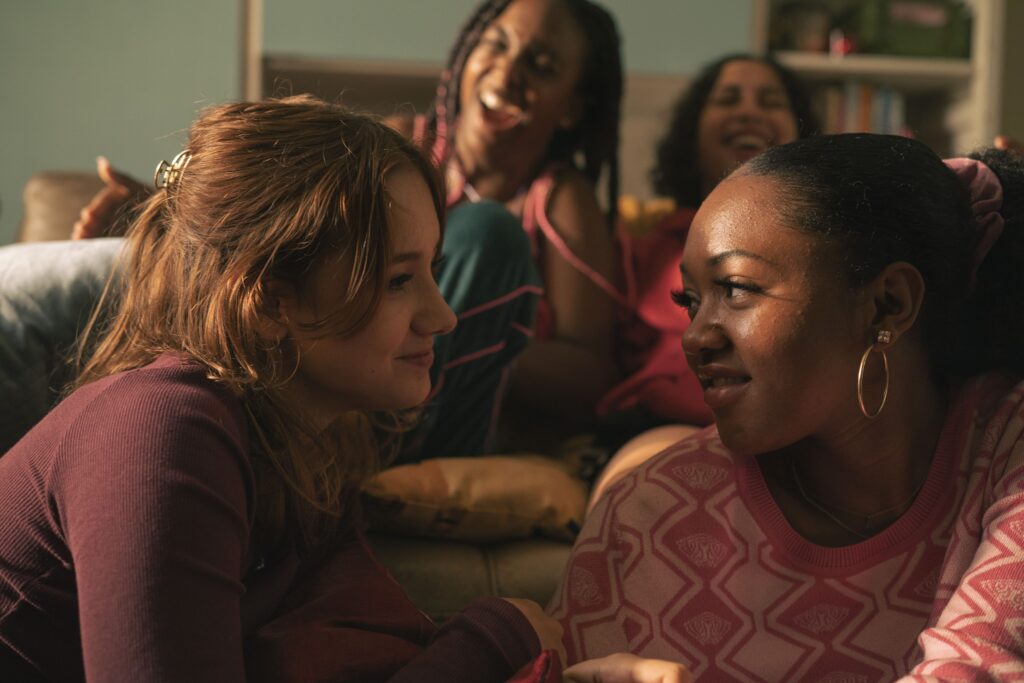
Olivia (15) heeft een intense maar destructieve relatie met haar moeder. Na weer een ruzie wordt ze uit huis gehaald en ondergebracht in een crisiscentrum, waar ze nieuwe meisjes ontmoet en leert om de band met haar moeder in vraag te stellen. Daardoor moet ze keuzes maken. Kijken naar VLAM kan soms pijnlijk zijn, van de fysieke pijn wanneer we zien hoe Olivia zichzelf verminkt tot de bittere nasmaak van de scène waarin ze zich moet voordoen als de jongere zus van haar moeder om diens kansen op de datingmarkt te vergroten. Maar de Jeugdjury van Filem’On zette de tanden op elkaar en kende de prijs toe aan de Nederlandse speelfilm van Daphne Lucker.

Can too much love harm a person?

Daphne Lucker: It depends on who that love is for—yourself or someone else. Do I give love simply to prove that I’m a noble person? Does Selma put herself first, or her daughter?

Who can teach you to give love in a healthy way?

Lucker: Your parents! But unfortunately, that’s not always the case. I believe most mothers love their children as much as they possibly can, but not everyone succeeds in doing so. Sometimes illness plays a role, or they’ve learned the wrong patterns from their own parents and end up trapped in a cycle of violence. To the outside world, they keep up appearances—in Selma’s case, all the love she shows her daughter is just a performance.

Much of the dialogue in the film consists of people talking more to themselves than to others. Even though there is a lot of shouting, people rarely listen. What was that like for the actors?

Lucker: It all came quite naturally through improvisation. The girls in the shelter home were constantly chattering and shouting. Most of them have been through difficult family situations themselves. We talked about their lives and added personal elements to their characters, so they were largely playing versions of themselves. After the improvisations, we discussed which elements worked and how to incorporate them into the dialogue.

Is the line between parents and children becoming more blurred in our modern age?

Lucker: Your relationship with your parents changes when puberty hits. You start to feel more mature. I remember that from my own teenage years (which aren’t that long ago), and so does scriptwriter Rosita Wolkers, who based her story largely on her own memories. Selma treats Olivia more like a friend than a daughter. That can seem cool—Olivia’s friends think she has the coolest mum ever. But Olivia knows better: it’s not fun when your mum shows up at a parent-teacher meeting, gets drunk, and starts flirting with the teacher. That’s totally not cool. When her mum goes on a date, Olivia even has to pretend to be her sister. Her mum constantly rubs it in how much she wants this guy, pushing all the wrong buttons.

It isn’t a film about sexuality, but sexuality is often part of the arena in which the story unfolds.

Lucker: It’s also part of the relationship between Olivia and her mother. That’s what happens when you treat your daughter like a friend. Adults talk about sex with their friends, and Selma has similar conversations with her daughter. Some scenes have a clear sexual undertone, but that sexuality is rarely addressed healthily.

You can brag about sex, lie about it, use it to manipulate people…

Lucker: We visited the crisis shelter where screenwriter Rosita Wolkers had once lived, and the situation there was quite troubling. Many of the girls had been involved with “loverboys.” That gives you a completely different perspective on relationships and sexuality—on how you relate to your body, and on what love really means. Everyone in the film has a distorted view of love and how to be loved.

Some scenes must have been physically discomforting for the actors. 

Lucker: We had an excellent intimacy coach, who approached things from a purely technical perspective, never as something tied to the girls’ personal experiences. For example, for a scene in which Olivia has to climax, we sat in a circle and discussed how to approach that on camera. We all had to make loud noises, like a lion or a seagull, and breathe as if we were extremely hot or cold. Sophie Lindner (Olivia) could then choose for herself what felt right for her. It was awkward for all of us, but any sexual connotations were stripped away. 

A constant tension between attraction and repulsion marks Olivia’s relationship with her mother.

Lucker: During check-in sessions, Sophie and Thekla Reuten (Selma) discussed with the coach about their boundaries. Thekla is a wonderful actress, and her warm motherly feelings towards Sophie made it great fun to work with them. They felt very much at ease with one another. That was a condition for the actress playing Selma: she had to be kind and supportive to help Sophie feel safe in her role.


Did Sophie have any background as a dancer?

Lucker: Not at all. In the film, Olivia expresses her emotions through contemporary dance, sometimes exploring the entire room with her body. Sophie danced a little as a child, but she hadn’t done anything like this since. Her dancing isn’t about perfection; it’s about telling a story through the body, and she appears to be very good at that. The way she explores the room is like exploring her inner self; her gestures grow larger throughout the film, as if she’s breaking free and gaining autonomy. By the end, you may still have questions about her future, but you sense that she’s strong enough to make her own decisions.

She’s constantly searching for pain. Why is that?

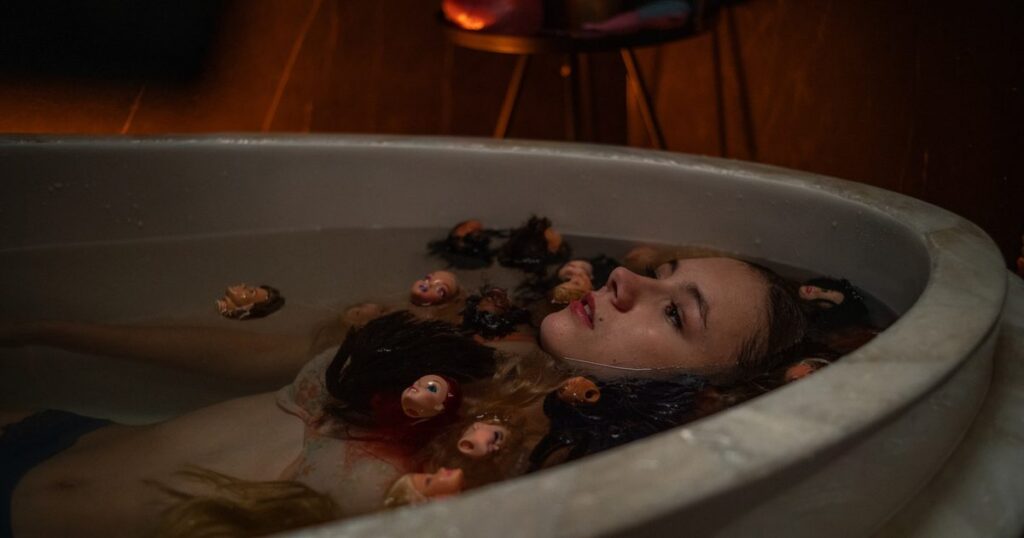
Lucker: During our research and casting process, we were struck by how many of the girls we met used self-harm as a way of coping. We decided to incorporate that into the story. It’s just as much a physical thing as the dance sequences.

Did you have a special budget for all those lighters?

Lucker: At first, the flames symbolise the pain she inflicts on herself, but they also represent an inner fire that drives her, which ties into the film’s title. The girls appreciated that we took their experiences with self-harm seriously and portrayed them with care. We show that there are ways to overcome those urges. When it comes to expressing emotions that Olivia can’t put into words, she channels them through dance.

Why did it sometimes feel like I was watching a documentary, even though it isn’t one?

Lucker: The girls in the shelter house are somehow playing versions of themselves. Their raw, authentic presence is what makes it feel so real. It’s also in the camerawork. The images are often bright, with girls wearing colourful outfits in a stylized setting, but the camera follows Olivia in a loose, almost documentary-like way.

You can even see it in her skin, which shifts from pale to a rosy glow.

Lucker: That’s mostly done in the colour grading. We used very little makeup because we wanted the girls to look as natural as possible, with all the small imperfections and pimples that come with puberty.

All we want for Olivia is for her to find peace of mind. What does she need to grow into a more balanced individual?

Lucker: Her mother constantly lets everyone down, and Olivia doesn’t want to be let down again. Other people help her see that she doesn’t have to accept that; she can stand up for herself, even against her mother. We often feel a sense of loyalty towards our parents; we grow up believing that parents are always right. That’s why someone else needs to tell you that things just aren’t your fault. Mum always claims it’s Olivia’s fault, and so many girls in crisis centres believe the same thing. We should not blame the victims, but make it clear that it is not their fault.


Nathaniel H’Limi over MY LIFE IN VERSAILLES

“De spiegelzaal is nooit leeg, maar nu wel”


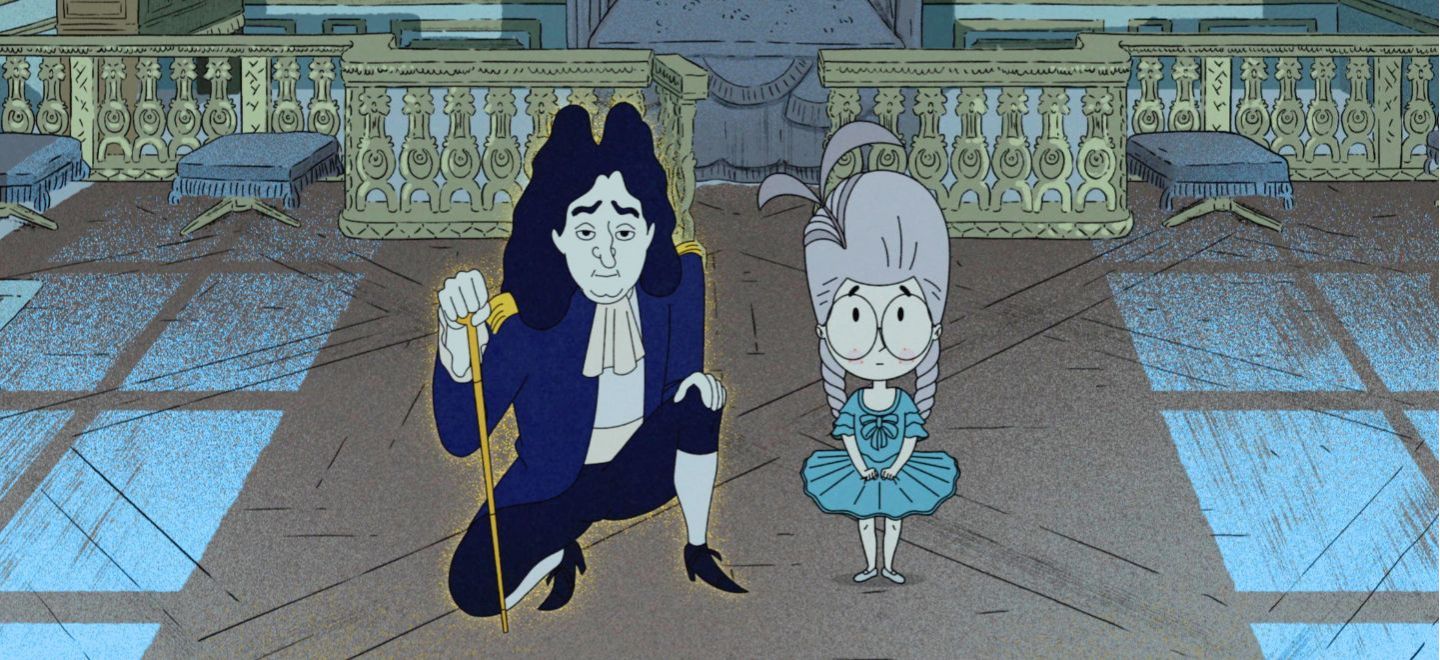
Een goed verhaal kan op vele manieren worden verteld, maar toch blijft het altijd een goed verhaal. Het verhaal van MY LIFE IN VERSAILLES is al verteld in een kortfilm, een tv-serie en nu ook in een lange animatiefilm. Deze drie formats hebben een ding gemeen: regisseur Nathaniel H’Limi, die zijn film kwam presenteren op het Filem’On Festival.

Na het overlijden van haar ouders gaat de achtjarige Violet bij haar oom Régis wonen, die ze nauwelijks kent. De norse man is onderhoudsmedewerker in het paleis van Versailles. Na een moeilijk begin, gaan de twee elkaar steeds beter te begrijpen. Tegen de achtergrond van het majestueuze paleis, met af en toe een uitstapje naar de straten van Parijs, vechten ze voor elkaars toekomst en groeien ze steeds dichter naar elkaar. Een twee-persoons-gezin!

There’s a short film (2019), a TV series (2024), and a feature-length animated film (2025), all titled MY LIFE IN VERSAILLES. How are they connected?

Nathaniel H’Limi: Nine years ago, we responded to a call for projects, launched by France Télévisions. At the time, most of their young audience’s fiction featured little boys as heroes. Now they were looking for a heroine in a contemporary story. As an illustrator and graphic designer, I had never worked in animation before. Screenwriter Clémence Madeleine-Perdrillat had never directed an animated film, and our producer had no prior experience in animation. Three inexperienced people with a shared desire to work on a global story we deeply cared about. For me, drawing stories has always been a dream, and that is what I did for nine years. The result was a short film which went on to win the Jury Award at Annecy, giving the project its international exposure.

How did that help put you on the map?

H’Limi: With festival selections and a small-scale cinema release in France and Belgium. Every time during post-screening discussions, the same question came up: What happens next? Even France Télévisions mentioned a possible sequel. Recognising the ideal format for young audiences, we suggested making that sequel into a TV series. Doing a series requires strong shoulders: it takes years, and it’s super complicated to finance, even if everyone loves your project.

Were you able to maintain the same quality standard as in the short film?

H’Limi: Not entirely. My graphic style may appear simple, but it is entirely handcrafted. The short film was done with gouache and ink on paper, with all 300 sets drawn by hand. With the money that our producer was able to piece together, we spent five years making the series, which had its life on the small screen. Which felt somewhat frustrating; we believed our story deserved its place on the big screen. We re-edited the 2h20 of footage from the series into a 1h20 feature. Moving away from the series’ episodic approach was a challenge; much of the credit for that goes to Clémence. That’s the genesis story of these three different formats under the same title. Or even four, if we include the book adaptation.

How much footage from the original short did you reuse?
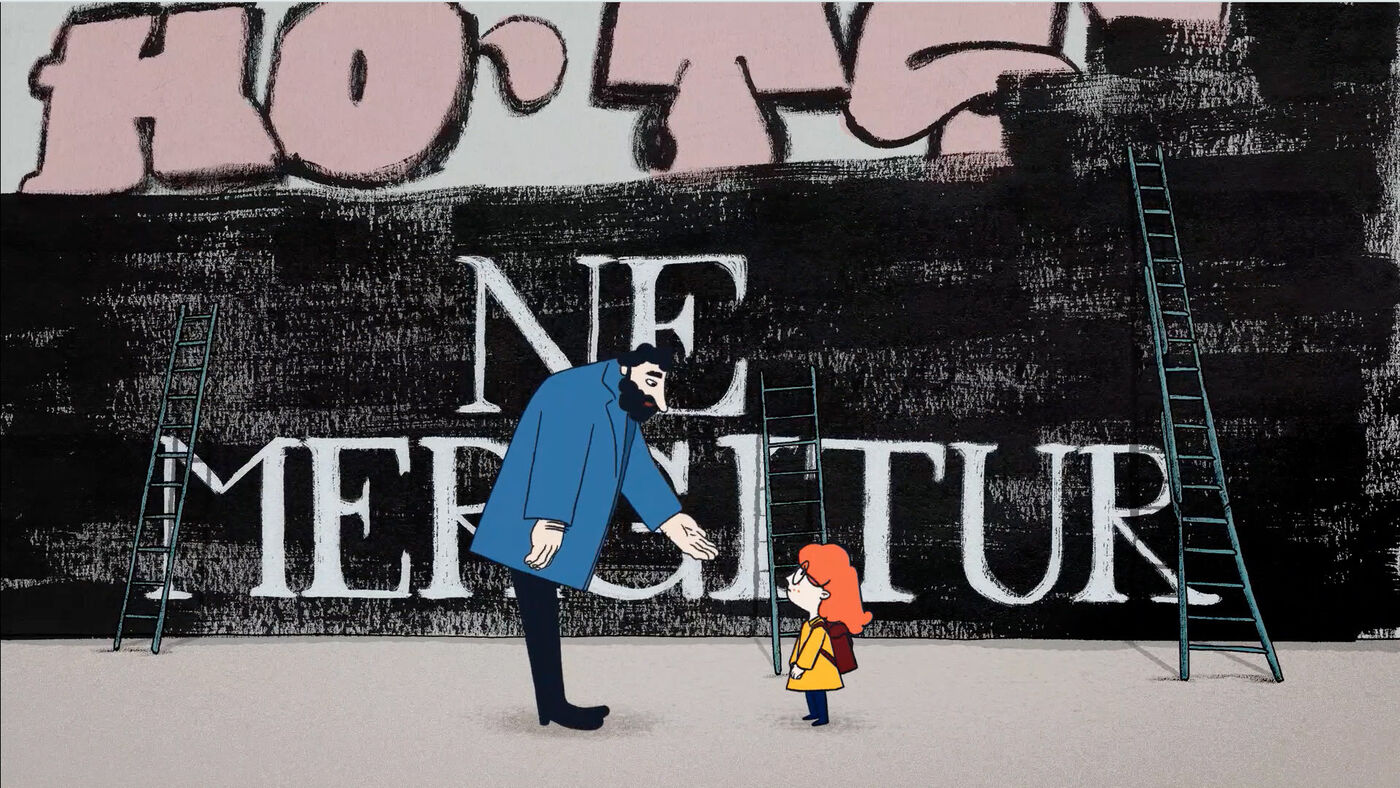
H’Limi: All of it! The first 26 minutes of the feature are exactly the short film. Since its release six years ago, our audience has completely renewed itself. Aside from the animation incrowd, nobody will recognise those 26 minutes as a separate short.

VERSAILLES must have taken up all your time for years!

H’Limi: For Clémence and me, this film marks the end of a nine-year-long period. This is the moment to understand that everything we did made sense. You would be surprised how deeply this story resonates inside us. It carries traces of our personal lives and of everything we went through in the aftermath of the terrorist attacks in Paris in 2015. 

I hadn’t realised those attacks were so present in the short film. 

H’Limi: That’s where the entire project began! You can sense it from the streetscape: the writing on the walls, the presence of police officers, the Place de la République covered with flowers,… Both visually and narratively, our story is grounded in reality. Those attacks have marked us all – every adult in France remembers exactly where they were on November 13, 2015. 

From that point on, you follow the rhythm of the seasons. 

H’Limi: We were very precise with our timeline, the subtle passage of time, and the shifts between seasons. You might feel it rather than actually see it. When Violette runs across the Place de la République, you can tell from the light that winter is approaching. The next time she passes through, clouds of cold breath are coming from her mouth. Two years later, the flowers have disappeared from the square, and skaters glide through it under bright sunshine.

The feature film adds several layers to the story, particularly dealing with adult issues.

H’Limi: Children suffering from adult problems is a universal thing. Clémence approaches this with humour, while staying close to the painful truth. Régis, for instance, was unable to fulfil certain expectations due to physical limitations, and now finds himself judged by his parents. It’s a situation that resonates in many families. The expectations that parents and children place on one another are exactly why we all go to see psychologists.

Did your parents see the film?

H’Limi: They did, just yesterday! They’ve also followed the series. What matters to me is that these themes resonate with so many families, and I’m happy to depict them in the movie.

The scenes with the grandparents are deeply uncomfortable. Everyone sits around the table in silence, and when they speak, they avoid saying what really matters.

H’Limi: There’s an elephant in the room! Finding the right rhythm for that scene was hard. You want the young audience to engage with a slow scene that relies entirely on glances and gazes, on shoulders, on Régis crushing sugar with his hand… They are all grieving, but no one speaks about it except Violette, who brings the naive joy of an 8-year-old to the table. In fact, it’s one of the scenes we worked on the most.
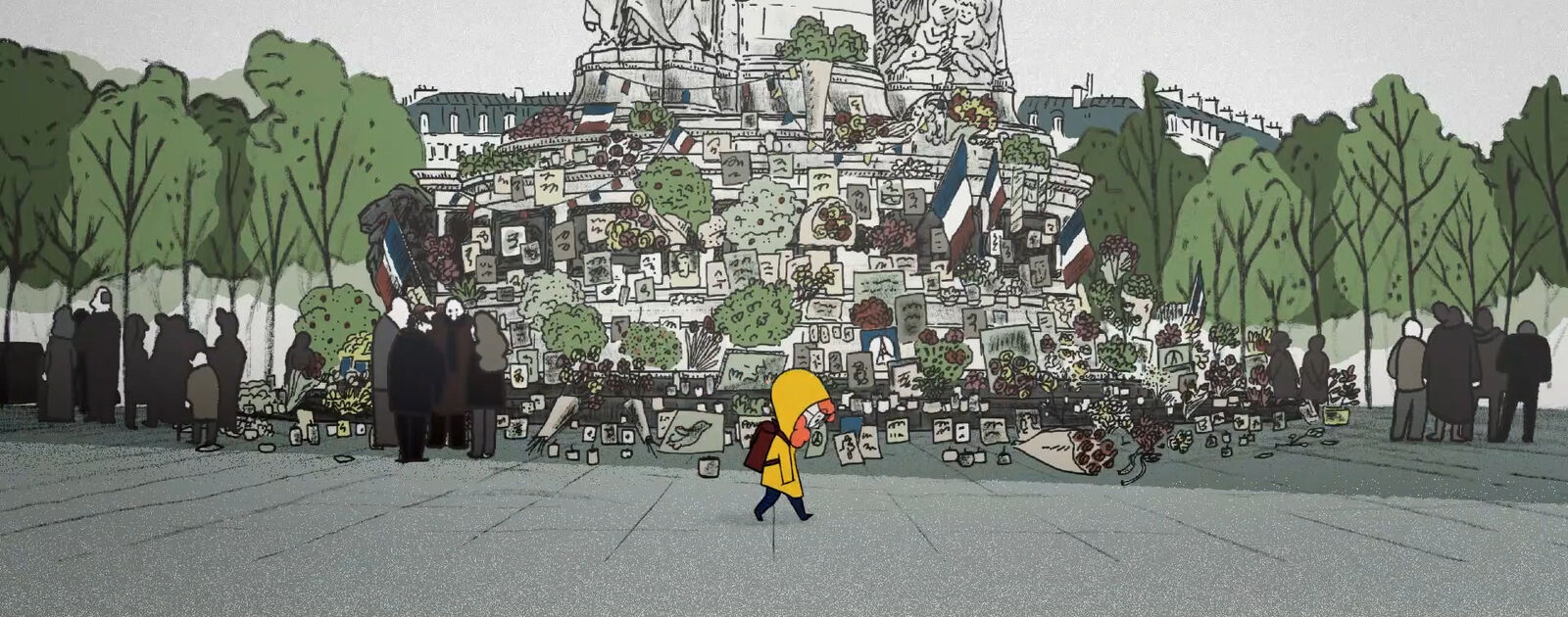
No one seems able to find the right tone to speak to a grieving child.

H’Limi: Those terrorist attacks were so violent, so unfair, so horrible that people didn’t know how to talk about it. That’s what made us want to make this film: to find a way to talk about it at a children’s level. Today, most children don’t even know what a terrorist attack is, and I find it very difficult to explain. Our core message is: things like this shouldn’t happen, but they did happen, and we need to acknowledge it. Adults and children “read” those scenes very differently.

What makes Paris feel like Paris in your film? 

H’Limi: Clémence and I share an approach in our methods: we devour the real. She feeds her writing with fragments of everyday life, conversations overheard in cafés or among friends. And I’m a real-life drawer. I had never designed a film set before, which honestly made me panic. So I began researching obsessively. The whole film, graphically, draws from that. The grandparents’ apartment is inspired by my parents-in-law’s home. Régis’ house comes from one of the forest rangers’ houses in Versailles. For Violette’s run through the city streets, I explored the area around Place de la République and selected a nearby school and house. I retraced her route on Google Maps and photographed everything. For my drawings, reality is like the bones and muscles that give structure to the human body.

Do you use the same approach for creating your characters?

H’Limi: Absolutely, they are hyper-inspired by everything around us. Violette’s character is partly based on Clémence as a child. For Régis, I asked myself what I would look like if I were two metres tall, weighed 100 kilos, and had a beard. I set up a mirror in front of my desk and acted out every single expression or frown.

His face is just hair and a big nose! That’s not you. 
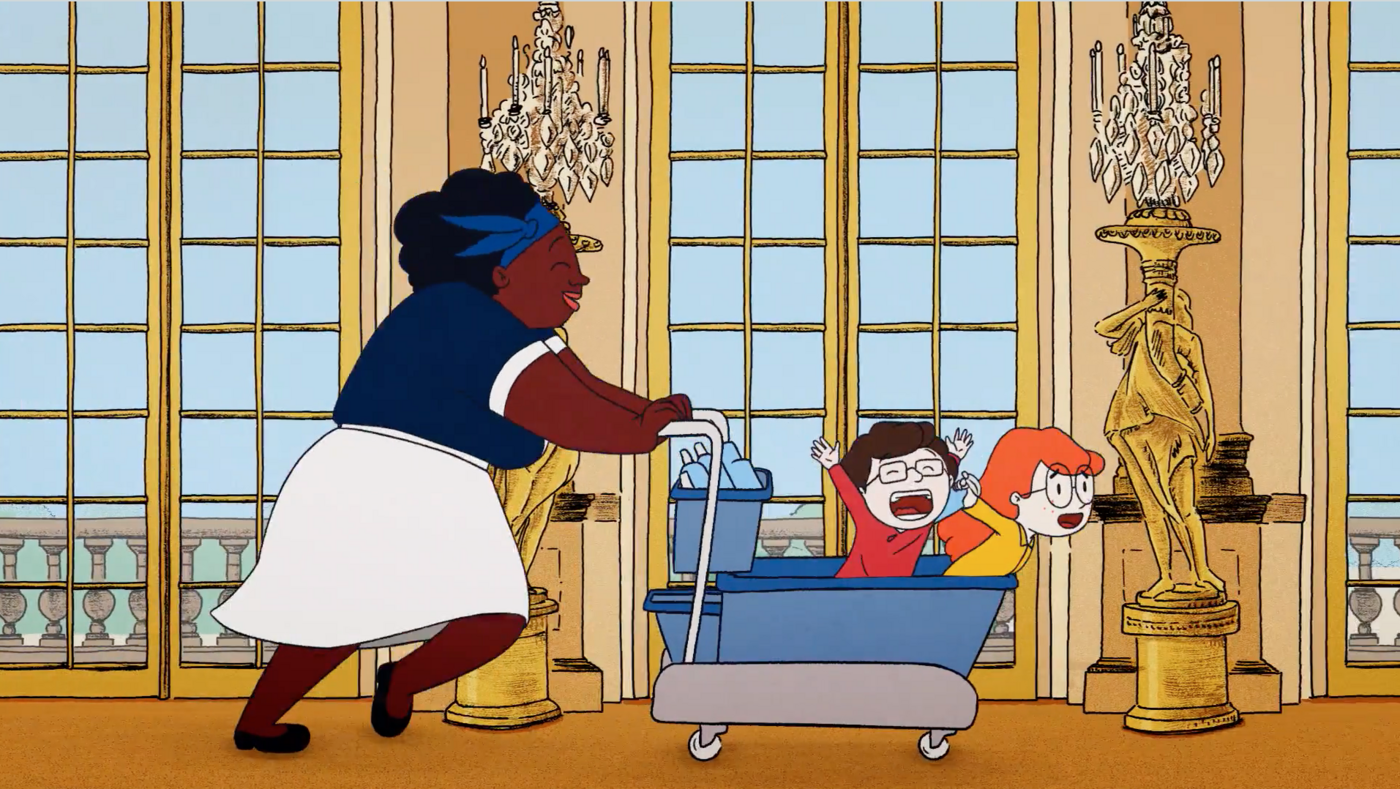
H’Limi: That was me, at a certain point in my life, when I was younger and eating too much. Régis is built around circular forms: his shoulders, hair, beard, nose, fingers—even his furniture—everything is rounded. In a way, he’s just a doodoo. By contrast, Violette’s design is more angular. Their shapes and colours complement each other; yellow and orange versus blue and black. As I mentioned earlier, what you don’t notice, you will still feel it.

The shape of his torso is almost square, as big as he is.

H’Limi: Clémence wanted him to have something of an ogre about him; the ogre and the princess being classic figures in fairy tales. His body reflects his personal history: broad shoulders from a physically demanding job, thin legs from his past as a dancer. Even today, Régis remains a challenge for me to draw. I’m always working from reality, and his particular shape doesn’t exist in real life. 

With your attention to correctness, Versailles must have been a challenge!

H’Limi: We were lucky… Versailles is always packed. It’s almost impossible to take reference photos among 15,000 visitors. But once production began, COVID–19 hit. The authorities in Versailles reached out to us: the castle is closed to the public; this might be your chance! Experiencing Versailles completely empty was extraordinary, almost unreal. The Hall of Mirrors is never empty, but now it was! 

Next thing you tell me is that ‘the spider’ (the underground network of water pipes that becomes one of the film’s key locations) really exists!?

H’Limi: It does! It’s not the kind of place a child would explore alone. But every movie needs a touch of magic. At the time, Paris felt sombre and dark, whereas Versailles brought light, oxygen, and colour into the movie. Versailles was a pretext at first, but gradually became a much more layered element of the film.

Decorations in Versailles are so overwhelming that ultimately, you simply seem to give up on clear lines.
H’Limi: When I show my drawings to students, they often go like: “Wow, that’s so well done.” But it’s not. If you look closely, you’ll see nothing but messy scribbles. Together, they look like something grand, but it’s just strokes. Early on, Clémence and I agreed not to strive for perfection. I often describe our style as ‘realistic, but poorly executed’. 

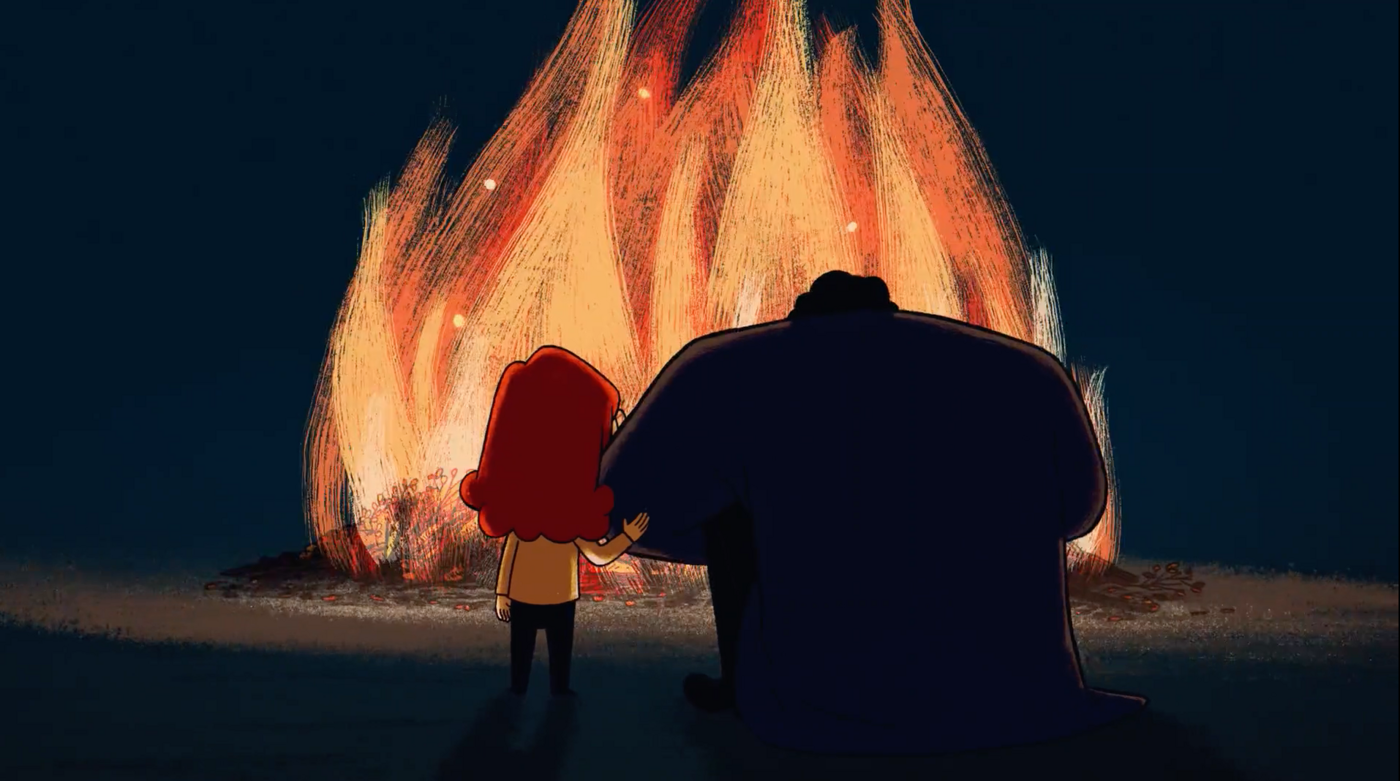
There is a striking scene in which Violette and Régis sit by the fire, burning leaves. From this game of shadows and silhouettes, a new story emerges.

H’Limi: When we presented our storyboard to France Télévisions, they said: “Ah, so this is the obligatory graphic ‘delirium’.” Apparently, in every animated film, the filmmaker at one point wants a graphic delirium, which allows him to enter another universe and go all the way. But we didn’t go all wild; we stayed close to the emotional core of the text, which is very delicate. This is a pivotal moment when Violet and Régis understand what binds them. The flames were created by hand – I asked for a computer-generated fire, and then redrew it myself to match our graphic language. Creating that scene was one of the most exciting moments of the entire film.

What makes it their perfect moment to connect?

H’Limi: They connect through a shared sense of loss. Violette understands she’s not the only one in mourning. And Régis realises that he doesn’t take care of Violette because he has to, but because he wants to.

What role does Geneviève, the rather rigid welfare worker, play in the story?

H’Limi: She is a hyper-anxious, stressed lady who compulsively repeats everything she says three times (a trait inspired by one of Clémence’s aunts). It took me quite a while to bring that character to life; in fact, she only really came together once we found the right voice, performed by the famous French actress Anne Alvaro. At the last moment, Geneviève underwent a makeover. The film had taken such a toll on me that my hair started turning grey. Surrounded by towering piles of paperwork, it felt unrealistic that Geneviève wouldn’t have grey hair as well. So I changed it from brown to white. She was actually a funny character to draw; she brings a good dose of lightness and humour to the story. 

French animation seems to be thriving at the moment, with a strong output of shorts and international co-productions. 

H’Limi: I’m not a producer; I’m just a modest filmmaker, observing what’s going on around me, rather than being really part of it. From what I observe, wonderful series and films are being made by dedicated production companies, such as MIYU Productions (with whom we began this project), and Sacreblue. Many schools have developed animation programmes with a growing number of students. The downside is that many people with a training in animation cannot find a job; I see young talents struggling to enter the industry. So while the creative energy is very much alive, the economic reality is more fragile.

Is there still room today for a film like MY LIFE IN VERSAILLES?

H’Limi: We’re currently developing a new feature, an adaptation of the book ‘Jean-Chat voit dans le noir’, which I illustrated. Our producer has already warned us that, at the moment, 2D feature animation in France is not the safest investment. So many films are being made, but the financial return is not exactly impressive. Even a remarkable film like CHICKEN FOR LINDA struggled to find an audience. But I’m not an expert. My role is simply to draw stories, and I work as hard as I can to make that work. We may have to fight a bit for our position, but I’m still confident.


Dorien Schetz over OLIVIA AND THE INVISIBLE EARTHQUAKE

“Ik vind chaotische mensen doorgaans heel amusant”


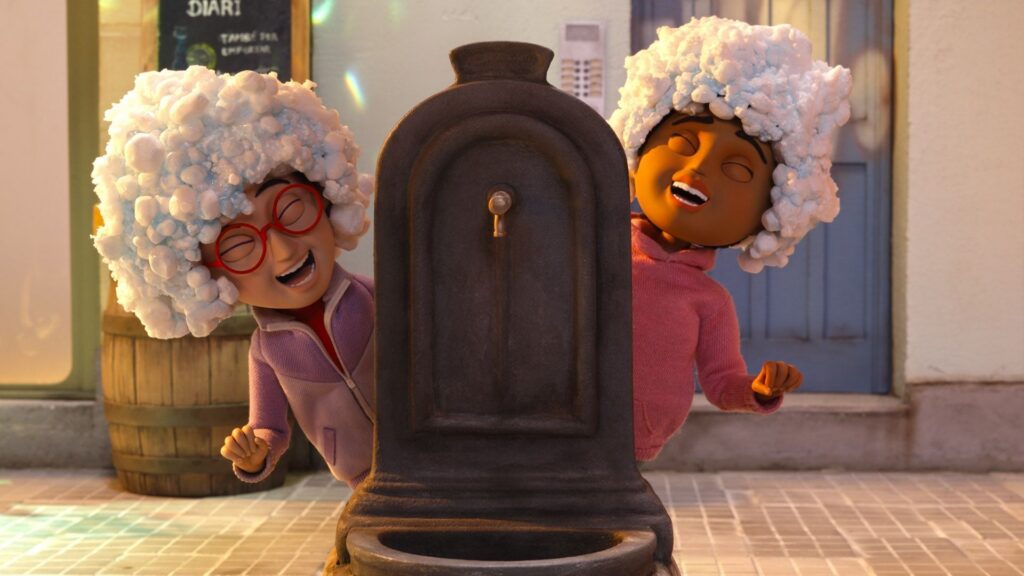
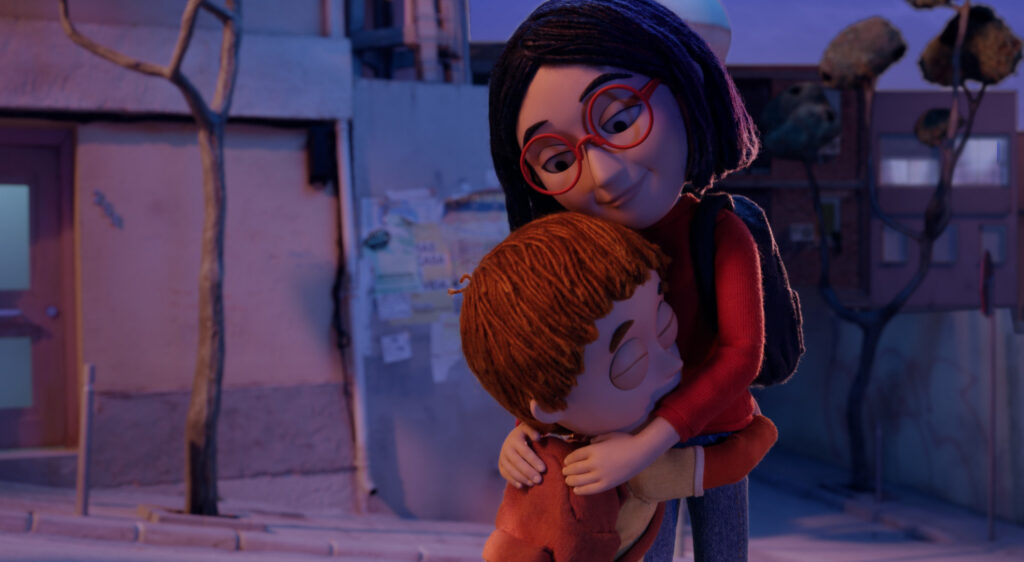
Het leven van de 12-jarige Olivia staat van de ene op de andere dag helemaal op zijn kop, nu ze moet leren voor haar jongere broertje te zorgen. Gelukkig krijgt ze hulp van haar opgewekte buren. Samen maken ze van elke klus een spelletje en van elke dag een onvergetelijk moment.

OLIVIA AND THE INVISIBLE EARTHQUAKE toont een boeiende groep kinderen in de buitenwijken van Barcelona. Ze worstelen met de alledaagse problemen van mensen die moeite hebben om het hoofd boven water te houden. Als de film iets sprookjesachtigs heeft, dan zit dat in de vriendschap en solidariteit tussen gezinnen en buurtkinderen. Deze Spaanse coproductie is een geslaagde zoektocht naar evenwicht tussen stijlvol design en een beperkt budget. Daarover vertelt de Belgische assistent-regisseur Dorien Schetz.

You are the one to define the scope of our conversation. As Assistant Director, I don’t know exactly what your responsibilities are. 

Dorien Schetz: The story of the film, the design, and the sets are already fixed when I become involved in a project. My job is to supervise the organisation, and I prefer to do that for stop-motion films. That’s what I’ve been doing throughout my entire professional career, first at the Beast Animation stop-motion studio, and then on the sets of SAUVAGES (Claude Barras) and OLIVIA. I don’t choose projects based on content, but on the technique used.  

How much stop-motion is OLIVIA AND THE INVISIBLE EARTHQUAKE? 

Schetz: 100% stop-motion! 

I don’t think so! I saw a bit of shadow play, I saw sand animation…

Schetz: It’s not 100% puppet animation, but stop-motion is about bringing dead objects to life. Like sand! Mama Fatou’s roots are beautifully illustrated in a piece of sand animation with a leopard and an African village. We had César Diaz on our team, one of my favourite animators and an absolute master of sand animation. It would be a shame not to use that skill in the film. That shadow play was filmed on set with transparent paper and then animated in stop-motion. The puppets and sets are real… You find stop-motion in many different forms.

Without too many technical gadgets.

Schetz: This is a European low-budget film, but within our limited budget, the whole team has created something beautiful, purely artisanal, and with minimal post-production. The scene in which Olivia ends up in a dream world was created entirely by hand: the lighting was prepared, the effects were set up by the lighting team, and the animation was done layer by layer. In Barcelona, there is a brand of lightly sparkling water that is sold in bottles with a special relief pattern. The camera team used this to create a lighting effect. You can also do this with a lens that costs €10,000, but we did it with a bottle. Or we animated a candle flame with papier-mache on a flat plate, manually, frame by frame.

There is a striking shot in which we look through the camera of a mobile phone, and the hands are enlarged to fill the entire screen. They are so delicately made, with dirty edges under the nails.

Schetz: Hands are madness! I’ve never seen such perfect miniature hands, so delicate. They broke easily, so people on the team were constantly busy making hands. 

The film is set in Barcelona. How am I supposed to know? The location is never mentioned.

Schetz: It can’t be anywhere else but Barcelona. You can tell from every detail: the pavements, the bollards in the street, the lampposts, the architecture of the houses. The set design team did a fantastic job. They even smuggled those flowered Flor de Barcelona tiles into the film.

From now on, my favourite place in Barcelona is Calle Futur 33, the street corner that is often shown in the film. Sometimes with people around, sometimes deserted…

Schetz: That’s a brilliant example of the work of our amazing team. Despite the limited budget, they got the most out of it. The result is stunning. Look at all those details: posters on the walls, notes with telephone numbers, a message about a runaway cat, the classic ACAB graffiti… Everything is there! The sets were made in Valencia. When they were delivered to Barcelona, we stood there staring with our mouths open. It was mind-blowing! The largest set was the street map, which was about 60 square metres. And that was just one of twelve! You can keep an interior set small, but as soon as you go outside, the size grows exponentially.

Depending on the time of day, the horizon changes colour beautifully, with shades of orange and purple.

Schetz: Credit for this goes to the camera and lighting team, who chose the right lighting mood for each sequence, as directed by DoP Isabel de la Torre. The director determines what time of day the scene takes place and what the weather conditions are like. Then the team gets to work creating the right atmosphere, which they maintain throughout the entire sequence, so that the sun is in the same place and the shadows fall correctly. 

You’ve already passed on my compliments to someone else three times. Is there anything I can say that might be a compliment to you?

Schetz: That the film was finished on time. I moved to Barcelona in January, the shoot was due to start in April, and we had to be ready by the end of December. I knew in advance: we have 8 months of animation in 12 to 14 studios, 8 animators, 12 Olivia dolls, 10 Tims, 5 Lamines, 3 Vanessas, 2 Kikis, 5 mothers, and one Superspunk. We have to shoot so many seconds in so many sets… You have to get all the teams – set, puppets, camera, animation, direction, production, rigging, and post-production – to work together without everything exploding. And if something goes wrong, e.g. a puppet breaks, you have to anticipate very quickly. I have to make the perfect puzzle out of all those elements within a certain time limit. I succeeded in doing that, and I’m quite proud of it. 

How does the assistant director relate to the director in the organisational chart?

Schetz: My main task is to take care of all the practical stuff, so that the director only has to think about the creative aspect. Which animator will make which shot with which puppet? It’s all planned out! That allows the director to concentrate fully on the emotions or the action in that shot. I do this job because I am frighteningly well organised. And because I love animated films, and many people in that sector are less well-organised. So I can help them. I don’t mind being surrounded by a bunch of chaotic people. I usually find chaotic people very enjoyable, and they are grateful for someone like me. We complement each other.

You made an interesting choice for the dolls’ basic hair.

Schetz: It’s usually wool, stiffened with iron wire, so that some hairs are still movable. The choice of material is determined by the available time and budget, in consultation with the director and the puppet designer. If the choice of material makes the animators’ work too difficult, it puts the brake on the number of seconds you can deliver per day. 

If I were to ask you a similar question about the eyes, I would probably get the same answer.

Schetz: It is always the result of artistic and budgetary choices. You choose expressive eyes, but you also have to be able to work with them easily. The most difficult thing about Olivia was her glasses. They make her eyes difficult for the animators to handle, especially because we wanted to adapt the eyelids in every position. You see those animators fiddling with eyelids behind those glasses with a small stick, and then I’m glad I’m not an animator. Last year, on the set of SAUVAGES, all the characters had super-large eyes. That’s not only an artistic choice, but also a practical one, because it allows you to work faster.


The film features a few remarkable fantasy scenes, including a particularly striking one in which blue whales appear. Do these fit into the overall picture seamlessly, or do you need to develop a separate design for them?

Schetz: A shot in which they play Eskimo is much more complex than two characters simply talking, because you are working in different layers: the northern lights are one layer, the iceberg, the wavy water, the whale, the dolls… We estimate about four seconds of animation per day, but here you have to calculate four seconds for each of the five layers, so you’re working five times as long. What’s more, the whale was built on a small scale so that it wouldn’t be too unwieldy. It’s animated on green key so that it can be scaled afterwards. 

The co-production line-up looks quite interesting, with Chile joining the usual suspects.

Schetz: That’s not so strange. No European country can produce a feature-length animated film on its own. Such a film is, by definition, an international co-production. Spain and Chile couldn’t secure the financing. So France, Belgium and, in the end, Switzerland joined in.

And completed the film in eight months! Isn’t that incredibly fast?

Schetz: We did SAUVAGES in six months! That’s fast. But OLIVIA did stay within the time frame, at an average of 3.2 seconds per animator per day.

Because you strictly ensured that everyone met their quota! 

Schetz: Indeed, strictly but fairly.


Gert Hermans

Virginia Nardelli & Stefano La Rosa over THE CASTLE

“Wanneer film iets creëert dat er voordien niet was”


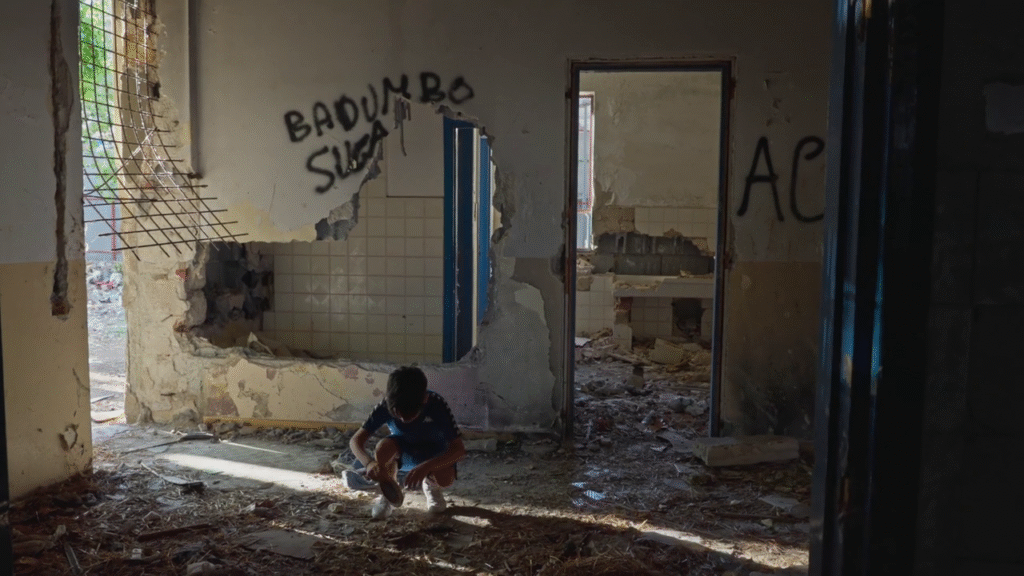
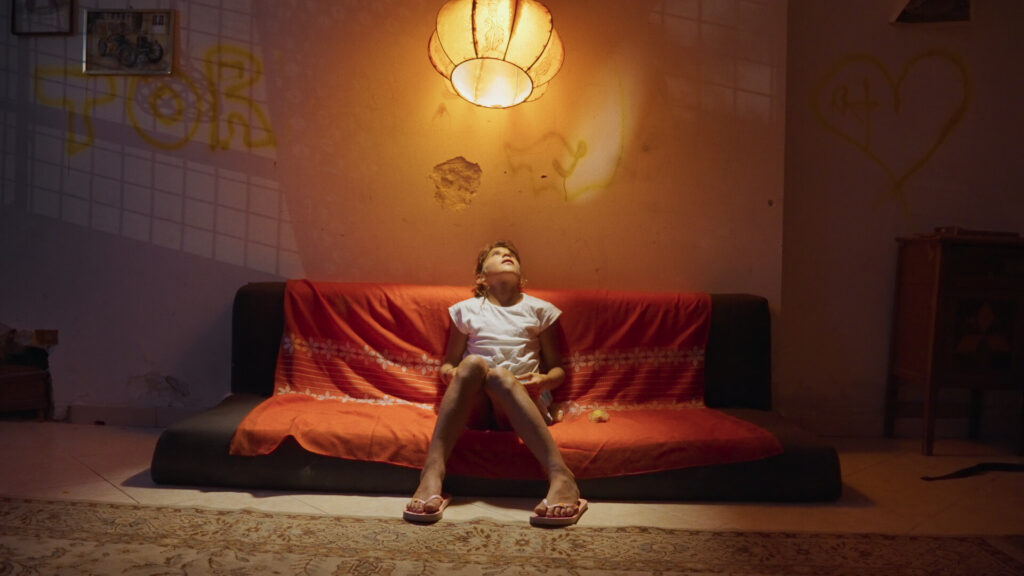
Midden in Palermo, Sicilië, staat een oude, verlaten kleuterschool. Men zegt dat het er spookt en dat je er beter wegblijft. Maar drie kinderen – Angelo, Mary en Rosy – vinden er een schuilplaats, een geheime plek waar ze, buiten het zicht van de wereld, hun fantasieën en angsten met elkaar delen. Totdat hun ‘kasteel’ met sloop wordt bedreigd. Drie regisseurs (Virginia Nardelli, Stefano La Rosa en Danny Biancardi) volgden hen op de voet; op het Filem’On Festival spraken we met twee van hen.

De kinderen werden gedurende een lange periode gevolgd, maar de film voelt als een snapshot, de registratie van een cruciaal moment in jonge levens, en een vooruitblik op wat hen later te wachten staat. Begripsvol observeren de filmmakers dit moment tussen hoop en verdriet.


For a children’s audience, THE CASTLE might be a film about building up something, while for me, it was more about losing something. 

Stefano La Rosa: As an adult, you might see something you already lived through but lost, and now you remember it. That evokes a certain melancholy. 

Virginia Nardelli: When the kindergarten was destroyed, it felt like we lost something so beautiful. But it’s also a positive thing: a school will now be reopened. By doing a good thing for the community, a sweet dream for the children was shattered.

Where exactly is this story situated?

Nardelli: In Palermo, in the heart of the city, but the neighbourhood feels suburban, because the community completely ignores it. There are no shops, no bars; no public transport goes there. The only people on the streets are those living there. If you accidentally ended up there, you would be approached on the street: “Sir, I think you’ve taken a wrong turn. Were you looking for somewhere else?”

La Rosa: There is only one road leading there, which winds around the kindergarten and the square. On that road, kids are riding their quad bikes and scooters all day long; that’s how they spend most of their time. 

Groups of children hang around. In one scene, they are giving Angelo a rough time. That felt unpleasant, or was it just a harmless game?

Nardelli: That was an observation of how brutal things get on the streets. We felt uncomfortable filming it, so we asked Angelo and his parents whether or not to include that scene in the film. For him, it felt normal.

That explains why he says, “I love this neighbourhood, but not the people.”

Nardelli: If you’re not a full-blooded macho man, then you’re an outcast there.

La Rosa: Angelo simply isn’t like that; he has a gentle way of connecting with people, very different from the other kids. When we met him at the age of nine, he was not yet fully aware of that. But over the three years we’ve spent there, everything changed, including his perception of himself and of the neighbourhood. At a certain point, hanging out with two girls became problematic. Gender models are still approached in a traditional way there.

The girls tend to be dominant, while Angelo is more thoughtful.

Nardelli: Mary is rather bossy, Rosy is wild, and Angelo is more reflective. This created an interesting dynamic. But as soon as another kid entered the group, that balance fell apart. 

La Rosa: Initially, it didn’t matter much that he hung out with girls; he was still a child. Then, little by little, it became trickier until, at one point, we were afraid to jeopardise his social life in the neighbourhood! But he said, “No, I want to do this!” The obstacles were a mixture of social codes and jealousy. Other kids also wanted to be part of the film project, but as soon as they joined, they messed up everything. We constantly had to take those social dynamics into account.

How much did you guide those children? Why did they do all the things they did? 

Nardelli: We were there for 70 days to film, but we spent at least twice as much time there, doing other things. We set up a framework for them to improvise. Sometimes it worked, most of the time it didn’t. We had to wait for all the variables to fall into place, creating the perfect conditions for a cinematic moment. That happened rather organically than scripted.

La Rosa: We wanted to document something beyond their daily lives, and building up this new space with them in the kindergarten was a perfect occasion. They brought us there, and Rosy said, “What a mess; let’s clean it all up.” We thought: perfect!

Doing most of the ‘construction work’, she isn’t afraid of getting her hands dirty!

Nardelli: Rosy is wild. She got herself quite a reputation for being a free spirit. For the film, she felt free to take it all out, without being judged by others. 

La Rosa: This was her ultimate chance to prove herself as someone who could act responsibly and take care of things. 

Nardilli: Her parents and teachers were surprised. “We’ve never seen her like this. This is a side she never shows.” She was the most attached to the place. While workers had already begun demolishing the building, she kept tidying and cleaning. For me, that was one of the most emotional moments in our project.

Being proud of their work, they have a strong sense of ownership. This was really their place.

La Rosa: In this intense neighbourhood, it’s difficult to find private space, but they created one for themselves. When they wrote their names on the wall, we were like… Yes! That makes it clear what this place really means to them.

Although their conversations sound surprisingly poetic and philosophical, we hear their daily concerns shining through. Did you push them to have such talks?

Nardelli: They can’t be pushed! 

La Rosa: The scene in which they talk about their fathers in jail started as a simple game, but then the tone of the conversation changed unexpectedly. Such stories are simply a part of their lives. Each family there has at least one family member in jail.

They also say that growing up scares them.

Nardelli: Growing up means following in their parents’ footsteps. Mary’s parents were only 14 when her mum gave birth to her – in one year, she will be the same age as her parents when they got her. Starting your own family is the only way to escape from the family nest. In that sense, every kid there is afraid to grow up. Mary says: When we will be married, being together like friends won’t be possible anymore. 

La Rosa: As a grown-up, boundaries are stricter. You can’t hang around with male friends any longer. THE CASTLE tells about growing up in a context where social codes are strong, and your range of options is narrow; you don’t have many. That’s a sad aspect of their lives. There is a political side to the story. Such neighbourhoods are often talked about in terms of clichés that we tried to deconstruct. We approached these themes without projecting preconceived ideas. We let those kids take us somewhere, in their own way.

The moment I learned the most about Angelo was in the song he sings, about “how nothing will change and we can stay here forever”.

La Rosa: That song is sung in a strong Neapolitan dialect. This ‘Neomelodica Napoletana’ music is very popular in that neighbourhood, but we couldn’t understand the lyrics. We still don’t know exactly what the song is about, but the only words we could get – ‘Nothing will happen’ – did fit perfectly with that moment in the film.

Although you came as outsiders, they seemed to trust you completely.

La Rosa: We have earned that trust over time. Without patience, we would never have achieved this level of intimacy. We have constructed this story together with them over four years. For us, this was a lesson in finding different narratives, simply by letting people talk freely. We only created a framework for them.

Nardelli: We discovered our film while making it.

The demolition of the kindergarten is inevitable. Did you know all along that this was about to happen? 

Nardelli: We knew there was a plan, but in Sicily, plans can stay on hold for years. But then suddenly it happened, and we were not ready for it.

La Rosa: We were still about 10% short of the planned recordings, so we had to find creative solutions. But we knew from the beginning that the renovation works could be a nice ending point. 

But it’s not the end! Why does the film end the way it ends?

Nardelli: I love it when cinema creates something that wasn’t there before. When the realistic part of our story ends with the destruction of “our castle”, we created another magical space elsewhere, where we can return at any time in our imagination.

Have the kids seen the film? 

La Rosa: We showed a preliminary result to the children and their parents to obtain their approval. But the Italian premiere at the Biografilm Festival in Bologna was the first time they had travelled by plane, stayed in a hotel… It was a very complete experience.

Nardelli: That was stressful for us. I remember myself shouting at 4 o’clock: “Girls, please, go to sleep!“ But they had great fun!

We didn’t talk much about cinematography. Maybe because it all felt so natural. Was there a big cinematographic plan behind it?

Nardelli: A lot of scenes took an amazing start, but then faded out, because children easily get bored. In the editing, we synthesised them a bit.

La Rosa: The filming happened rather spontaneously, without thinking about the decoupage. We ended up with loads of footage and four months to edit it. 


Gert Hermans


Jurylid Emma Tirand over het BENSHI streaming platform

“Ons publiek vernieuwt zich voortdurend”


De snelle opkomst van streamingplatforms heeft een enorme impact op de filmsector. Er gaat geen enkele gelegenheid voorbij zonder dat gespecialiseerde analisten cijfers opgooien over de gevolgen voor de productie, distributie en consumptie van (kinder)films. Op Filem’On konden we zulke info uit de eerste hand vernemen: jurylid Emma Tirand vertegenwoordigt Benshi, een Franse streamingdienst die zich richt op kinderen (en vooral hun ouders). En nu wil Benshi België veroveren met een uitstekende catalogus van kinderfilms.


Can you do an elevator pitch for Benshi? 

Emma Tirand: Benshi is a streaming platform for children aged 2 to 11 years old, focusing on interesting arthouse films that challenge their viewpoints. We follow an editorial line with the help of our editorial committee, which decides on every film that is presented on our platform. That editorial line is crucial for what we do. 

On the children’s market today, do we need more content or better content?

Tirand: Children are exposed to screens everywhere, all the time. Even parents who closely monitor what their children watch can do little to rectify this. We offer a safe space where children can watch age-appropriate films. We’re the only platform providing such specific age recommendations, which reassures parents. Compared to the never-ending catalogues on channels such as Netflix, Benshi offers relatively few titles. As a small platform, we don’t believe in a constant stream of content; we believe in well-chosen films that spark something in your child, especially since children tend to watch their favourite content over and over again. 

You talk from a parent’s point of view. What role do they play in Benshi’s policy? 

Tirand: We don’t believe in the cliché that what is made for children is by definition childish. We push for films that are interesting to watch as a family. We believe that creators who work for children need to be extra selective, because this is the time when your audience grows up, discovers things, and develops. Those stories need to be even better than others. Of course, we all know that there are times when parents put their children in front of the television to have a moment to themselves. Both ways of using Benshi are fine. Parents will make choices for their children in line with their own preferences. That’s why we advertise to parents, not to the children. When we talk about Benshi, we talk about the parents. 

Why is it important to be so super accurate in your age recommendations?

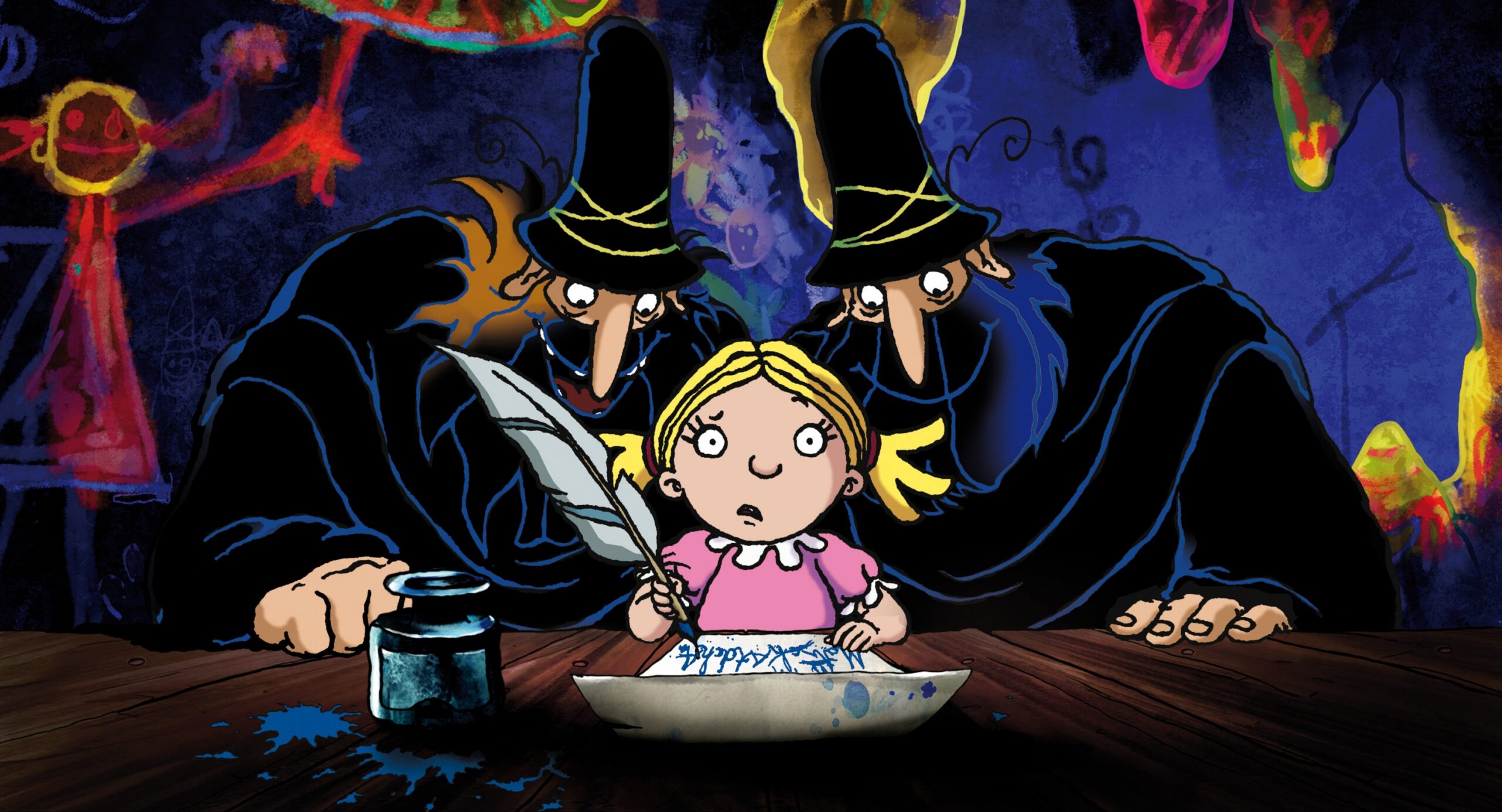
THE THREE ROBBERS

Tirand: A three-year-old does not have the same interests as a seven-year-old, or a ten-year-old. They don’t have the same knowledge or attention span. For younger audiences, we mainly offer (series of) short films; we rarely show feature films. Classics such as AZUR & ASMAR (Michel Ocelot) or THE THREE ROBBERS (Hayo Freitag) are suitable for those who want to enjoy feature films for the first time. Our age ratings take into account the themes, length, pace of films, etc. 

This narrative differs from the usual commercial considerations of streaming platforms, but is entirely consistent with that of most festivals in our sector.

Tirand: Benshi’s roots lie in cinemas, in the Studio des Ursulines, an arthouse cinema in Paris specialising in children’s films. We maintain strong ties with French cinemas and festivals. The importance of discovering films in the cinema does not conflict with our idea that children can also watch them online. These two patterns can coexist perfectly.

How do you keep that bond with the cinemas alive?

Tirand: Benshi consists of two elements: a streaming platform and an online cinema guide. Our editorial manager and her committee watch every title that is released in French cinemas. If a film gets a Benshi recommendation label, we’ll promote it on our website, we’ll post a review, we’ll have announcements in our newsletter, and we’ll look for partnerships with distributors. Since COVID, SVOD has grown tremendously, and streaming has become a part of people’s lives. But it doesn’t exclude the success of cinemas.

What is your personal role in the organisation chart? 

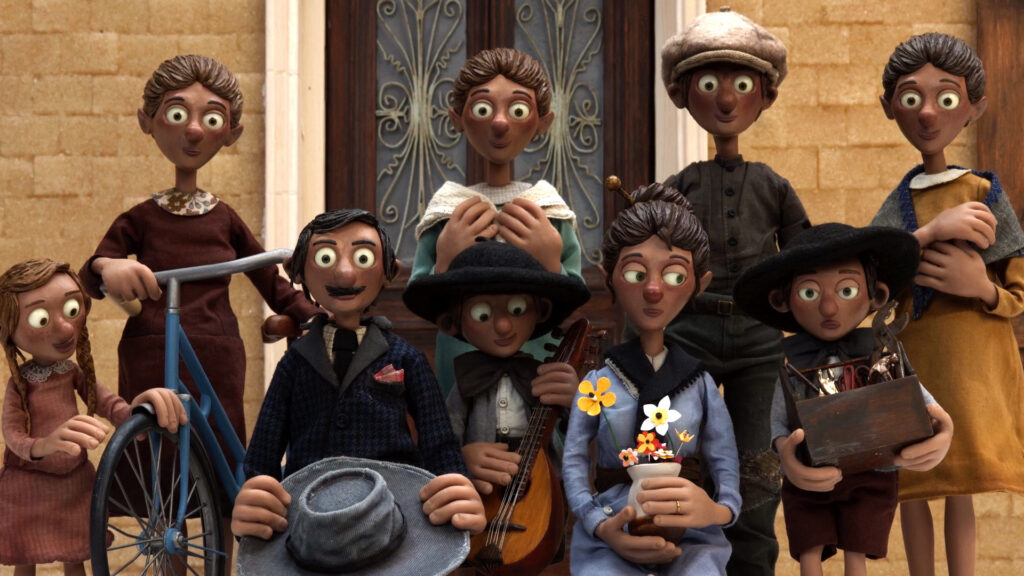
Tirand: I’m in charge of acquisitions; I buy films for the platform. Benshi is an editorialised platform, which means that each month, the editorial manager and I work hand in hand to propose themes, to which I adjust my acquisition activities. For instance, last October, we had an interesting selection around exile, for which I bought films like NO DOGS OR ITALIANS ALLOWED (Alain Ughetto), DOUNIA AND THE PRINCESS OF ALEPPO (Marya Zarif), and several shorts. These themes keep coming back, as our audience constantly renews itself – that’s one of the nice things about working for a platform for children. When you start watching Benshi at the age of three, two years later, your preferences will have completely changed, but other children will have come along to take your place. 

NO DOGS OR ITALIANS ALLOWED

How are things organised on the acquisition side?

Tirand: We mostly buy non-exclusive SVOD rights for French-speaking territories; Benshi has always been a French platform. But in October 2025, we launched a platform in Belgium, the Netherlands, and Luxembourg, with a new website and new films. We partnered with Cinekid in the Netherlands for the launch and with Filem’On in Belgium for a Benshi Award. And from December 2024, we have another platform in the UK. We will further strengthen our presence by offering Dutch and English dubs, and luckily, we offer many films without dialogue.

Emma Tirand

How would you position Benshi compared to other streaming platforms? 

Tirand: We’re not the main platform in a family. People come to us for specific, additional content that they’re not necessarily familiar with. They might stay with us for a while, but I don’t see ourselves as competitors with Disney or Netflix. We play in a different category. 

Would that audience be comparable to the average festival audience?

Tirand: Not necessarily. What Benshi and festivals have in common is the audience’s trust. Just as schools and families confidently go to a festival, hoping to be pleasantly surprised, parents trustfully come to us to discover something new. The intensity of this experience depends on how much parents are willing to invest in it. If you navigate our age ratings carefully, you can easily find films that you can watch with children of different ages, as a family experience. 

Has Benshi already become a brand among producers? As in, “I’ve made a typical Benshi film”?

Tirand: I know exactly what a Benshi film is. I’m not sure if producers want to brand their work as such, but they do know what we’re looking for. Unfortunately, we don’t financially involve ourselves in a project until it’s finished. We don’t do pre-sales… yet..

Do you have an idea about your audience profile?

Tirand: It’s very urban; mostly middle to upper-class families who take their children to cinemas anyway. We reach out to new potential audiences, including those who lack easy access to movie theaters, through social media and parent influencers that are aligned with us, but it’s not easy.

What percentage of your content is produced in France?

THE LITTLE MOLE

Tirand: 80%, I would say. That’s a lot. We also have content from Spain, Italy, Belgium, the Netherlands, and a lot from Eastern Europe, where the stop-motion tradition is strong. Which speaks from patrimonial content, like THE LITTLE MOLE (Zdeněk Miler), that we are happy to include in our catalogue.

Your website shows a list of Benshi’s “heroes”! Who’s on your list?

Tirand: The little bear POMPON (Matthieu Gaillard), the cute bird DIMITRI (Agnès Lecreux & Fabien Drouet), and my all-time favourite short on Benshi is ANATOLE’S LITTLE SAUCEPAN, a lovely stop-motion animation by Eric Montchaud.

ANATOLE’S LITTLE SAUCEPAN

Benshi even has a section for documentaries. If kids have the preconception that documentaries are boring, inaccessible films for adults, Benshi is there to prove the opposite with a very accessible catalogue. 

Tirand: Good documentaries for young audiences are hard to find. There are lots of nature documentaries made for television, but we prioritise the cinematic aspect and link it to fascinating themes. Like in THE ANCIENT WOODS (Mindaugas Survila), a Lithuanian film without dialogue, it’s a fantastic experience to be immersed in a forest like that. It’s these kinds of unique adventures that Benshi promotes, because they foster a love for cinema at a young age.

Among all the other streaming platforms, you make a nice, civilised impression: No advertisements, but affordable prices… 

Tirand: We are no sharks! In this highly competitive market, we have around 25,000 subscribers in France, and we continue to grow, partly with the support of CNC (French National Film Centre) as well as Creative Europe MEDIA for our European expansion. It is not easy to carve out a place for ourselves in the market, but we seize every opportunity to tap into new markets, and we remain true to who we are.

THE ANCIENT WOODS

Is being a jury member at a festival a suitable way for you to prospect for new content?

Tirand: Filem’On was my first time as a member of an ECFA Jury. It was great to discuss with other jury members, and I’m happy with the choice we ultimately made for GOAT GIRL by Ana Asensio. 


Gert Hermans

Producer Arne Dahr over WITH GRACE

“Je moet het bos voeden”


In de korte Noorse documentaire WITH GRACE stelt de 13-jarige Grace, een grappig meisje met grote dromen en een uitzonderlijk talent om iedereen aan het lachen te maken, ons voor aan een liefdevol gezin in Kenia. Aangespoord door de verwoestende gevolgen die de natuur op hun wereld heeft, experimenteert Grace’s vader met een eenvoudige methode om hun leefomgeving aangenamer te maken. Op het Filem’On-festival kwam producent Arne Dahr ons vertellen hoe dit precies in zijn werk gaat.

Significantly, the film begins with the image of a tree. 

Arne Dahr: Trees are so important for this film. This family is planting trees to let them grow into forests, which provide shade and humidity, even in the desert. You need to feed the forest until it is big enough to continue growing on its own. That is how an oasis will emerge.

In my garden, the plants all die, but in the desert, they can survive!

Dahr: The main idea of Kisilu, Grace’s father, is to build a farm where people, animals, and plants can grow into a new ecosystem. Desert ground can be cultivated, certainly in Kenya, where the soil is very fertile. The main problem is the lack of water. But if you plant seeds and water them for a while, the ecosystem evolves. Kisilu has gained the trust of his neighbours, who start following his example. 

Those people’s lives depend on whether there is water or not.

Dahr: So do our lives, but we don’t feel it yet. This film is about climate change, affecting the lives of people living in the midst of nature, with nature, and cultivating nature. If the rain doesn’t come, their entire life will change. They don’t have the buffer zones that we have. 

Grace’s father is the one promoting this new way to survive nature’s harsh reality.

Dahr: He is a visionary! Kisilu is a remarkable man who manages to gather his neighbours around him, form a community, and convince them of his mission. He manages to lead them positively, and people like his ideas and want to try them out together.

He is also the one who breaks the circle. All the other fathers leave for the city to make money, but he wants to stay with his family.

Dahr: Grace has eight siblings, and you see Kisilu around his kids all the time. Whether there is a flood or a drought, or even if the house collapses, there’s always a smile, and there’s always friendliness. You never see him lose his temper. He is very different from the clichés about strict or absent fathers. The question if he will have to move to the city greatly concerns Grace.

What would make him leave his family?

Dahr: The necessity to make money to feed his family and pay for schooling, which is very expensive in Kenya. There are no public schools that offer free education, but he insists that his children, both sons and daughters, receive an education. Kisilu didn’t leave; he is still with his family, and they manage to live off the farm. And there’s one more hero in this film. Despite her worries, Kisilu’s wife, Christina, is never stressed. She supports her husband and runs the family. In addition to climate change, this is also a film about hope and about good parenting. 

We see Grace looking at pictures of herself as a baby. Who took those pictures? How come you followed that family for so long?

Dahr: In 2017, director Julia Dahr made a film about Kisilu called THANK YOU FOR THE RAIN. That’s when she met little Grace and decided to come back later to make a film about her; we’re observing her father through her eyes. Julia is extremely devoted to this theme. She became friends with the family, and over the years, she returned many times. She has lived with them, and Kisilu came to Norway to visit her. The images you see of Grace as a little girl are footage that was shot over the years on all those trips.

You decided to use a voiceover.

Dahr: We had many discussions about that. It’s Grace’s voice that you hear, both in English and in her own language, and there’s a third version available in Norwegian.

You can hear her laughter after every sentence she says.

Dahr: That’s typical for Grace – it was real, and that’s why we didn’t cut it. Voicing the film was a complicated process. Grace had to travel to the capital, Nairobi, which is a two-day trip for her. She made it with Dina Mwende, our Kenyan co-director. But Grace is attending a boarding school, and they didn’t want to give her time off. We needed to talk to the principal, and many other people were involved. But we insisted on having her voice, and despite the complicated process, it worked out very well.

Grace recalls many fond memories. And there’s one particularly beautiful story about a yellow dress.

Dahr: I’m happy that you like the story. We had the BBC involved in the production; they were very much into all these details, and the yellow dress was one of them. They insisted that we see that dress, but the directors didn’t want it, and we didn’t have the image. So we had to come up with a creative solution. It’s a strong little story within the bigger film. 

She recounts how the dress made her feel like a princess, until a storm blew it away. 

Dahr: “And I never saw my yellow dress again.” Her mother lost all her underwear in that storm, and that makes everybody laugh, even though the house has collapsed.

What else should we pick up from life in that village?

Dahr: People live outside all the time. There isn’t even a door to mark where “inside” begins. You only go inside to sleep or have some shade. They eat together, but not like us, having three meals a day. The family eats when there is food; even if mum starts cooking in the middle of the night, everybody wakes up to eat. For Grace, this is a lovely memory. Audiences need to see how people are living and having a good time like that.

Is that a message you want to convey to your audience?

Dahr: The film is being shown on several TV channels, including the BBC, and has been screened at at least 90 festivals. Julia would like to go back once more and make a third film about Christina, to show life in Kenya from a woman’s perspective.

Is it correct that this film is a ‘project of love’ from an uncle for his niece?

Dahr: Julia is my niece, and I’m her godfather. When several employees in Julia’s company, Differ Media, became pregnant at the same time, I stepped in to finish two projects in production. I stayed for almost two years.


Gert Hermans


Brian Durnin over SPILT MILK

“Roken is onmisbaar bij het weergeven van Dublin”


Wat maakt een film typisch Iers? Veel geklets? Check! Koffie, bier en sigaretten? Check! Grijze straten van een industriestad in verval? Check! En een vriendelijke regisseur en producent die tijdens het festival de tijd nemen om de achtergrond van hun verhaal tot in detail uit te leggen? Dubbele check!

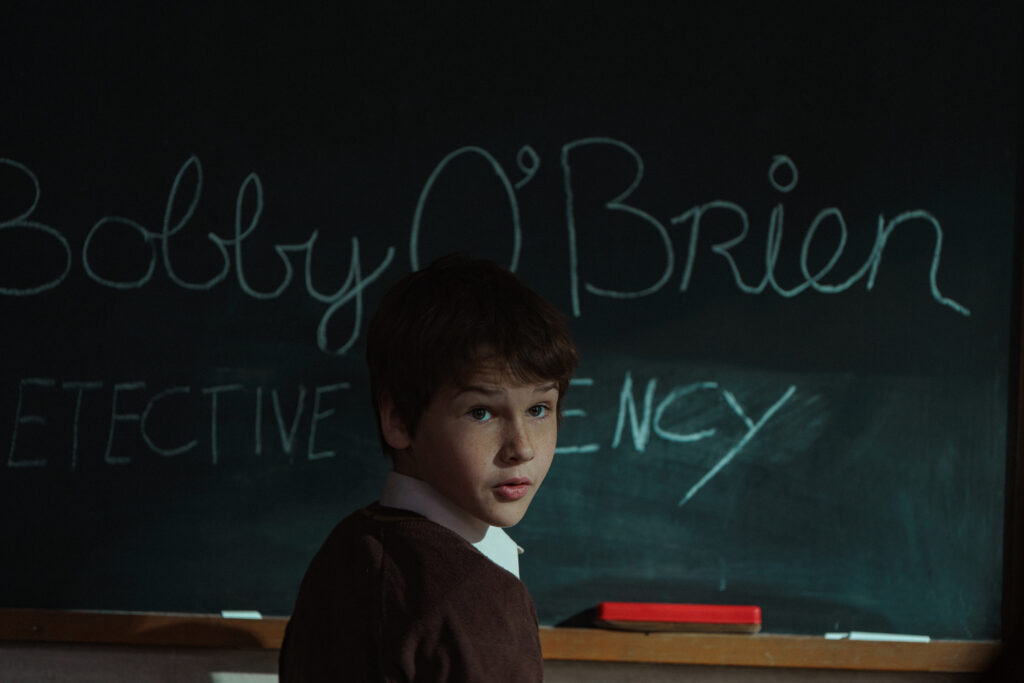
Bobby droomt ervan om detective te worden, net als zijn tv-held Kojak. Wanneer zijn oudere broer Oisin vermist raakt, storten Bobby en zijn vriendin Nell zich op de zaak, die hen naar een duistere, criminele onderwereld leidt. Hun zoektocht verwijst naar gebeurtenissen uit de vroege jaren tachtig, toen ouders in opstand kwamen tegen lokale drugsdealers die hun gezinnen te gronde richtten. Producent Laura McNicholas vat het als volgt samen: “Een kind uit een arbeidersmilieu ontdekt zichzelf tegen de achtergrond van sociaal-economische onrust. Uiteindelijk gaat SPILT MILK over een jongen die beseft hoeveel hij van zijn familie houdt, maar moet toegeven dat de wereld duisterder is dan hij had verwacht.”

Bobby is introduced through a brilliant sentence: ‘You always have a plan, and you always get in trouble.’ 

Director Brian Durnin: Sounds exactly like my life. Bobby’s got a huge imagination and a big heart; he sees the good in things, but he’s missing how much his best friend needs him to be there for her. Throughout the story, he understands that, regardless of all his plans, he needs to start becoming aware of the people who are being good to him.

What’s the importance of brothers? Are you the younger brother? 

Durnin: I’m the older one and felt a certain responsibility to guide my siblings in life, whether or not they sensed that. As an older brother, you’re seeing the younger ones making their mistakes. My sister was wild; she got in more trouble than I did. In SPILT MILK, Bobby looks up to his brother Oisin, but he doesn’t want to be like him. He’s very much his own person. 

He doesn’t want to be Oisin. He wants to be Kojak!

Durnin: ‘Kojak’ was big in the 70s, and it was all the time rerun in the 80s; ‘Kojak’ was always on TV. Even into the 90s, in Ireland, we had our national broadcaster, and maybe one or two English channels. Daytime TV featured many detective shows: ‘Murder, She Wrote’, ‘Ironside’, ‘Kojak’… Bobby genuinely admires that tough guy, who takes no crap. If there was going to be Kojak in the film, I wanted a scene that had a purpose, a thematic foreshadowing. I watched every episode of Kojak – there are over 100 episodes – and ended up finding a clip with a cool quote and a little wink. 

I suppose this cost you some money?

McNicholas: The more people were in the clip, the more we had to pay. So we picked a scene with just Kojak in it. But the football archive scenes were even harder to get. The price charged by the English FA for archive material was astronomical, and eighties football was not archived in Ireland. Luckily, our Scottish co-producers could acquire some material. Our editor, Colin Monie, is an amazing mega-brain. He always knew exactly where we were in the timeline of the movie and was obsessed with details. He only wanted to use games that were really played during that short period. I was like: ‘Who cares?’ But for him, it became massively important. 

Another substantial part of your budget must have gone to cigarettes!

Durnin: In the 80s in Ireland, literally everybody smoked. The adult actors couldn’t smoke in the room with the kids, even though the cigarettes were fake. It was a lot of work, figuring out who could smoke and when. But that’s a quintessential part of depicting Dublin in 1984. 

Which you have done very meticulously!

Durnin: A lot of the look is in the colour tones. I had some key references, like British photographer Tish Murtha’s social realist reportages about Northern England, and my own family photo albums. Everyone was wearing different shades of brown in those days; the world looked almost sepia. Several people told me: You transported me back to my own family in the 80s.

For that, you needed to find the right location. 

McNicholas: Dolphin House is Dublin’s largest remaining public housing flat complex, built in 1957. Many people have moved out, and many properties are empty. We took over a few units. In terms of production design, the O’Brien family flat was pretty much designed like a time capsule, straight to the ’80s.

Durnin: Those social protests actually did take place there, in Dolphin House.

Were those protest scenes based on historical facts?

Durnin: The same thing happened in several flat blocks. All of those communities were feeling abandoned; they weren’t getting enough support from the police or the state. People were dying there; they needed to make a statement.

You must have incorporated many childhood memories, not only in the narrative, but into the details. I suppose you once built towers out of beer mats.

Durnin: That’s based on me, spending time in pubs as a kid; my father was an alcoholic until he quit drinking. Until the age of 12, I was a pub kid, playing under the tables as my dad’s social life was centred around pubs and bookies, around drinking and horse racing. These things were acceptable back then. People used to drive to places, drink, and then drive home, in a car full of smoke, with six kids with no seatbelts on. It was such a different world. 

I bet you were doing a lot of jumping jacks in gym class.

Durnin: We had a gym teacher called Ollie. He was full of energy: ‘Here we go, high knees! High knees!’ A muscular man in his fifties, like Popeye. He could balance one of those Swedish benches on his chin and walk around the gymnasium. My school had this big, old gym hall where we climbed the ropes. That’s straight out of my life. I don’t think PE is like that anymore. 

Have you enjoyed yourself with clothes and props?

Durnin: Oh, yes! John is wearing one jumper that belonged to my wife’s father, and the other is my father’s. I was just bringing in whatever I could find. There’s a radio from my granny, the little side table in the apartment was the one that my father had beside him, with an ashtray on it; he would sit there and smoke 60 cigarettes per day in a chair that was molded around his body, watching horse racing and Kojak.

Is the rhythm of the dialogues something you had to work on, or was it all there?

McNicholas: That’s all natural; it’s banter. There’s a kind of playfulness in how Dubliners talk to each other, and there’s definitely a musical element to our accent. There’s some bad language in the film, but that’s how people communicate, particularly in the inner city. It’s conversational rather than aggressive. 

Durnin: We come from a generally dark, rainy country, so we’re reliant on our personalities to get the energy into life.

SPILT MILK seems to be an ode to motherhood. Behind Bobby’s mother’s weary facade, you can still see a twinkle of light.

Durnin: Dani (Danielle Galligan) is incredible. During COVID, we invited her for an online table read, and she was just brilliant! We were wondering if maybe she was too young, but when somebody nails a part that much, it’d be crazy not to give her the role. She was always intended to be a young mother, but we styled her a little older. Nobody questioned Laurence O’Fuarain as Bobby’s father, although they are both around the same age.

They look totally credible together. 

McNicholas: It was important that they felt like a couple. They look a bit worn out because they don’t take good care of themselves, but potentially, they’re a handsome mum and dad.

Durnin: I showed Laurence the reference photos of my father, and he showed me his, and they looked exactly the same, with the same moustache. Laurence usually looks rather buff, like a hunky guy. But he said, All I’m going to do is go to the pub every night and drink pints with my father – which he did. And no gym! I told them both beforehand: I’m not going to do make-up on you. This should authentically feel like the eighties, when people were worn out because they had no money to look after themselves. They hardly knew where the next meal was coming from. They were relying on their wits to keep them going.

Asking you about the title comes from a silly typo that I made, writing in my notes about a film called SPLIT MILK.

Durnin: We didn’t want something too literal; it’s more like a state of mind. Spilt Milk indicates something like, ok, that’s happened, now let’s move on. Bobby is not going back to being a little kid. He puts the hat down; he’s still playing games, but something has matured inside him. He loses some of his innocence, but not his imagination. He just has new information; he knows the world isn’t perfect.

McNicholas: Brian and I, being both parents of young boys, talked a lot about resilience. You want your kids to dream, but you equally want them to have resilience because they’re going to need it. That’s kind of sad, but it’s also a good part of growing up, being able to deal with things when they don’t go your way. Ultimately, this is a film about parents wanting their kids to have the freedom to dream, and unfortunately, lots of kids don’t get that freedom. 

SPILT MILK seems like a big labour of love.

Durnin: My connection to the story was obviously personal, based on my kind of upbringing. But I also felt privileged to tell a story about our city, about where we come from.

McNicholas: As Dubliners, we love Dublin. The film captures the essence of what it is to be a Dubliner, even in difficult times. All characteristics that we would associate with Dublin, the sense of humour, the banter, the resilience, I don’t think any of that has changed.


Gert Hermans

Brian Durnin & Laura McNicholas were guests of the Zlin Film Festival 

Brian Durin was guest of the Filem’On Festival


Bara Anna Stejskalova over 9 MILLION COLOURS

“Hou op met zingen en vertel me een verhaal!”


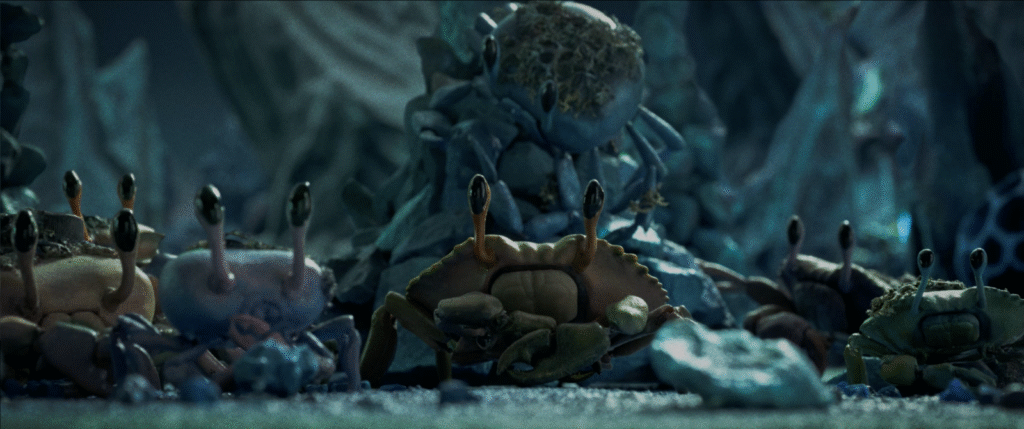
De onderwaterwereld zit vol kleuren – volgens sommigen zijn her er wel 9 miljoen! –, beweging en vreemde wezens. De ideale omgeving voor een animatie-artiest om haar creativiteit de vrije loop te laten. Zeker als je bedenkt dat al die dieren ook nog eens zingen en dansen in een spetterende diepzeemusical! Tijdens het Filem’On Festival in Brussel vertelde de Tsjechische regisseur Bara Anna Stejskalova hoe ze dit bovenmenselijke plan ten uitvoer heeft gebracht.

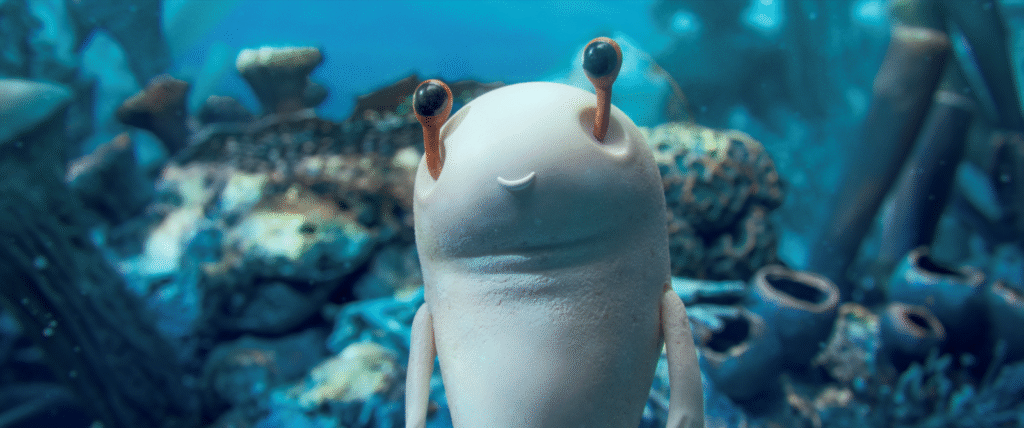
De oceaan is een paradijs voor Fran, een gracieuze maar moordzuchtige mantisgarnaal. Met haar dodelijke scharen grijpt ze alles wat ze maar wil. Maar wanneer Fran verliefd wordt op Milva, een blinde en hulpeloze vis, zal de oceaan nooit meer hetzelfde zijn.

Allow me to present you with a few dilemmas. LA LA LAND or THE SOUND OF MUSIC?

Bara Anna Stejskalova: LA LA LAND.

Why am I not surprised? SINGING IN THE RAIN or MOULIN ROUGE?

Stejskalova: MOULIN ROUGE. We have the theme of ‘forbidden love’ in common.

Are you a musical fan?

Stejskalova: Not at all. I grew up on Czech fairy tales. When Disney films finally came to the Czech video stores, I was surprised by how much singing there was going on. I was like, Stop singing and tell me a story! I suspect that my aversion to musicals originated there, and I never returned to the genre as an adult. But when writing the script for 9 MILLION COLOURS, it became clear that it had to be a musical. I spent two weeks on an island in the Azores, where I went diving with an instructor. I found out there were so many sounds in the sea, from the small pebbles to the big whales singing. That’s when I realised my movie needed music that referred to all those sounds underwater.

It’s very tempting now to quote the Disney song Under the Sea!

Stejskalova: We used that song when pitching at Animarkt in Poland. We wanted to pitch the project in a way that made everybody feel engaged, so my producer, my editor, and I did a karaoke version of Under the Sea, sung into glasses of water. It didn’t really work, but people remembered us, and we won the award. In the original concept for 9 MILLION COLOURS, we considered vocalists singing underwater. We conducted some tests, but the problem was that the microphones mainly picked up the bubbles, while the vocal sound disappeared into a big, bubbly mess. But we used this principle in the sound design, for example, when you hear the characters laughing underwater. Our sound designer took a bullet for the team and went down with his head.

The songs also have an explanatory function.

Stejskalova: In an early phase of the project, I wondered how to explain that the mantis shrimp can see so many colours. I wanted the audience to recognise this as a fact, and not as some random choice made by a whimsical animator. Working on the music design, we considered having her sing about her amazing powers, how she’s a queen, and how many colours she can see! That’s when we decided it had to be a musical. 

Are you good at singing?

Stejskalova: Me? I suck! Singing at Animarkt was a sacrifice I was willing to make to get my film made. There were only 30 people in the room, most of whom were animation people, who are a bit weird and quirky by nature, so I felt among equals.

There are two things that animators usually tell me they hate: water and animals with many legs.

Stejskalova: My animators do hate me now! Before 9 MILLION COLOURS, I made the film LOVE IS JUST A DEATH AWAY, in which the main hero was a worm; no legs, no arms, just a body and a mouth. I felt like tuning things up a bit, and we ended up with this underwater overkill. Luckily, Jiří Krupička and Vojtěch Kiss are brilliant animators. We scheduled the film based on my experience with puppets having two, four, or no legs, not taking into account the number of legs of crabs or shrimps. The entire production took about one year longer than estimated, primarily due to the legs, water, and lighting requirements.

Fran is visually a complex character; Milva is rather the opposite, like the simplest form you can imagine. Did both options come with different challenges? 

Stejskalova: Animating a character that doesn’t have many features is hard. Milva’s body movements are limited due to her monolithic shape. She hardly has eyes; she can just express some simple emotions through the shape of her mouth. We had three shapes: smiling, frowning, and looking surprised. I wanted her to initially appear in a haze of mystery, so that her character could develop. From a simple, emotionless being, she becomes a more complex individual, making her journey throughout the film. 

Even her colour changes. I think I saw her blush. 

Stejskalova: That was prompted by your empathy, because that never happened. She probably got dirty because she is made of white silicone, which is almost impossible to keep spotlessly clean throughout filming. The audience doesn’t notice it, but I can even see the tiniest bit of hair or dust that sticks to her for a few frames and then vanishes.

Is it clay that you work with?

Stejskalova: Fran and Milva are made of silicone, the dolphins and shrimps are in rubber, and the crabs are printed in 3D; there were at least 40 of them. Rubber is cheaper than silicone, so we ended up using a lot of it. 

Where does Milva’s rudimentary form come from?

Stejskalova: She is based on two different, ugly, deepwater species. One of them is the blobfish, a notorious ugly duckling, but I like the texture of its skin, which we then applied to a different type of fish that basically has Milva’s shape. We gave the eyeless creature a little tale and added the front fins.

Fran has a striking, radiant effect in her eyes.
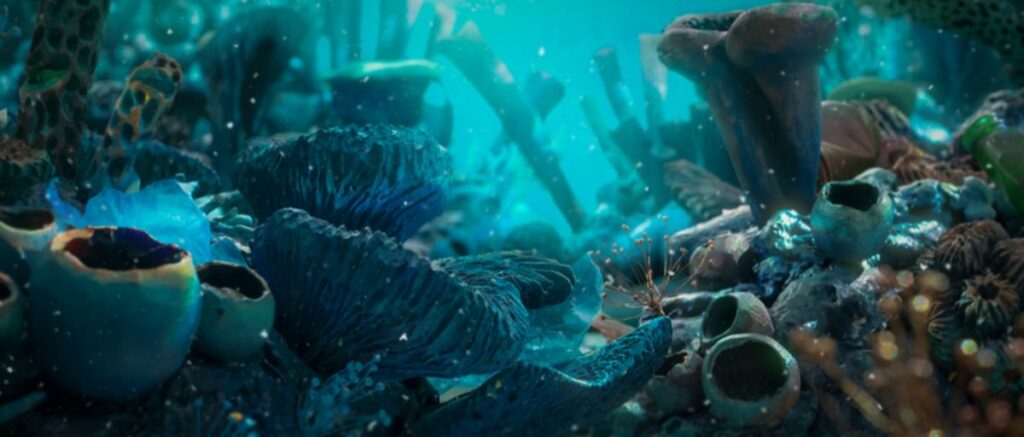
Stejskalova: Mantis shrimps are amazing animals. One of the coolest facts about them is that they have supervision. Humans have photoreceptors for three colours: red, green, and blue. Mantis shrimps have 16 photoreceptors; they can see ultraviolet, ultrared, and coralised light in a spectrum that we can’t even imagine. Crabs can only see in black and white, but not the same way as we perceive it. I found it fun to mimic and recreate those visions, even though I would always fail, because this goes beyond our perception. The entire character design is based on realistic elements, and all these species truly exist.

With the mantis shrimp as a natural superstar!

Stejskalova: I wanted to make a film with a mantis shrimp ever since I first read about them. They have the coolest features; they are ultra-strong and very territorial. Some subspecies have boxers instead of claws, but boxers don’t look good on film. We combined several subspecies, like the peacock mantis shrimp, which has all the wonderful colours. They are super fast; a punch from their boxing gloves is like a bullet from a gun, so fast that it creates little vacuum bubbles. Mantis shrimps are small, but even octopuses and dolphins are scared of them.

There’s an endless variety of coral, sea pox, algae, and everything… You could have gone on endlessly adding more details. How did you decide what was enough?

Stejskalova: We had the budget deciding that! Many objects were constructed in 360 degrees, so we rotated, reused, or repainted them. We kept some of the puppets for a possible exhibition. We have plenty of coral reefs; I don’t know what to do with them. There’s one thing that we couldn’t give enough visibility throughout the movie: I wanted more pieces of garbage in the image…

I noticed one can on the bottom of the ocean, and I wanted to ask you about it.

Stejskalova: There was so much more, but we made it too much part of the set. Showing how polluted the oceans are was an underlying message I wanted to convey. This sad reality needed to be addressed, without resorting to overly explicit references; if you try too hard to force a message, it often misses its target. I wanted it to be like a question that the audience would ask itself, a slightly uncomfortable feeling that you notice within yourself about why all that trash is there. 

There’s a lot of movement in the characters, but what about the motion in the backgrounds?

Stejskalova: The backgrounds are static, but with a bit of motion added. We shot mostly on green screen, and the backgrounds and water level are usually real-life footage that we composited in blue. We used 3D water only for the shrimp’s POV, because, in general, generated water looks kind of misplaced. Another type of movement was added in post-production via minuscule, shifting dots of plankton.

The light, constantly playing in the water and on the sea bottom, adds another layer of movement.

Stejskalova: Together with our cinematographers, we found a satisfying method for that: a projector beaming sun rays on the sea bottom, frame by frame. In the test projections, even though we had a green screen behind the characters, we recoloured the green into blue, which is enough to convince you that you are underwater. There wasn’t much post-production needed. We just added the rays and erased all the rigs. However, the creation of water was a straightforward process. 

Did you watch many synchronised swimming videos? 

Stejskalova: Maybe the animators did. Developing the choreographies was fun. The crabs were extra challenging, due to those six legs. They don’t really have a body that you can rock, so we had to rock them by their legs.

At the end, we jump out of the water with the characters and finally see the open sky again. It’s a wonderful sky that perfectly blends with the underwater universe.

Stejskalova: I tend to start and end with similar shots, like closing the circle. The film opens in the early morning hours, under a clear blue sky. Then we dive in, going deeper and deeper, until we emerge again, as if the viewer has been on a journey alongside the main characters. These two shots mirror each other, but are set at different times of the day. 

What is it about Milva that attracts Fran so much?

Stejskalova: Compared to the other creatures, who look like little monsters, Milva is this white, glowing creature. She’s not monstrous. And because she is not afraid, she lets herself be manipulated. Fran can manoeuvre this life-size doll into any position she wants.

I thought it was about even the deadliest creature being able to recognise and admire innocence, but you make it sound less nice. 

Stejskalova: Fran isn’t a nice character! It’s all about manipulation. I would say she’s a bit of a narcissist. Milva is a bit silly and naive, but she’s pure. Milva is like a depressed human being, unable to see the joy in the world. While Fran can be sanguine, she’s happy, highly esteemed, like a boss, a queen bee. 

Which of these two extremes suits you best? Or do you consider yourself just a dancing crab in the background?

Stejskalova: Probably, every animator is a bit of a sociopath. Who else would lock themselves away in a cellar, in the dark, for so long?

Luckily, they are locked in cellars! Imagine all those crazy animators being out on the streets!

Stejskalova: That’s why we have festivals, so you can locate exactly where they are. 

Do you still eat seafood? 

Stejskalova: Oh yes! I don’t feel guilty about it. Do you know those rituals where you have to eat your enemy to make you understand them? Actually, they are not my enemies; I simply like seafood! 


Gert Hermans

On behalf of Filem’On


Ana Asensio over GOAT GIRL

“De onderliggende krachten die zich nu al beginnen te roeren”

Hoe klein ze ook mag zijn, Elena staat op een keerpunt in haar leven. Haar eerste communie zou het begin moeten betekenen van haar spirituele leven, maar een ontmoeting met Serezade brengt haar in contact met een meer werelds bestaan. Haar vriendschap met het rondtrekkende meisje, dat danst op straat en speelt met haar geit, leidt tot nieuwe inzichten bij de introverte Elena.


Regisseur Ana Asensio heeft een rijke carrière als actrice achter de rug. Haar regiedebuut GOAT GIRL combineert de gestrengheid van de Spaanse tradities in 1988 met de voorbode van een uitbundigere toekomst voor Elena, een gehoorzaam meisje met grote, vriendelijke ogen. Op het Filem’On Festival werd GOAT GIRL door de jury bekroond met een ECFA Award.

Seeing the opening scene, something tells me that as a child, you were familiar with the nervous wait before going on stage. 

Ana Asensio: As a five-year-old, my mom signed me up for ballet. I have a vague memory of a big performance we did in a theatre that was larger than anything I could imagine. The scene returns to that moment of suddenly feeling exposed to a different kind of gaze. People weren’t looking at you as just another little kid, but as someone who is put up on a stage, under a spotlight, doing something that requires the adult’s attention. 

Poor Elena can only say that she “just wanted to do well.” 

Asensio: Elena’s grandmother replies wisely: “Why do you think doing the same as all the others is the way to go?” As a child, you don’t necessarily want to shine; you don’t want to stand out. Your parents might want you to, but you just want to be like every other kid. That scene tells us, on one hand, about the kind of girl Elena is, but also about her grandmother’s wisdom.

That speaks from the scene in which Grandma makes Elena dance. Rather than trying to make her fit into a structure, she wants to bring out the strength that is inside the girl.

Asensio: As she grows older, looking back on her life, Grandma tells her not to waste time trying to fit in, but to embrace her own path. Pulling that from Elena, she is the only one who sees the girl’s full potential.

Although she only appears in a few scenes, Grandma leaves a strong impression.

Asensio: Gloria Muñoz is a great actress; in her two scenes, she just gave it all. She helped so much in bringing the young protagonist, Alessandra González (playing Elena), physically close to her. Kids might not be so inclined to hug elderly strangers, but Gloria showed Alessandra that she was someone you could trust, hug, and feel safe with.

There’s something in Elena’s eyes, a combination of heartbreaking innocence and straightforward power, that is really exceptional.

Asensio: That is what made me fall in love with Alessandra the first time I saw her on tape. We asked all candidates to improvise around a few questions and clues we gave them. She was the only one who would not answer right away; she took a minute to process the question, trying to understand exactly what we wanted from her, and then gave us an eloquent answer. Not to impress us, but just because she is like that. She has a great intuition. Let us hope she never takes acting lessons! Keep your intuition intact and remain curious about the world; that’s the best acting class you can get.
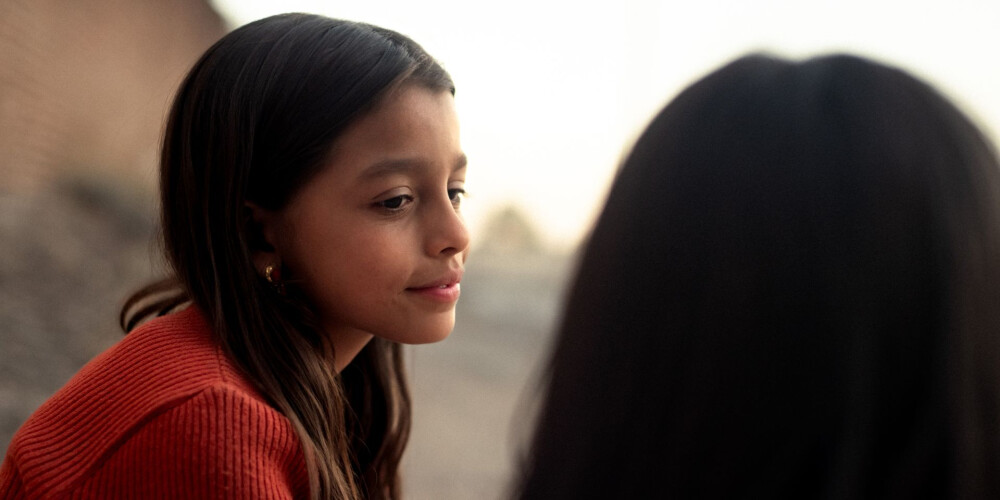
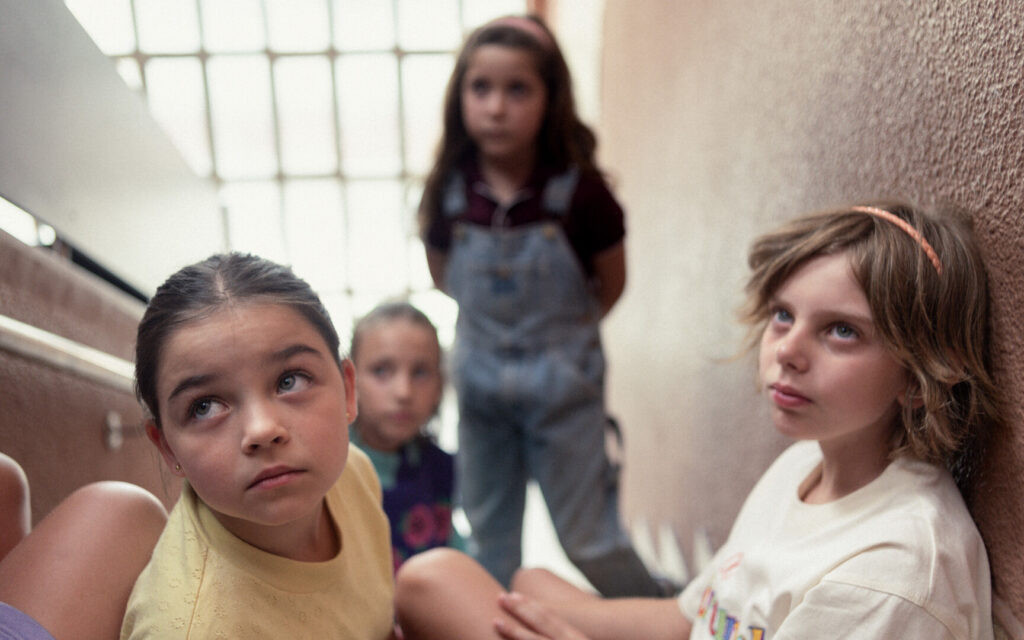

As innocent as they are, there is a strong and explicit femininity in the two girls, and you’re not afraid to show it.

Asensio: It was a battle! I wanted to show how innocent these girls are at this age, not even aware of their sexuality, but I had to make sure not to overexpose them. In a scene with Serezade, the Roma girl, dancing, with her skirt floating in the air, there is a moment when we catch a glimpse of her underwear. In the editing, the producers advised me to cut the scene earlier. Of course, their fear was valid, but somehow, it’s exactly that freedom that children have and that I wanted to show.

Like in the remarkable scene in which both girls see their reflections in the mirror splinters on the floor.

Asensio: Call it femininity, call it sexuality, call it self-discovery,… They are completely unaware of the underlying forces that are already emerging, which is beautiful. 

A text that Elena reads aloud to her grandmother adds an extra layer of meaning. 

Asensio: This poem by Spanish poet León Felipe questions all things we know, which are all invented by mankind. Stories were created and then written down. But basically, all the doctrines are only there to narrow our minds and our thinking. Felipe concludes I learned all of these stories, I fell asleep with them, but most of them sprouted from the fear of mankind.

The same can be said about religion. 

Asensio: All life’s bigger questions create anguish because we can’t answer them. All we have is faith, which often emerges from fear; a fear of realising that this is all there is, and basically, you’re alone in this world. Religion is there to guide you, and, perhaps, make you break with individualism and find some sort of comfort in belonging to a group, of which all members share the same beliefs. 

How does that character of the priest fit in? Does he represent the traditional religious authority? Something tells me that he’s not sure about his own beliefs. 

Asensio: He is inspired by a priest from my childhood. I remember his voice sounded like he had just been smoking. Why would a man who is married to God dye his hair? Where does this vanity come from? He must have some secret life behind closed doors. I told the actor Enrique Villén: You love rock and roll; straight from the church, you go home, you take off your cassock, and you blast some rock and roll on your stereo, you dance, and you play your electric guitar, and nobody knows about it. That’s your passion. Being a priest is your job, like a school teacher, and you want to make sure these kids pass the test. That’s your goal. 

Did you need to grow up in the Spanish tradition to tell this story?

Asensio: Elena’s feelings are universal, but the specificities are Spanish, indeed. The 80s in Spain were a period of transition, like an awakening in society that wanted to break with the censorship of its recent dictatorial past. There was something in the air; you could feel this freedom with artists and musicians, and with the people on the streets.  

News reports about a kidnapping help us to situate the era of the 1980s correctly; at the schoolyard, kids are playing ‘police versus terrorists’.

Asensio: The media coverage of a businessman being kidnapped by a terrorist group in my childhood affected the entire Spanish nation. We understood how the ransom was related to freedom and independence. I grew up next to a neighbourhood where many families lived from the military, and there was a threat of bombs regularly. I vividly remember as a kid walking by a car, thinking, Oh my god, I hope it doesn’t explode. 

The moment Elena runs away from home, she gains a different view of the world. Her gaze on small things changes, like a bucket of water or the sand under her feet.

Asensio: The way we see and perceive Elena’s world is exactly how she feels it. When she feels distant from her parents, the camera reflects that through their cut-off silhouettes, out of focus or distorted. When running away, she’s discovering the world by herself. Feeling a spiritual connection with her grandma, she remembers the poem, like a legacy that is being passed on to her. At that moment, we change the film’s aspect ratio to make it feel like everything expands in cinema scope! 

This seems to be the year of the goat… I’ve been asking directors remarkably often about goats. Now it’s your turn. Goats seem to have problems with authority.

Asensio: While writing the script, I imagined all those things that goats would do. But our goat did none of them! They are rebellious, but that’s what makes me sympathize with them. My star sign is Aries, the ram; we just go our own way, even if it’s completely irrational. I deliberately used the word ‘rebellious’; if I were to describe myself as ‘stubborn’, too many people would be taking credit. “Ana finally admitted she’s stubborn!” I’m a very passionate person, also as a filmmaker, which comes with a certain intensity.

Why did you need a voiceover? 

Asensio: It was at the very end of the editing process that I felt like there was something that I wanted to hit, and I didn’t know how. There was an insecurity about being able to get my personal, intimate story across. I tried an improvised voiceover at home, and up till today, I’m not fully sure if that was the right choice. At that moment, it gave me some peace and security that I did everything within my power to reach deeper and make the film as personal as possible. That’s why it’s my own voice that you hear.

That’s not so surprising, given your career as an actress.

Asensio: Acting was my first love, and I pursued it my whole life. Until I realised that this was no longer sufficient to express myself and feel fulfilled. Eight years ago, I wrote and directed my first feature film, and now I’ve made the second one. As an actress, you depend on what comes your way; if you are not among the lucky ones who are offered truly exciting roles, you end up being frustrated. I love acting in projects that I feel like belonging to. If those projects come my way, I’ll fully embrace and enjoy them; if they don’t come, that’s just fine, too. 

Gert Hermans

On behalf of the Filem’On Festival


Sylwia Szkiladz over AUTOKAR

“Duizenden bomen scheiden hen van elkaar”

Als Brussels festival is het heel bijzonder om AUTOKAR te vertonen, een geanimeerde kroniek over Poolse arbeidsmigratie naar Brussel in de jaren ’90. Een klein meisje stapt in Polen op een bus met België als bestemming. De bus lijkt zo groot, het kind nog zo klein en de reis duurt zo lang. Wanneer ze haar potlood kwijtraakt, brengt een zoektocht door de bus haar oog in oog met haar medepassagiers. Een jeugdherinnering krijgt vorm. Na de succesvolle première op de Berlinale kwam Sylwia Szkiladz haar film toelichten op een festival in de stad die inmiddels haar thuis is geworden.


Times have changed; what happens in your film is completely unthinkable nowadays: a child has to travel thousands of kilometres on her own, on a bus from Poland to Brussels. But it is your story, and that of many children like you.

Sylwia Szkiladz: I arrived in Belgium in the 90s, when Poland was not yet a member of the European Union. People came here without a plan, without papers, not knowing what kind of work they might find, which was both exciting and frightening at the same time. Part of my family lived in Poland, another part lived in Belgium; as a child, I constantly travelled back and forth. Such independence was not unusual among Polish children of my age. With my Polish classmates in Brussels, we didn’t even talk about it; it felt normal to us. Only when I grew older did I realise how unusual that situation was. It’s an experience that I share with many kids of my generation. 

If you wanted to take a “piece of home” with you, that happened through the food that you brought.

Szkiladz: My parents came from a rural region near Belarus, where people provided for their own livelihood. Moving to a new country without money or a home, the family wanted to ensure that there would at least be something to eat. I remember the bags and suitcases, bursting with food, and hard to carry; often, the handle broke off. The family sent us all that food not only because they thought we were starving in Belgium, but also so that we would think of them whenever we ate it. Through the food, they tried to be with us.

We, Belgians, thought you were coming here because this was the promised land. From the film, I understood this wasn’t the case. The promised land is where the heart is, and the only reason for coming here was money. 

Szkiladz: It is hard to understand the exact reasons behind such a bold decision; they were young and completely unaware of what life in the Western world was like. Money was certainly one factor. In Poland, people presumed that all Belgians lived well, and that we, as hard-working people, could aspire to the same. It was also partly out of curiosity. My parents were in their early twenties. For them, it was a way to discover a world they had never known.

There must have been a tremendous sense of nostalgia in this community.

Szkiladz: Nostalgia isn’t always a healthy driving force; at times, it kept me from moving forward. I felt as though I wasn’t fully living in the present. As an adult, I wanted to move on in life, while preserving what mattered from those experiences. That’s one of the things that pushed me to make this film.

What do all the people in the bus have in common?

Szkiladz: Only when seeing the finished film, I realised that all characters had lost something, – a family, a home, a language, a pencil,… – and each of them deals with it in its own way. 

And they are all animals!

Szkiladz: We are watching through the eyes of an eight-year-old girl, coming from a village, surrounded by forest. She has heard all the stories people tell about forest animals and takes them literally. Her head is full of them. When she is afraid or overwhelmed by the trip, she digs into her imagination, and naturally, all those half-human characters appear. In this way, Agata brings something from her world onto the bus. These anthropomorphisms helped me tell a story that is close to my own. I needed some distance; I didn’t want to portray the people I actually encountered during my many crossings. Drawing humans with expressive features can easily become overly caricatural. The anthropomorphic bodies helped me exaggerate the characters freely, using the world of fairy tales. I was able to draw quite naturally from the codes of the coming‐of‐age tales and the fantastical.

My house is following me, she says!

Szkiladz: She left her home behind, but the house is still there, and thousands of trees stand between them. That house in itself is like a story with no ending.

Agata’s face looks minimalistic, no more than a few stripes. How did you make her so expressive when you had so few elements to work with?

Szkiladz: Through the combination of explicit body language and naturalistic voices. Before we started working on the animation, we recorded the voices in Warsaw with Polish actors. We couldn’t predict how Belgian animators would correctly shape an inner world through a language they didn’t understand. Take, for example, the “bear” on the bus. The animator initially portrayed him as far too rude, almost violent. Yet we needed to feel his human warmth, his underlying concern. Throughout the animation process, we prioritised emotion over technical perfection. It made us feel connected to the characters in a raw, imperfect, perhaps more truthful way. 

Another interesting character is the she-wolf, who leaves the bus, wanders into the forest, and is later picked up again. What exactly is going on there? 

Szkiladz: That’s a typical question from the Western world. In Poland, everyone immediately understands what is happening in that border scene. We can assume she doesn’t have the proper papers, so she crosses the border on foot through the forest and is picked up again on the other side. We also understand that she isn’t a bad person. She introduces Agata to artistic creation, giving her the pencil and drawing with her. She is the only character who doesn’t speak; we can imagine she comes from even farther beyond Poland. What matters is how our perception changes throughout the story, even though she is initially presented as potentially unpleasant.

We also get to see how border controls were organised, with bribery and greedy border patrols.

Szkiladz: People sometimes tell me how the film gave them goose bumps, because it shows exactly how things were. Only a few years later, Poland joined the EU. Everything happened very quickly for us, and there was never enough time to emotionally process all these changes. These stories are rarely talked about; there is still a certain shame in speaking about them. People prefer to forget. It felt good to take the time to work on this sequence, but it was difficult for me to construct. I expected it to be easier.

You created a beautiful visual contrast between the sharply outlined characters and the more vague backgrounds.

Szkiladz: This contrast between bright, fluorescent colours and black and white reflects the way I remember Poland at that time. AUTOKAR was drawn digitally in TVPaint with Cintiq, a programme for hand‑drawn 2D animation. Together with the artist Noémie Marsily, we designed the backgrounds using Chinese ink on paper, sometimes very sharp, sometimes a bit watery, but always with a focus on textures. We scanned and painted them in TVPaint, using the same brush as for the characters, which creates a connection between both layers.

How would you summarise your artistic journey to date?

Szkiladz: I was born in Poland, in Sokolka, near the Belarusian border; this region continues to inspire me. I grew up in Brussels, I arrived here when I was eight, and studied Visual Arts at Saint‑Luc and Animation at La Cambre, where we were encouraged to submit our films to festivals. That was very enlightening: meeting people and observing how the industry works felt like an important part of my formation. In 2015, I did a young artist residency at Studio Folimage, where I made THE TEENY-WEENY FOX with Aline Quertain (also screened at Filem’On). For more than 12 years, I have been running animation workshops under the name “Les Films du Lapin Masqué” with a wide range of participants: children, teenagers, seniors, animation students, in festivals, homework schools, kindergartens, retirement homes, migrant centres, in Poland, Belgium, Morocco, France. This diversity of encounters has inspired me enormously. Those people have taught me how to tell stories quickly and collectively, with few resources. What matters most is the energy. I tried to bring that joy of creation into AUTOKAR, resisting the temptation to be too perfectionist. 

At Cinekid, AUTOKAR won the Best International Short Film Award!

Szkiladz: All this was so unexpected! Because the setting of the film is so deeply Polish, I wasn’t sure whether it would work internationally. After the Berlinale, we received a flood of festival invitations, and the film already won several awards. In the meantime, I am working on my next project, but I can’t say much about it yet. The only thing I can reveal is that it will be an animated feature co‑produced by Lithuania, France, and Belgium. The project is still in its early stages, but is off to a very promising start. 


Gert Hermans

Teresa Juksaar over BAA-BAA

“Wacht! Het komt!”


Mensen en dieren, opgesteld in geometrische constructies die aanleiding geven tot gesprekken die nooit plaatsvinden en quasi-ernstige observaties van komische toestanden. Als Esten inderdaad een voorliefde hebben voor droge humor, dan is BAA–BAA van Teresa Juksaar het ultieme en ronduit hilarische eerbetoon aan de Estse volksaard. Op bezoek op het Filem’On Festival lichtte de jonge regisseur haar opmerkelijke observaties toe.

Een gezin dat net is verhuisd naar een nieuwe flat in de stad, vindt een geit voor de deur: een onverwacht cadeau in het kader van een liefdadigheidsactie. Dit is het begin van een odyssee van man en geit, die samen door de stad trekken. In deze streng strikt geordende omgeving lijkt elk dier een anachronisme. Alleen de dochter van het gezin denkt daar anders over…

We wonder how dogs actually see the world; they see things differently than we do. Similarly, I wonder how you see the world because we’re looking at the same things, but what you depict in your film looks completely different from what I see. 

Teresa Juksaar: My grandmother was an abstract painter; her works were highly expressive. I like to think of my films as abstract with eccentric elements. I consider myself quite a melancholic person who needs colours and humour to survive life’s challenges. 

Trying to describe your film, I’d say that everything is normal, yet nothing is truly normal. Every conversation feels a bit awkward, with people standing in geometric constellations or just staring at each other.

Juksaar: I’m inspired by what I experience in life, so in some way, I’m depicting reality. This is how I experience my world. I love people and the weird and silly things they do in their everyday lives. There’s a lot of cruelty in this world, but I focus on the good and prefer to approach serious topics with a healthy sense of humour.

Even the dogs and cats in your film are behaving weirdly. And there were a lot of them! You had cats, goats, Rottweilers and bloodhounds on set.

Juksaar: I’d say that having animals interact with each other in an urban environment is rather strange, even though they’re just behaving as they normally would. The two Rottweilers were the hardest part of the animal directing. They wanted to go after the goat. We had to use a sort of cloth so the dogs couldn’t see the goats; otherwise, they would have lost control. We used green screen in that shot; it wasn’t possible to have all of them together in the same frame.

Which leads us to the true hero of the movie… The goat!

Juksaar: We cast two male goats, one year before the shoot. But when we returned to the farm one week before the start, they had simply grown too big. So the goats had to be recast. That’s when we found two female goats, Kuusi and Kola. We needed two because goats are herd animals, and we used whoever was more cooperative at that moment. They both looked very different, although nobody but me seemed to notice. 

Were your goats disciplined? 

Juksaar: With so many challenging elements, like the weather, children, a lot of extras, and several demanding locations, the goats for sure weren’t the hardest part. They behaved quite well; they pooped a lot though.

On command? 

Juksaar: No, that scene happened spontaneously; it wasn’t in the script. When I said ‘cut’, the DoP shouted: “Wait! It’s coming!” Then I saw what he meant.

The film shows a healthy interest in animal poo, regardless of all the ‘no shitting’ signboards, wherever you look.

Juksaar: I created an atmosphere of a place where nothing is allowed; signboards are everywhere. In a city deprived of green spaces, the goat is bringing a sense of ‘nature’, until you bump into all these restrictions, including a ban on dog and goat shit.

The entire city, with its urban architecture, breathes a strong sense of alienation. 

Juksaar: Jacques Tati was an inspiration, with all these grey, concrete buildings, and a total lack of greenery. I found a small district in Tallinn that reminded me of Tati’s PLAYTIME. It’s in the city center, but nobody seems to know it. So many Estonians asked me: Where did you find that place? The film evolves from grey to much greener in the end. 

Of all the intriguing minor characters that cross our path throughout the film, did you have one particular favourite? 

Juksaar: There are many. The bus driver is one of the most memorable characters. And I admired the group of Japanese tourists. It was fun to work with them; they knew exactly what to do. We made a bit of fun of Japanese tourist stereotypes – I hope they don’t mind.

Can you guess my favourite? The lady of the animal shelter! She asks for the zodiac sign of a goat, she has a pink computer, and she knows how to use the delete button!

Juksaar: She is a colourful character. She loves animals, but doesn’t really like humans; making contact with animals is much easier for her.

Did you buy a pink computer? 

Juksaar: We painted it. It also had a pink mouse with ears, which, unfortunately, isn’t visible in the frame.

The only person acting relatively normally is a little girl. Is she the only reasonable human being?

Juksaar: I wanted her to be loud, bluntly expressing her feelings, because all the other characters are quiet and stoic. They don’t express their feelings that much.

You mean the others are simply standard Estonians.

Juksaar: Yeah, right. We don’t say a word if it ain’t needed. 

Among all these silent people, great importance is given to the sound reel. How did sound contribute to the film’s alienating atmosphere? 

Juksaar: Creating the sound design was a hard task, because the film genre is undefined; it’s not classical drama, nor pure comedy… It’s a bit of both. Searching for the right auditory elements, we included many goat sounds. Listening back to the film, I probably noticed a few “baa’s” too many. We experimented with the sound designer for quite a while before we found the right tone for the film.

Would you recommend every family take in a goat?

Juksaar: If you don’t resist a goat to bring change into your life, it might lead you into new and surprising situations, and get you closer to nature. The world could become a better place if we all started giving goats as presents on different occasions, opening ourselves up to life’s changes, and learning to adapt to them. Personally, I’d like to give it a try. Life shouldn’t be taken too seriously, and I’m pretty sure goats would gladly contribute to that. 


Gert Hermans

Paul Galli over PEOPLE UNDER WATER

“Bij mijn zussen zijn was de essentie van opgroeien”


Claustrofobie in de open lucht, is dat een tegenstrijdigheid? Niet in de kortfilm PEOPLE UNDER WATER van de Duitse regisseur Paul Galli, die te gast was op het Filem’On Festival.

Twee zussen zitten samen met een zelfverzekerde klasgenoot vast op een houten platform in een meer. Op de kleine ruimte is er geen mogelijkheid om aan elkaar te ontsnappen. Gesprekken die ze al lang hebben ontweken, moeten nu eindelijk worden gevoerd. Dat doet hen beseffen hoe ver ze uit elkaar zijn gegroeid. Het begint allemaal met een tijdcapsule die de jongste zus, Lila, voor een schoolopdracht heeft samengesteld.

What would be in your time capsule?

Paul Galli: Those time capsules are not really a thing in German schools; I’ve only seen them in the movies. I would put in a gift from my sister. She had this little golden figurine of a pig. As a child, she never let me have it. When I went to South Korea for one year as an au pair, she gave it to me when I left. That was so generous!

What’s so special about sisters? 

Galli: I have two sisters; we’re a triplet. Being with sisters, for me, was the essence of growing up. We argued a lot as children, and we still have our quarrels now and then, but looking back on our relationship and how it has evolved, it’s so special to have had their presence throughout my entire life. My film is dedicated to them.

As the one brother in this three-person constellation, did you feel like the outsider?

Galli: I never did. It was never about sisters intentionally plotting against their brother. In fact, the sisterly bond in the film grew out of the relationship between actresses Joana and Sophia Taskiran. I worked with Joana before, and when she told me she had a younger sister who was also interested in acting, we wrote the script for them together.

With so many themes tackled, like sisterly love, depression, gender issues… what would be for you the overarching theme that is keeping all elements together?

Galli: The importance of talking to each other and not burying issues deep inside yourself.

Is that why the film is called PEOPLE UNDER WATER, while all meaningful conversations take place above water?

Galli: They never discuss what truly matters; everything stays bottled up and closed off until it all surfaces during the course of the film.

Which explains the intense silences in your film. I recognised different types: the silence of a lazy summer’s day, silence caused by alienation, by feeling embarrassed, or afraid, or angry. And a silence because you ran out of words to say to each other. 

Galli: Together with the scriptwriter, we combined all those types of silence. In the editing, we wanted to let the silence tell its own story, but perhaps I went a bit too far, especially for young people, who might not have the longest attention span. Honestly, I’m not sure if I made the film for young audiences in the first place.

Your story concentrates a lot of intensity in a very small space. How was it, being crammed onto that small platform?

Galli: What we in Germany would call a Kammerspiel, a chamber play. The platform wasn’t probably any bigger than three meters by three, surrounded by the vast water. When they were not in the shot, cast and crew were often swimming. We had paddle boards to go ashore, and two small, unstable boats for the crew to work from. They were connected to the platform, and we had to move them around to keep them out of the picture. Working with a small crew makes things more condensed; after every shot, we took no more than five minutes to prepare the next one. It helped that I had already worked with Joana Taskiran; she knew I was to be trusted, and the sisters were comfortable with one another.

That was no unnecessary luxury. On the platform were three girls, wearing little more than bathing suits.

Galli: We talked a lot with the actresses about comfort and safety, especially with Sophia. Having her sister with her was a great help. A big part of the team was women; a camerawoman might see and capture those scenes differently from a cameraman. 

In such a confined space, every movement becomes meaningful. Because you have so little room to manoeuvre, the few elements you do have take on great importance.

Galli: I give a lot of importance to preparation. I want most technical and cinematographic decisions to be made in advance so I can focus solely on the actors. With my core team – I like working with the same people – we lock the entire script before shooting begins, so that there are no more ambiguities. Every step is carefully planned and rehearsed in advance, not to restrict the actresses, but to create a stable framework they can rely on. This preparation allows them to let go on set, knowing the structure works, and to respond freely and intuitively in the moment.

Why this strong need to keep control? 

Galli: Our tight schedule was very much dependent on the weather. Actually, the film was supposed to be shot the previous summer. Then it started raining, and it never stopped, so we shot a completely different movie indoors. We met again this summer, with a year’s delay, and shot PEOPLE UNDER WATER. I’m happy we could finally make it!

The lighting is fantastic. You can feel the languor of a summer’s day, with lazy people lying underneath the sun. 

Galli: We only used natural light. That was partly a financial choice, but the sun also brings a different quality of light, which was perfect for the movie’s atmosphere. After last year’s experience, the weather made me extremely wary. We only had five days, and at the slightest disruption, we would have to call off the plan again. Every cloud in the sky made my tension rise. 


Gert Hermans

Mirjana Balogh over WISH YOU WERE EAR

“Moederborden en kabels maakten altijd deel uit van mijn leven”


Liefde en verliefdheid zijn lichamelijke sensaties, maar zo lichamelijk dat ze de vorm en de essentie van je lichaam veranderen? Dat is inderdaad het geval in de wereld zoals die door de Hongaarse regisseur Mirjana Balogh in haar kortfilm wordt geschetst. Veel explicieter dan in WISH YOU WERE EAR wordt het niet.


In een wereld waarin ex-partners na een breuk een lichaamsdeel met elkaar moeten uitwisselen, laat elke stukgelopen relatie een zichtbaar spoor achter: mensen verliezen niet enkel een stukje van zichzelf, maar dragen ook iets tastbaars van hun vroegere liefde met zich mee. Zelfs in een kille digitale wereld doet een breuk nog steeds evenveel pijn. Na de Crystal Bear Award voor de beste kortfilm op de Berlinale won Mirjana Baloghs reflectie op hoe relaties onze identiteit en ons zelfbeeld vormgeven ook de Nationale Loterij Award op het Filem’On Festival.

Did you make a science fiction movie?

Mirjana Balogh: I guess so. I love science fiction; I dreamed of doing something in that genre, involving machines that aren’t possible in our reality.

After the opening scene, I was surprised that the man turned out to be the main character. I was sure you were going to tell the girl’s story.

Balogh: You identify him as male? I intended to present them as a non-binary person. In the world they live in, it’s hard to tell any gender apart.

Come on, he looks ultra male. His tight suit sparks your fascination for his muscular structure, and he has a beard!

Balogh: That’s not a beard; that’s a chin! I wanted the character’s face and hair to be somewhere between male and female. In my mind, it was initially a man’s body, but by swapping all these body parts, he became more feminine, more fluent. But the protagonist is ashamed of his body and covers it up in clothes the whole time.

Mirjana Balogh

Perhaps I thought he was a man because he never smiles.

Balogh: Actually, there are a few hidden smiles that you might not have noticed. But in general, the character refuses to smile. Their way of life is rather depressing; there’s not a lot to smile about.

Are you reducing humans to one single body part?

Balogh: Not at all. What I’m trying to make clear is that you carry all your relationships with you, literally, and those body parts symbolise how they shaped you as an individual. Every relationship changes us in some way. I wanted to capture how we can – or cannot – accept these changes. Some people see this transformation as a loss, while others feel that it has become an integral part of who they are. I’ve always been intrigued by how this happens. Even if I spend a week in someone’s company, I notice certain things that I copy in my speech or in my gestures. Isn’t that fascinating? And that goes even more when you’ve been in a relationship with someone. When couples break up, a lot of the other person remains within you. The exact extent of those changes has always fascinated me.

The bodies in your film are very concrete. But you show the heart both anatomically, as an organ that is cut in two, and symbolically. There are a lot of hearts in the film, and often they are more than just a physical thing.

Balogh: In the arena of relationships and breakups, the heart is the most obvious symbol; I don’t know which other shape could have been more appropriate. It also recurs in certain objects: a telephone, a robot, etc. This makes them more specific and meaningful in this phase of the characters’ lives.

Characters are often watching their own reflection. What do these people see when they look in the mirror?

Balogh: The main character, watching his reflection on the floor, was the first image I had in mind when I started this project. This picture tells the entire story and reminds me of Narcissus, who was always staring at his reflection, because that was what he loved most. When my protagonists look in the mirror, they don’t see their current selves; they see themselves the way they used to be, their original version for which they’re still longing.

Your focus is on the characters, but there are a few locations I’d like to know more about. What about the design of the city?

Balogh: It looks a bit futuristic, but not too much. It’s not a total sci-fi environment. Everywhere I go, I’m taking photos. For this film, I went through my collection and chose the ones I found most appropriate.

There’s an interesting place for recreation. What is it? A hobby club for ceramists?

Balogh: Exactly. I wanted to create a place where people could physically engage in handicrafts, contrasting with the perfect, streamlined body sculptures in the museum. If you are looking for relaxation in this over-organised society, it has to be organised in some way. A hobby club, in other words. In this case, for potters.

Some of the artworks in the museum are clearly recognisable.

Balogh: I wanted it to feel like a familiar place. That’s why there’s a painting by Matisse, for example. The entire world had to feel recognisable, but not completely; this margin of alienation makes it differ a bit from what we’re used to.

And there’s a discotheque, or at least a place where they dance… in a sensual, futuristic way. What happens there is more than just dancing

Balogh: In an earlier version, they went on a classic dinner date, which didn’t work at all. My editor, Judit Czakó, urged me to take a different approach. Dancing was an obvious solution, showing them moving closer and meeting each other. Technically, I found this part particularly challenging. I’m a terrible dancer myself, so I watched lots of dance videos, and I owe a lot to my superb animator, Luca Tóth, who completed the entire scene. She was the first person who came to my mind when I considered the dance, and she’s the one who finally did it.

You have an interesting fascination for technical processes, computer programmes, calculators, and transplantation machines. What does that tell us about you?

Balogh: My grandfather was an electrician, my father teaches physics, and I grew up with a collection of computers in the attic. Motherboards and wires were always a part of my life, and they stayed with me. Up till today, when I see an intriguing machine or some cool device, I take a photo. I’m not particularly good with machines, I just like the way they look.

There needed to be a pet. Can I call it a dog?

Balogh: It is a dog. I felt like the protagonist needed something to make him more human. He never smiles, he can’t enjoy music, so the least I could offer him was a pet. This dog has also gone through multiple breakups. In my first script, there were many scenes of the dog looking at a female dog. I loved those scenes, but I was told they were too funny, so I deleted them. What I kept were the dog’s legs in different colours; maybe then people will understand what happened. Sometimes I hear a bit of chuckling in the audience. The dog brings some relief; the film needed a dog so that it wouldn’t be too depressing.

If there is any humor to be found in the film, it’s in the first place in the title.

Balogh: Finding a title was one of my biggest challenges. I’m not very good with words, and all the super serious titles I could come up with didn’t fit the film. I adore puns, and I simply couldn’t find one, sitting at home, brooding. Until I googled ‘Ear puns’, and ended up with a hundred possible perfect titles. My father loves Pink Floyd – of course, he is a science teacher – and he was disappointed when I confessed that I hadn’t named the film after the Pink Floyd song.

You did some Q&As. Were there questions that surprised you?

Balogh: Many! The most confronting moment was at the Sarajevo Film Festival. One guy was saying how much it felt as if the movie was about him. Then he turned his head, showing me one extremely big ear. It was huge! I didn’t know what to say.

You’re a product of the Moholy-Nagy University of Art and Design in Budapest, more precisely of the so-called MOME-Anim programme. Does WISH YOU WERE EAR fit the MOME-Anim tradition?

Balogh: I strongly disagree with people saying that every MOME-Anim film is the same. For me, they’re all different and unique, and I hope that my film fits in there somewhere. The film was produced by MOME with the involvement of numerous current and former students, and is promoted by MOME’s Film Knowledge Hub. You can really call this a MOME-Anim film. I love MOME-Anim!

2025 was the year of Hungarian animation! And MOME-Anim is probably one of the reasons for this revival.

Balogh: I think so. Most people working in Hungarian animation were MOME students at some point. It’s a very important place! The people teaching there are also animation artists. They themselves come from MOME-Anim, and then they go back there, creating a beautiful circle.

Your biggest personal success came at the Berlinale, where you won the Crystal Bear in the Generation+ section. What happened there?

Balogh: It was so unreal. I still can’t believe it; it’s just the craziest thing that ever happened to me, and it was hard to comprehend what was going on. I had my hotel breakfast while Michel Gondry was sitting at the table next to me. It went on for a whole week, and I had no idea what I was doing there.


Gert Hermans


Annette Saugestad Helland over THE RUMBLE-BUMBLE RALLY

“Het deeg en de cake opeten!”


Wist je dat een woonkamer ook een racebaan kan zijn? Papa vraagt Mathilde om haar speelgoed op te ruimen. Voor Mathilde en haar twee ingebeelde vriendjes is dit het startsein voor een opruimrace. Autootjes razen door de kamer en onder de bank, totdat duidelijk wordt dat vader en dochter er verschillende opvattingen op nahouden over opruimen… en dus ook over het leven.

THE RUMBLE-BUMBLE RALLY has a charming small-scale vibe, but technically, it accomplishes a remarkable feat by blending animation and live action smoothly. Secretly, the Norwegian Mikrofilm hopes to bring the Rumble-Bumble universe to the big screen someday, with the help of both directors, Annette Saugestad Helland and Johan Kaos, one of whom presented her work at the Filem’On Festival in Brussels.

My first question is a personal one… Do you agree that the dough is better than the cake? 

Annette Saugestad Helland: Yes! I totally agree with our main character. As a kid, you’re sort of not allowed to eat the dough because some say it can cause a stomachache. But not being allowed is part of the pleasure.

You consequently use a child’s point of view. At several moments in the film, I clearly realised: this is how a child would see things.

Saugestad Helland: Indeed, both in the story and in its visualisation. We asked ourselves all the time how children would view certain situations and tried to come up with visual solutions on how they would use their imagination. That playful approach came with technical consequences; it’s a challenge to blend live-action and animation into one credible universe, but this visual mixture of reality and fantasy is quite close to how I imagine children play.

These differing perspectives also form the basis of this story.

Saugestad Helland: From the father’s perspective, the house should be clean and tidy to welcome guests. But the kids don’t care if it’s messy; they just think about the fun they could have with all those toys. This causes a clash of perspectives. Both co-director Johan Kaos and I are familiar with the pressure on young parents to strive for perfection at all times. We wanted to oppose that. However, I sympathise with the father in the film. It is not easy to impose things on a child, but he tries his best in a friendly tone.

Matilda says: Being the first one is not important. Then what is? 

Saugestad Helland: Eating the cake and the dough! To children, it is more important that parents take the time to sit and play with them, and to feel accepted and have fun together.

Was safety in traffic ever an issue? 

Saugestad Helland: On the contrary! In this make-believe world, it was fun to indulge in irresponsible driving with toy cars. We recorded the live-action part over one week; the 15 crew members all seemed to be into cars. Nothing excited them more than making them crash; the little boy inside them blossomed! They all stood around filming with their mobile phones.

You didn’t make it easy on yourself, combining all those different techniques: Stop motion, cut-out, drawing, live-action etc.

Saugestad Helland: When blending a drawn world and a real world, that sparks the imagination. But it’s also like making two separate movies and then mixing them.

Making two movies is double the work!

Saugestad Helland: I was in charge of the animation part, while Johan was mainly working on the live-action. With the actors, everything had to be done on a small budget, as fast as possible. Whereas for the animation, the work ethics were quite the opposite. You could use a whole day to animate the whiskers of a little rabbit. Merging those two methods into one film caused a maximum amount of complications, but it was worth it. 

In the animated drawing, the landscape changes in an instant, as cars pass by. All of a sudden, flowers and trees are popping up. What was the logic behind that? 

Saugestad Helland: No logic! It’s just playing, in an attempt to visualise a child’s imagination, which is somehow an impossible thing to do. As a starting point, I had a few ideas of what could spark a child’s imagination. We chose an idea where we fantasised about what it looks like under the sofa in a house where children live, which can be relatable for parents too.

Did you research that?

Saugestad Helland: Unavoidably. I have one small child (and two older ones), Johan has two, but the chaos is similar. When it came to the practical side, we didn’t have enough space for the camera under a real sofa, so we had to recreate that environment in a studio, which felt a bit surreal. We collected potato chips, crumbs, and objects that seemed a bit scary at first glance, to create this imaginary world. We got help from a model-maker, who constructed the car models, and made a model for a piece of old bread, with an extra layer of green on top for the mould.

The character design is indeterminate and genderless. I think one is a rabbit, but I’m not even sure. 

Saugestad Helland: I often work with children in animation workshops, where they design imaginary creatures by combining different animals. That is where these characters originated. They are Mathilde´s imaginary friends, and therefore, have to look a bit quirky.

What you did with the lighting was amazing. Despite the darkness under the sofa, you combine real light, studio lighting, and animated light. Your lighting schedule must have looked incredibly complex. 

Saugestad Helland: We used a significant amount of Christmas lights, which created the perfect atmosphere on camera. We had an excellent photographer, and there was Konrad Hjemli, who had the task of composing the animated and studio lights, sitting for long hours on this precision work. He was our hero. People were constantly lugging Christmas lights around the set, and then he skillfully had to erase their hands from the picture.

Those car wheels spinning uselessly on the edge of the couch look super realistic.

Saugestad Helland: We used an extra set of wheels that we retrofitted in the editing process to create some extra spin. It seemed as if we were making a car chase movie for children. Co-director Johan Kaos was in charge of moving the cars. He had the best week of his life; he was so much into it. 

Do you have a favourite car chase movie?

Saugestad Helland: That would be THE PINCHCLIFFE GRAND PRIX, a Norwegian children’s classic from 1975 by Ivo Caprino. I just love that film!

Your producers were Tonje Skar Reiersen and Lise Fearnley from Mikrofilm

Saugestad Helland: This film could never have been made without them. 10 years ago, I made a film, set in this Rumble Bumble world, MORNINGBIRD AND MURMELTON ON WINTER HOLIDAY. Tonje was willing to descend into that universe with me once again. Now, there might be plans for a feature Rumble Bumble movie. We received development support from the Norwegian Film Institute. Did you know that in the opening scene, when father is baking a cake according to a recipe from the radio, it’s Tonje’s voice that you hear? She is the film’s heroine in so many ways!


Gert Hermans

Piret Sigus & Silja Saarepuu over ROBOT LEO

“Ik was verrast toen een bezoeker het een rommelboel noemde”


Een metalen fietsband die ontploft als hij over een spijker rijdt… Dat vinden we onweerstaanbaar grappig! Het kwetsbare uiterlijk van het hoofdpersonage, de laconieke soundtrack, het consequente gebruik van metaal in het hele design van de film… Die elementen maken ROBOT LEO tot een waardige ambassadeur voor Estland, waar droge observaties en onderkoelde reacties de norm zijn. Hetzelfde kan gezegd worden over de twee regisseurs, de onverstoorbare zussen Silja Saarepuu en Piret Sigus, ook bekend als Animailm Studio.

Leo de Robot woont samen met zijn kat in een gezellig, roestig huisje. Op een dag verwacht hij bezoek van Lilleliisu. Leo wil een goede indruk maken – de tafel moet netjes worden gedekt. Maar hoe dichter het grote moment nadert, hoe zenuwachtiger Leo wordt.

Leo is a metal robot, but does he have a personality, an identity of his own? 

Silja Saarepuu: He is a bachelor, sharing his house with a cat. We have two bachelor friends who are always inventing and repairing stuff. Leo is modeled after them. 

Piret Sigus: Leo’s house is designed after their houses, full of stuff and loose parts, waiting to be used one day. We compressed those two characters into one Leo. 

But the first inspiration was a children’s book.  

Saarepuu: ROBOT LEO’S SPECIAL DAY by author and illustrator Pusa is a lovely book for children who are learning to read. Pusa allowed us total freedom; she was happy that we brought her creation to life, with a slightly extended narrative. The book is also the reason why we have two versions of the film: with and without a narrator’s voice.  


Why would you need a narrator? It’s not going to get even funnier than it already is. 

Sigus: We believe that the film works better with a narrator who reads the original verses from the book in a warm, grandfatherly tone. But some festivals prefer the version without, to overcome language barriers. 

Did you work exclusively with metal? Or did you sometimes trick the audience? 

Sigus: Analogue robots are made out of metal – that’s crucial! Even the cat is made of a wire spring, covered with textile, and the trees are made out of nails. We cheated a tiny bit with the backgrounds; some smaller trees are made of hot glue. 

Saarepuu: We only used a green screen for one scene, and for the title and end credits. “Handcrafted in every detail” is Animailm’s motto. In our previous productions, we used fine textile techniques, like embroidery. This time, we were crafting metal. 

How to animate such non-flexible material, and still make it look very much alive? 

Sigus: You can animate with simply everything; didn’t you realise that? We work on the glass surface of a multiplane table, and I was worried the metal would scratch the glass, but we saved it with the use of velvet and paper. 

Saarepuu: And with the help of Marilli Sokk, our excellent animator, who set all the different elements in motion. 

Leo’s legs seem to be endless. 

Saarepuu: To make the legs flexible, we constructed little pieces, like shells, that you can stack on top of each other. We had so many loose shells that we could extend those legs endlessly. Like in the shot in which Leo grows all the way till the attic of the house, while the cat is watching down upon him. We called that our DIE HARD shot; Leo rises upward like Bruce Willis in the iconic ventilation shaft scene. 

What about his eyes? How to put an expression in that dead material? 

Saarepuu: Leo has a wire spring attached to the back of his head, which makes his eyes move simultaneously. We could even open and close them. 

Sigus: When Leo is surprised, his pupils grow bigger. They are like little bowls; the more surprised he is, the bigger the bowls. We worked the same way with his mouth, which is like a little radiator.  

I was especially fascinated by the objects that, in reality, would never be made of metal: a bicycle tire, a balloon, laundry, etc.  

Sigus: We conducted numerous tests to identify the most suitable materials. The balloon was one of the most difficult searches. The outline is made of metal, but we strung balloon fabric over it. If you look closely, you can see that it is slightly transparent. 

Saarepuu: Leo is hanging the laundry out to dry as his way of cleaning the house. He wants to find his most beautiful tablecloth – I suppose he washed them first. His entire house is filled with small tables. 

That involved a great deal of welding work. Was that done by one of the bachelors Leo was based on? 

Sigus: They were too clumsy for such a meticulous task. We had to bring in a third bachelor. Saarepuu: Just before making the film, he bought himself a micro welding machine. The film was his ultimate practice to find out how the machine worked. He welded hearts on the cups in several stages, with the heart growing bigger each time.  

Leo lives in a house with the stairs on the outside  

Sigus: For the cat! Leo doesn’t need stairs. 

Saarepuu: It looks a lot like the houses of one of those bachelors. I also remembered an image I saw in Romania. There were two wealthy neighbours; one house had four roofs, and his next-door neighbour had five. I suspect that they were competing with each other. 

The presence of metal also affects the sound. 

Sigus: We gathered all the metal objects in our sound studio and rattled them in front of the microphone. We recorded all that clamour and picked the best results. For instance, when Leo is coming up fast, we used the sound of an old-fashioned drill machine. 

A merry ‘poing poing poing’ sound lends Lilleliisu her particularly cheerful character. 

Saarepuu: In the bachelors’ workshops, we found a metal string that created this festive noise. We also used a mouth harp – our composer Ramo has this ability to make music with just anything! It makes Lilleliisu look very shiny – the sounds add a bit of spice to her joyfulness, though she looks also happy in silent mode. 

How should I imagine your studio, both during and after this movie? 

Sigus: It’s a place where people work; it’s not like an office. It looked very normal to us, with metal pieces and scrap lying around everywhere. We still haven’t found the time to clean it up. 

Saarepuu: It looks a bit like Leo’s house itself. I was surprised when a visitor called it a mess. It doesn’t look like that to us. 

Your last film, THE TURNIP, was made in an underground studio. 

Sigus: In a small basement under my garage. My family wasn’t too happy about it; they had had enough of all those people coming and going every day to work on our film. We moved the studio out to a bigger and more expensive place. The more space you have, the more mess you can throw around, but there is nobody to complain about it. 


Gert Hermans 


Leif Lindblom about THE PINCHERS’ HIGH VOLTAGE HEIST

“The norm in society but the odd one in the family”


The Pinchers are a good-hearted family of thieves. At the urging of their son Ture, the family is trying to turn their lives around – become honest and abide by the law. But living an honest life can be so boring, and things get complicated when Ture is falsely accused of stealing a dog. Pursued by a suspicious policeman and scary twins, the Pinchers wonder if they should make one final move. Swedish director Leif Lindblom – who based his film on a popular series of children’s books – was a guest at the Filem’On Festival. In his director’s statement, he claims that “in a somewhat upside-down world, we twist and turn moral concepts, and look at them from another angle.”


Leif Lindblom: In Sweden, every year in early December, a new TV-series starts; one episode per day, all the way up til Christmas. It’s a popular family thing. One day the Pinchers’ books were sent to me for that series, and it got me hooked immediately. Anders Sparrin’s script was so clear and transparent. He has a strong intuitive feeling for cinema. When he found out that I have a background in moral philosophy, he was like: “maybe I should study some of that too…” Because he wrote the script, not even thinking about moral dilemmas, but solely focusing on the storytelling.


His story puts the world kind of upside down.

Leif Lindblom: The Pinchers are a criminal family, that’s in their nature. But in their view, there’s good thieves and bad thieves. That’s why Ma Pincher calls the dog-kidnapper “not like us, she’s bad.” They don’t steal directly from people. If you’re stealing a tiara from Farah Diba, the wife of the former shah of Persia – who amassed his wealth at the expense of his citizens – then it’s hard to say who you are stealing from. Breaking with their life of thievery, would make them feel miserable. This is how they have lived for generations. 


Did this ever provoke reactions from the audience?

Lindblom: The Swedish television warned us to be prepared. Prime time television usually raises some critics, but there were almost none. One woman wrote a newspaper essay, comparing the series with the New Testament. And she was deadly serious. Probably the audience understood that the Pinchers aren’t bad people, they don’t harm anybody, they don’t steal personal belongings. Except father Pincher stealing the policeman’s morning paper every day.


Can I compliment you for naming that man… Paul Isman?! The Pinchers’ son Ture doesn’t like the family’s way of living. He wants them to live an honest life.

Lindblom: Ture assumes he always acts correctly. He doesn’t lie, he doesn’t steal… But even his morals are tested when the life of his best friend – the dog – is at stake. Ture is the norm in society but the odd one in the family. He does what society considers morally correct. The family, on the other hand, breaks the laws, but they’re trying hard to become better persons. They go into group therapy to learn how to go against their nature. Ture’s little sister feels sick, simply because she can’t steal. 


That’s where your background as a former student of Moral Philosophy comes in.

Lindblom: Ture’s sister tells him: sometimes you have to do things that seem wrong at the time, but are actually right. That is the big lesson for Ture to learn. He feels secured by what society dictates, without further questions. But morals can change, and right or wrong are not always that obvious. You also have to reflect on yourself. Otherwise we’ll end up in a dangerous society.


I suppose the film’s art design originates from the books, playing around with traditional crime fantasies. But for the movie and TV-series, you had to create a physical version of it.

Lindblom: The story is set in 2024, but I imagined a scenery from the late 60s, early 70s, as if the world had taken a different, alternate path somewhere back in time, with criminals committing only harmless crimes. Their striped costumes are like casual versions of prison suits. Most of the time the actors were freezing their ass off because the story is set in summer, but we filmed in winter time. And there are no mobile phones, because that would change the entire conflict. That felt very liberating. 


Regardless of their criminal nature, the Pinchers’ house radiates a warm and cosy family atmosphere.

Lindblom: If you’d take a closer look, you’ll see that objects don’t match. Because it’s all stolen goods. All houses in that neighbourhood look the same, and the Pinchers live a similar kind of life… with a slightly different lifestyle. 


What is your personal background in crime?

Lindblom: I grew up in a town that had the highest crime rate in the entire country.


Due to you? 

Lindblom: No! In the early seventies, the neighbourhood was a notorious crime hotspot, and it still is. But the violence nowadays has escalated completely. When a gang cannot kill a rival in a gunfight, they go to his house and kill his mother and sister. Sweden has the highest rate of gun violence in Europe. THE PINCHERS reflects on morality, but today in crime, all moral boundaries are blurred. 


Where do those creepy twins come from?

Lindblom: In the casting, these two came and took their moment. When they were acting out how to push someone down the stairs, I was laughing out loud. That’s a sign that it works. I found inspiration for these unsettling characters in my favourite horror movie, THE SHINING. I’ve put a lot of Stephen King into this film. Like the balloon. It was so obvious for me it should be red!


It all adds to the film’s absurdist comic tone.

Lindblom: When doing comedy, you always think you can do better. Because you can not rationally explain what makes a scene funny. Sometimes you can feel it, but then you don’t know exactly how you got there. For me the recipe is to tone it down. You have to convince the actors to play straight-forward, as grounded as possible. Don’t try to act funny. 


Was that also your advice for the dog?

Lindblom: The trainer promised to prepare the dog for all required scenes. And she did. But once we started filming, with the crew standing around, the dog just looked at us, wondering why it suddenly got quiet on set and why there was this strange tension in the room. I was like: Who does he think he is? Marlon Brando, grinning into the camera? There were many tricks that he refused to perform, and we never managed to capture them on film. Moreover, he had a very strong bite. Every time he took an object in his mouth, it broke. Even the rat did everything right, because rats simply don’t care, but dogs… 


Jef De Bock

Ineke Houtman about THE BOOK OF EVERYTHING

“My father shook hands with his sons”


Usually, life is exuberantly celebrated in Ineke Houtman’s films (MADELIEF, POLLEKE). But in THE BOOK OF EVERYTHING that seems a difficult challenge, with a father who understands every sign of joy and cheerfulness as an act of rebellion against God’s omnipotence. Religion serves to keep people in line, harshly if necessary. That applies to Thomas, whose imaginative mind does not necessarily always drift towards God. And for his mother, whose small bursts of independence are punished with physical force. In the name of faith.


Even the design of THE BOOK OF EVERYTHING – presented at Filem’On by director Ineke Houtman – is shackled by strictness: colourless interiors, rigid frames… like the faces of the statues, sternly overlooking the road to church. Thomas needs help to rebel against father’s strict religious regime: from a colourful neighbour, a loquacious aunt, and even from Jesus – “Just call me Jesus” – himself. They give Thomas comfort when taking a beating or when mother has another black eye. Thomas knows what he wants, to be happy. And happiness starts with not being afraid anymore.


What does religion mean to children today? Can they still connect with it?

Ineke Houtman: The film is not primarily about religion, but about any form of extremist thinking and how to rebel against it. That is recognisable. I noticed it at the screening in Giffoni, in a region that is still very religious. When Thomas said ‘no’ to his father, a standing ovation followed, because he dared to confront someone more powerful than himself. His father talks all the time about Exodus and the plagues of Egypt, and with his imagination, Thomas puts them into practice to thwart him.


What are male issues?

Houtman: Huh?


This is what the father says to his son: ‘Come to me if you have any male issues.’

Houtman: It’s all about hormones and sexuality. Religion can be used to preserve the established order and keep men on their pedestal – securing your place atop the monkey rock. But nature and love are stronger than anything else. Which you see at the end, in the way Thomas’ mother is able to forgive her husband.


Already in the opening scene you depict dad as an unpleasant man, with an authoritarian tone of voice.

Houtman: You immediately feel the intense atmosphere in this house where one man decides everything and where you have to be constantly on guard. A permanent threat hangs over this family, because something unpredictable can always happen. And above all, there is shame – which is why women and children in an abusive household often find it so difficult to talk about it.


The role is played by Daan Schuurmans, who has portrayed such gentle, sympathetic characters in films such as BONKERS and POLLEKE.

Houtman: Daan is such a sweet man. He found it difficult to play this role and to show the film to his children. He himself is very cuddly. At the end of the film, father shakes his son’s hand; Daan would have preferred a hug, but I didn’t let him. His character is not that far along yet, and this was not the right era for it. My father shook hands with his sons, while daughters were allowed a kiss. That was how things were in those days.


Mum, though very sweet, does little to protect her children.

Houtman: She is submissive to her husband; her protest is sneaky and passive. Her son is allowed to visit the neighbour, as long as father doesn’t find out. She calls Thomas her ‘little hero’ but she herself does nothing heroic. She allows herself to be beaten! Only at the end does she tell her daughter Margot how sorry she is. She doesn’t realise how much she is protecting her husband… until Auntie Pie confronts her with reality. Then a new realisation grows in her. Suddenly father feels: I should watch out or I will lose my wife and kids.


How do brother and sister relate in such circumstances?

Houtman: Margot doesn’t take her little brother seriously; she’s a bit of a bully, punching and pushing… She’s quite a fierce child and in this she resembles her father. She says: I dare to stand up to you because I am like you. She is the only one for whom father shows respect. He does not hit her even when she disrupts prayer.


The pastor talks about ‘we wretched sinners’. That was the idiom of the church?

Houtman. ‘Good Lord, deliver us miserable sinners.’ When you are addressed like that, what are you worth still? The language of Calvinism, of which the Netherlands is heavily steeped, is humbling to mankind and is about shame, guilt, sin and honour.


Jesus sometimes seeks out Thomas in his room and addresses him in a high-pitched voice.

Houtman: A double role for Sallie Harmsen, who plays both mum and Jesus. Thomas adores his mother. She has an artistic spirit, she likes to laugh and sing,… which Thomas recognises in himself. All Thomas’s fantasies are rooted in reality, so Jesus is given the face of someone he loves, and who, like Jesus, is sacrificed. Jesus is his companion. You cannot deny that the man has said a lot of meaningful things.


What divine image speaks from that strange statue you sometimes picture?

Houtman: In the 1920s, Amsterdam-South was developed by architect Hendrik Berlage. Sculptor Hildo Krop made a series of statues that matched that sleek design and fit our story perfectly. That rigid statue of a father and child expresses a very different ideal of parenting than we are used to today. Did you see there is a similar statue at Heaven’s Gate? That creates a visual rhyme, grafted onto that rigid design.


Every few years you make a wonderful film for children, but one like this we hadn’t seen from you before. How does THE BOOK OF EVERYTHING fit into your oeuvre? 

Houtman: I love this film immensely because it’s about my childhood, about getting away from an authoritarian father and a strict family. When I was 10 years old, my brother died. The film shows the atmosphere at our house – so much pain and tension. Sometimes I would run to the toilet, just to escape from that constriction for a moment. That pain had to get out. Now that has been done, I feel a lot better.


As much of a relief as when the window at Thomas’ house is finally opened!

Houtman: Getting some air! I loved my parents dearly, but their life revolved around their grief. They never asked how it was for us – that was too painful to address. You can’t silence a life that was once there, can you? Shouldn’t it be respected and celebrated? As Ms Van Amersfoort says: it doesn’t all have to make sense. The meaning of religion is that you do it for God. Then you die and have to answer for Him. The meaning of life is that you enjoy what is in it.


The notion that you can enjoy things of beauty is completely new to them. Because ‘happiness is just for idlers and slackers’.

Houtman: From the author Guus Kuijer comes the idea that ‘happiness doesn’t hurt because you get used to it’. But it can take a long time to acknowledge and allow happiness. I am so happy to be adapting the work of a great master like him. Both his lightness and heaviness are standing close to me


That contrast is also in the music of Latvian composer Karlis Auzans, which is often very quiet and minimal.

Houtman: That man is so good! Karlis had written music for a Frankenstein opera, and we reused many passages from it. But because I want everything to be just right, we adapted the lyrics, based on Exodus. Those texts were unravelled by a professor of Latin-Greek, with an eye for all details. Very complex stuff, but fascinating to delve into together with an expert, striving for ultimate precision. No one will notice, but hopefully the audience will feel that great care was taken in all details.


The soundtrack almost inevitably draws on the religious repertoire.

Houtman: We had a house organ in the interior. Such a harmonium was allowed by the church, to accompany yourself when singing psalms. At my request, Karlis Auzans added a few passages for harmonium. I could ask him anything: a menacing cello, an instrument that sounded like frogs… A few minutes later, he then sent me the result. For the sound palette, we always started from the content. We had little to play with because of the rigid tone, so we tried to make the most of every opportunity.


So is the limited colour palette: for most of the film, we find ourselves in a sterile interior. How to tackle that as a filmmaker?

Houtman: With a lot of beige. The three interiors – the houses of Thomas, Mrs Van Amersfoort, and the opposite neighbours – were shot on the same set, but decorated differently each time: very strict, lavish, and modern, respectively. We filmed in a studio in Latvia and there was a budget to bring over one truck with equipment from the Netherlands – 2.5 days on the road. With that stuff, we did the set dressing. The street view is the only lively thing in this house. There is nothing cosy at all; apart from the aquarium and the curtains, everything looks equally Spartan. This is why we make Thomas’ imagination so big – because there is so little, his thoughts are magnified beyond measure. But gradually there comes more colour to the film; at the final party there is even a pink cake.


The film is set in 1961?

Houtman: The era of great change. Mankind went into space in a rocket for the first time and suddenly came close to God – God’s territory was taken by science. Rock ‘n’ roll cautiously peeked around the corner, as you see in that TV clip. Good rock ‘n’ roll, moreover, from the Tielman Brothers, Indonesian guys living in the Netherlands; a wild bunch inspired by Elvis. That was the image of those times.


But you don’t make it into a period piece. 

Houtman: There wasn’t enough room for that in that truck. But I did think about it. I wanted to invest more in that historical art design, to create a modern abstraction, like Tati did. But there are already a lot of period elements included.


Like a dip pen!

Houtman: I learned to write with that!


Gert Hermans

Mari Monrad Vistven about TODD & SUPER-STELLA

“We’re sort of a ‘low expectations family”


Walking with guests at the Filem’On festival, I hear them talking about the teenage boy who walks with us. How charming he is, and so nice to his mother, and so thoughtful. None of them recognise in him the little boy who, in the Norwegian documentary TODD & SUPER-STELLA, directed by his mother Mari Monrad Vistven, is so unutterably happy because he is going to get a cat. The film follows Todd and his sister Stella for five years. Stella hates things she can’t do. It doesn’t help that big brother Todd can do everything. Todd runs the slowest of the boys in his class, so he loves winning against Stella. Sometimes he dreams of selling her. “I used to fight all the time with my sisters,” says Mari Monrad Vistven, “but now we’re best friends.”


When meeting someone for the first time, do you try to guess their place among the order of siblings?

Mari Monrad Vistven: I sometimes do. I find siblinghood an interesting phenomenon. My mom is married to a single child. Whenever they have an argument, she says: it’s because you’re a single child.


How would you describe the film’s main theme? 

Monrad Vistven: TODD & SUPER-STELLA is a portrait of childhood and the things you have to go through when getting older. And it’s about siblinghood, growing up with someone who’s younger or older than you. You can’t escape from it for the rest of your life, and being born into it, you might easily take up that role. Like Stella deciding to be a cry-baby, or Todd taking up the role of being the smart kid, the one who can fix things. But when he meets his older cousins, all of a sudden he doesn’t seem that smart anymore. The film is taking small everyday-life challenges seriously, and is an alternative to fantasy films about superheroes.


What’s your position? 

Monrad Vistven: We are three, and I am the middle one.


Which made you the noisy one?

Monrad Vistven: You have to be noisy to get noticed… and that’s exactly what I did. The older sister is always number one – “Oh, you’re so clever!” – and the youngest one naturally gets the attention. So I became the loud one. “Look at me… I’m dancing!” It marks you for life. 


How did you pitch your children as being more interesting than all other kids on the planet? 

Monrad Vistven: Luckily I never had to pitch them. My colleague was researching for a film about kids’ friendship, and she told me: there’s something interesting about Todd and Stella and their interaction. I was like: but there are lots of other kids, you know, shouldn’t we make a film about them instead? But she did some test shootings and together we took the project to the Cinekid Script Lab. Our mentor Boudewijn Koole asked me: Why aren’t you directing? This is your project, just do it! Back home, we decided I had to take over from my colleague and be the director.


Now you’re still on speaking terms?

Monrad Vistven: We are. She was totally fine with it.


I have to confess that when I read about the project, I was like: normally a documentary comes with a great idea, and the idea ‘I’m a mother filming my kids and showing how interesting they are’, didn’t sound very convincing at first.

Monrad Vistven: I know! If Stella or Todd would have had some sort of crazy talent or a weird disease, then it could have become a personal thing. But they’re very normal. Making a film about the little aspects of childhood, it could have been about simply any child. That’s the strength of the project; anyone can recognise themselves in the film.


You present them with their minor mistakes and shameful reactions. Pretty confronting. 

Monrad Vistven: It was a huge responsibility that caused me several sleepless nights. Whenever they said “We don’t want this to be on camera”, I stopped. I never pushed that line, except once, because after having seen the rushes, a colleague told me that I often stopped the camera when things started to get interesting. So once I kept going, and Todd just went crazy and started punching his sister. Afterwards they both asked me: Why didn’t you stop us? I apologised and said it was never going to happen again. Every time they got fed up, we stopped. 


Any things you were particularly careful about?

Monrad Vistven: Nakedness, of course. There’s one shot when they’re dancing, and we tried to put some animation over it, and one shot when they’re both sitting in a bathtub. They never reacted to that scene. Yet, I can never be sure that this film won’t do harm later in life. When we were filming, I told them: this will be good for other kids to see. They didn’t believe me then. But when screening the film at festivals abroad and in cinemas in Norway, the young audience always comes up to Todd and Stella to say lovely things, like: “Thank you for sharing, that’s exactly how I argue with my sister”. “It was so good when you said you were afraid, because I am afraid too and now I know that I’m not alone.” And that’s exactly what you dream about when making a film like this. They must have met thousands of kids by now, and never a single negative word has been said.


How to end this project? When to decide: this is the story and I will stop filming them?

Monrad Vistven: At the start of the film, we set some goals. For instance, Stella claims she is afraid to jump, and when she jumped for the first time, it felt like an appropriate final scene. Here, the audience feels that the circle is closed. That was a classic final shot. Meanwhile Todd was growing up, and we didn’t want to take the project into the teenager phase.


Was there a detox period? 

Monrad Vistven: Certainly. It was hard not to pick up the camera for every new and interesting thing happening in their lives. But as a kind of rehab, I took a lot of still pictures of them instead. 


Can you describe a bit the daily life that is depicted in the film?

Monrad Vistven: It’s set in Oslo where we live, and in two family cabins, one hour away from the city.


Every Norwegian that I know has a cabin, but you have two! 

Monrad Vistven: Three cabins, actually!


You’re the poshest Norwegian I’ve ever met! 

Monrad Vistven: Life in general in Norway is good and easy. We live close to the school, there isn’t much traffic, they have their friends nearby, and sometimes we spend a weekend in a cabin. We’re sort of a ‘low expectations’ family, not putting too much pressure on them. School can be tiresome, growing up can be tiresome, being a teenager can be tiresome… and being a parent can be tiresome too. By worldwide standards, I would say we live a very pleasant life.


My most shocking question would be… Were you afraid of being accused of having your little favorite?

Monrad Vistven: Not at all, but I understand what you mean. It is difficult as a parent to treat your kids exactly the same. Because you relate to them so differently. Todd is 15 and it’s so lovely to hang out with him at a festival. Today he was carrying my bag. Ain’t that sweet?


He’s the one with the good intentions. From the very first scene, you see him being sweet and smart. And then there’s Stella, who is often a nuisance. And a snail killer!

Monrad Vistven: Only when a colleague started researching the film, I began to realise the complexity of their characters. Todd has good intentions, but he can react quite angry sometimes. And Stella seems like a nuisance, from Todd’s perspective. She wants to be the clown, she wants you to laugh when she’s trying to make you laugh. But when she isn’t prepared for you to laugh, she hates it. But Stella is very loyal and patient. 


Your visibility changes a bit throughout the film. How visible could you be?

Monrad Vistven: The opening animation establishes us as mom and dad. But I was often behind the camera, filming. Once a photographer got involved, I became more visible. But we had to get my husband in more because he wasn’t around at all. As soon as we took up the camera, he went downstairs. And when he finally turns up, he is wearing crazy sunglasses from some garage sale. I was like, what are you doing? You’re going to be in the cinema! He looks like a clown in the film, a charming clown, I admit.


He doesn’t look like a clown! He looks like a lumberjack, helping his family to survive the harsh winter! I’ve seen a lot of modest, simple joy and happiness. But I also saw one scene with exuberant happiness! 

Monrad Vistven: The coming of the cat! I’m sorry to tell you that happiness didn’t last long. It died after less than two years, right when we started the editing, the day after Christmas. It was heart-breaking and made me grow a few years older. But, we got a new cat now!


Let’s talk about the animations… Why are they there? 

Monrad Vistven: They were not a part of the initial plan. But Stella draws very expressively, that is how she gets her emotions out. As a parent, I sometimes took her anxieties too lightly. Like, “don’t make such a scene, it’s just a tooth being pulled out!” Until I watched her drawings, and I understood: Is this really what you’re thinking? Is this what you are afraid of? I realised there was so much going on inside her head, and this I wanted to include in the film. These animations are a descent into a child’s mind, based upon her drawings and made by Kajsa Næss (TITINA)à, together with a great team at Mikrofilm.


TODD & SUPER–STELLA is another star at the firmament of the Norwegian documentary producer Medieoperatørene.

Monrad Vistven: Mediaoperatørene – which I’m running together with Ingvild Giske and Hanne Myren – has been producing documentaries for 25 years. We mostly do single documentaries for TV or cinema, and some of them are for children. Our projects often present vulnerable people in different situations, like we did with THE REMARKABLE LIFE OF IBELIN by Benjamin Ree, which is a big hit at Netflix. Throughout these projects, the ethical part has always been our priority. This helped me with my dilemmas about filming my children.


Gert Hermans

Anneke de Lind van Wijngaarden about SWEETIES

“The first time you feel being looked at”


This summer, the 14-year-old girls Malak, Celia and Jae travel with their respective parents to a campsite in the south of France. Great expectations and strong desires await them there. This year, it just might happen: their first steps in love. Documentary makers Anneke de Lind van Wijngaarden and Natalie Bruijns wonder whether reality can match those dreams. In SWEETIES, they observe the girls in their daily walk around the campsite, and talk with them about dreams and deeds. That is, if they can just get their attention away from those darn smartphones.


Anneke de Lind van Wijngaarden enjoys hanging out at Filem’On. “Editing SWEETIES on my computer was a lonely and demanding process. That’s why I now immensely enjoy watching films here while everything is taken care of for me and I get offered delicious food. The way I’m pampered here is amazing.“


I don’t know if you chose the easiest or the hardest topic in the world. The easiest, because everyone can relate to it. Or the hardest, because it is so personal and sensitive.

Anneke de Lind van Wijngaarden: The hardest to make, and the most fun to watch! Relationships are so terribly complicated, with all those videos on YouTube: “How to French kiss” or “Ten signs of whether a boy likes you…”. And as a kid, you still have to stumble into it! In my times, we used to bumble around, but nowadays children start with a whole scenario pre-set in their heads. And yet everyone still bumbles around.


What do people look for in a campsite anyway?

de Lind van Wijngaarden: It‘s a typical Dutch thing. Belgians make jokes about Dutch people stuffing all their belongings in a caravan, so that the vehicle drags on the ground, loaded with tins full of beans. We used to go camping too; I also made out with a French boy and rode with him on the back of his motorbike. It’s a place to briefly escape ordinary life, and then you start trying things out, including in love. You have plenty of time to be bored and reflect. On campsites, the internet connection is often very poor, so you can’t be on your phone all the time. That’s why you have to indulge in other things.


I love how you smuggled snapshots of camping life into the film.

de Lind van Wijngaarden: A man soaping up his caravan, a family who brought the airfryer, so it all starts to look like a comfortable home again… The crew also stayed at that campsite, and as soon as we rolled out of our tents in the morning, we met our entire ‘cast’ in the washrooms. 


You did shoot at one campsite, during one holiday period?

de Lind van Wijngaarden: Yes, but the girls didn’t stay there at the same time – actually, they never met. We wanted to have frank conversations, and together with co-director Natalie Bruijns, we had selected girls who were eager to talk about love. During pre-production, we built up a bond with the family.


How did that selection go?

de Lind van Wijngaarden: We wanted girls with different perspectives on love; it had to be clear that love doesn’t mean the same thing to everyone. Jae set us a challenge. In the conversations beforehand, she was very open. But at the campsite, she was surprised at the attention she attracted, so we had to take a step back. The other girl, Malak, reflected on the topic in a rather philosophical way. It made me wonder: what is going round in your head? All the girls were around 14 years old – only those twins were a bit younger.


In the end, you did get them all talking.

de Lind van Wijngaarden: The interviews were the basis, over which we edited our footage. So we needed a place where they could speak easily and relaxed. We completely rebuilt our van, with little lights and cushions creating a cosy atmosphere. Then we drove out into the countryside, away from the campsite. Everyone got out of the van, and our quiet conversations began. To create a contemplative atmosphere, we turned up the volume in the headphones, so the girls naturally started talking softer. That’s how we kept the sound so intimate.


Those twins on the bench are hilarious! Like Statler and Waldorf in The Muppet Show. 

de Lind van Wijngaarden: You can’t tell their voices from each other – they sound exactly the same. Our target audience is officially from 9 to 12 years old, but there are so many differences between them. Some are already having sex on their minds, while others are still just “horse girls”, not thinking at all about boys.


Did you find your characters liberal or rather conservative?

de Lind van Wijngaarden: These kids are prudish and cautious. Although they see and hear a lot, the threshold is still high when they themselves have to take action. Like Jae, who had been in a relationship with a boy she had never seen. She didn’t want to meet him either, fearing that from then on everything would be different. You wonder what exactly such a digital relationship means to her, but it is something very true and romantic. You support each other from a distance at your convenience, and you can always show your best side.


What has changed, though, is the gender orientation in relationships. The first question you ask each other nowadays is “are you straight or are you gay?”

de Lind van Wijngaarden: It has become very normal to check that first. There are so many options these days, which can be quite confusing for young people growing up. That openness was a very normal thing among these girls. What is also striking: if homosexuality used to be mentioned in the past, it was exclusively about that. Now people are also allowed to be special in other ways, or excel in something, and then they happen to be gay as well. Many young people have considered or discussed other options too. For instance, Malak’s first kiss was with a girl.


‘I don’t like my body,’ you do hear often.

de Lind van Wijngaarden: That’s timeless, but social media has boosted it enormously. It is peculiar to puberty, when so much happens to your body and suddenly your looks also become important. It’s also the first time you feel being looked at. The same happened to me; I was a skinny girl with very big feet. When I look back at photos from those days, I think: girl, how pretty you looked! But back then… 


A campsite visually seems like a rather chaotic environment. And the sunlight is continuously bright.

de Lind van Wijngaarden: Indeed. Our DoP Jeroen Kiers was hugely concerned with the quality of the footage. Apart from the documentary scenes, which were in-the-moment, we also did interviews in a more stylised setting. For instance, we filmed Malak on a raspberry-red air mattress at sunset. Those were beauty shots. Now and then we steered things a bit. In Jae’s tent, there were a lot of kids and motion, so more directing was needed: “we are now going to film the scene in which your mother braids your hair and then you can talk about things.” To avoid things becoming a total mess, we gave reality a hand sometimes.


But not when they kiss! I was wondering, did you really want to be there at that moment?

de Lind van Wijngaarden: That kiss was totally unplanned. When she went to see that boy one evening, we kept the camera rolling for a long time, while darkness fell. In the background, Michael Jackson was sounding all the time; that was going to cause copyright problems – fortunately, we managed to filter out the music. The cameraman and sound guy stood quite close by, and I stood a bit further away, translating the conversation via my earphones, as Jeroen didn’t speak French. Through my mobile phone, I could follow what was going on at the monitor – that’s how it goes these days. I found it very uncomfortable… and then suddenly I heard these smacking noises in my ear. Our batteries were just about dead, these were the last seconds we could film, and then it happened finally! After that, we further left them alone.


Were you happy for her?

de Lind van Wijngaarden: I was! She went to the Ardèche with him afterwards, so they could spend some romantic moments without us. But it was an unusual situation. Do you think we went too far?


Anyway! But it would also have been very unfortunate if we never knew how it had ended.


Gert Hermans