“The underlying forces that are already emerging”
However small she may be, Elena is at a turning point in her life. Her first communion is supposed to be her introduction to spiritual life, but an encounter with Serezade brings her into contact with a more worldly existence. Her friendship with the traveller girl, who dances in the streets and plays with her goat, triggers new insights in the introverted Elena, who has just been introduced to the transience of life for the first time.
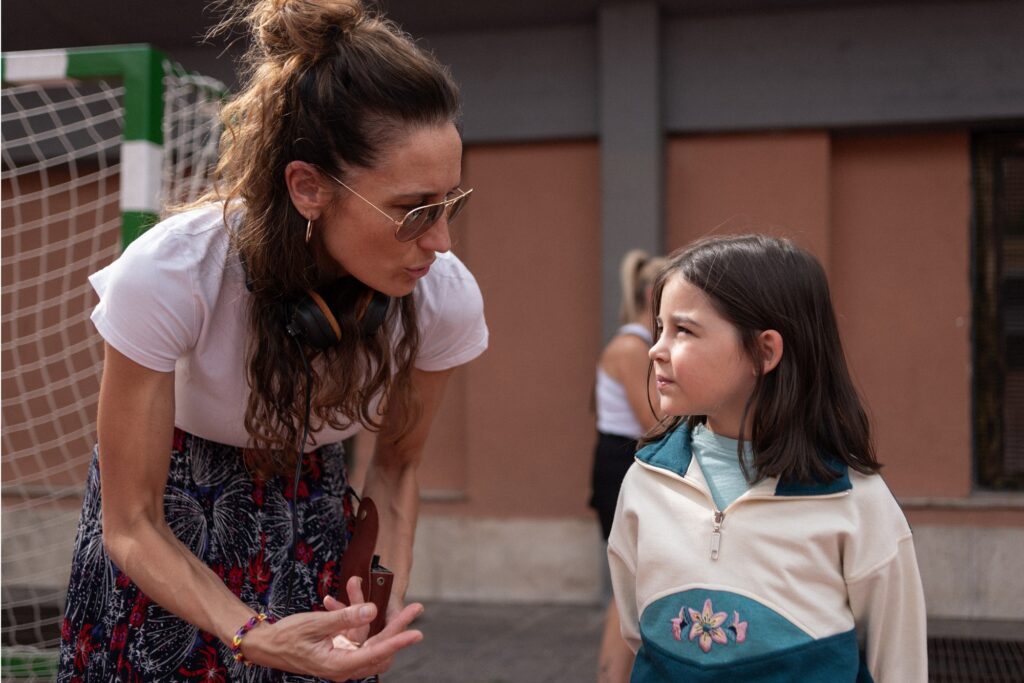
Director Ana Asensio, who had a rich career as an actress, combines in GOAT GIRL the severity of Spanish traditions in Madrid in 1988 with the foreshadowing of a more exuberant future for Elena, an obedient girl with big, friendly eyes. At the Filem’On Festival, GOAT GIRL was awarded an ECFA Award by the jury.
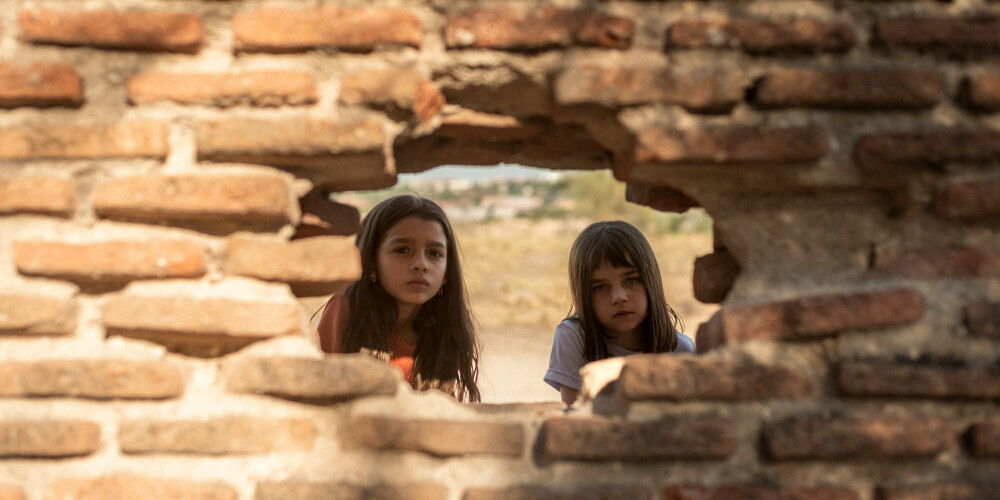
Seeing the opening scene, something tells me that as a child, you were familiar with the nervous wait before going on stage.
Ana Asensio: As a five-year-old, my mom signed me up for ballet. I have a vague memory of a big performance we did in a theatre that was larger than anything I could imagine. The scene returns to that moment of suddenly feeling exposed to a different kind of gaze. People weren’t looking at you as just another little kid, but as someone who is put up on a stage, under a spotlight, doing something that requires the adult’s attention.
Poor Elena can only say that she “just wanted to do well.”
Asensio: Elena’s grandmother replies wisely: “Why do you think doing the same as all the others is the way to go?” As a child, you don’t necessarily want to shine; you don’t want to stand out. Your parents might want you to, but you just want to be like every other kid. That scene tells us, on one hand, about the kind of girl Elena is, but also about her grandmother’s wisdom.

That speaks from the scene in which Grandma makes Elena dance. Rather than trying to make her fit into a structure, she wants to bring out the strength that is inside the girl.
Asensio: As she grows older, looking back on her life, Grandma tells her not to waste time trying to fit in, but to embrace her own path. Pulling that from Elena, she is the only one who sees the girl’s full potential.
Although she only appears in a few scenes, Grandma leaves a strong impression.
Asensio: Gloria Muñoz is a great actress; in her two scenes, she just gave it all. She helped so much in bringing the young protagonist, Alessandra González (playing Elena), physically close to her. Kids might not be so inclined to hug elderly strangers, but Gloria showed Alessandra that she was someone you could trust, hug, and feel safe with.
There’s something in Elena’s eyes, a combination of heartbreaking innocence and straightforward power, that is really exceptional.
 Asensio: That is what made me fall in love with Alessandra the first time I saw her on tape. We asked all candidates to improvise around a few questions and clues we gave them. She was the only one who would not answer right away; she took a minute to process the question, trying to understand exactly what we wanted from her, and then gave us an eloquent answer. Not to impress us, but just because she is like that. She has a great intuition. Let us hope she never takes acting lessons! Keep your intuition intact and remain curious about the world; that’s the best acting class you can get.
As innocent as they are, there is a strong and explicit femininity in the two girls, and you’re not afraid to show it.
Asensio: It was a battle! I wanted to show how innocent these girls are at this age, not even aware of their sexuality, but I had to make sure not to overexpose them. In a scene with Serezade, the Roma girl, dancing, with her skirt floating in the air, there is a moment when we catch a glimpse of her underwear. In the editing, the producers advised me to cut the scene earlier. Of course, their fear was valid, but somehow, it’s exactly that freedom that children have and that I wanted to show.
Like in the remarkable scene in which both girls see their reflections in the mirror splinters on the floor.
Asensio: Call it femininity, call it sexuality, call it self-discovery,… They are completely unaware of the underlying forces that are already emerging, which is beautiful.
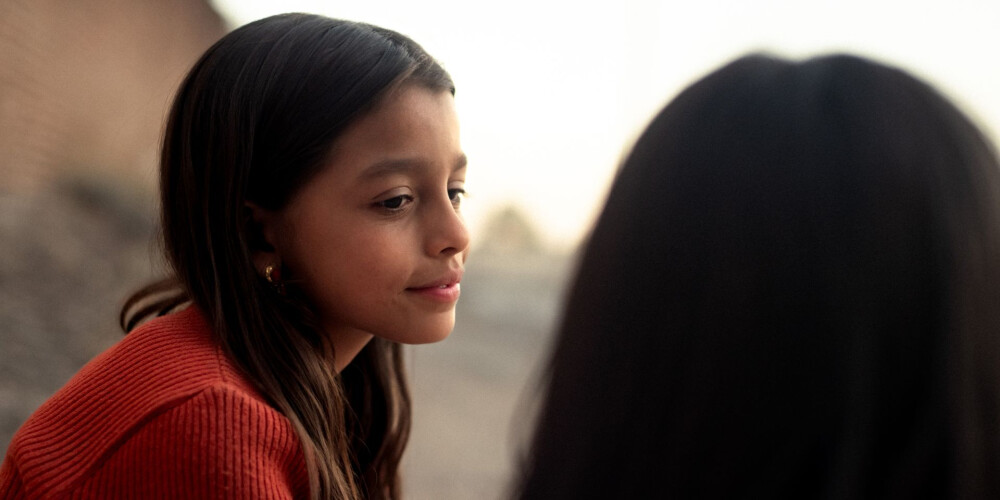
A text that Elena reads aloud to her grandmother adds an extra layer of meaning.
Asensio: This poem by Spanish poet León Felipe questions all things we know, which are all invented by mankind. Stories were created and then written down. But basically, all the doctrines are only there to narrow our minds and our thinking. Felipe concludes I learned all of these stories, I fell asleep with them, but most of them sprouted from the fear of mankind.
The same can be said about religion.
Asensio: All life’s bigger questions create anguish because we can’t answer them. All we have is faith, which often emerges from fear; a fear of realising that this is all there is, and basically, you’re alone in this world. Religion is there to guide you, and, perhaps, make you break with individualism and find some sort of comfort in belonging to a group, of which all members share the same beliefs.
How does that character of the priest fit in? Does he represent the traditional religious authority? Something tells me that he’s not sure about his own beliefs.
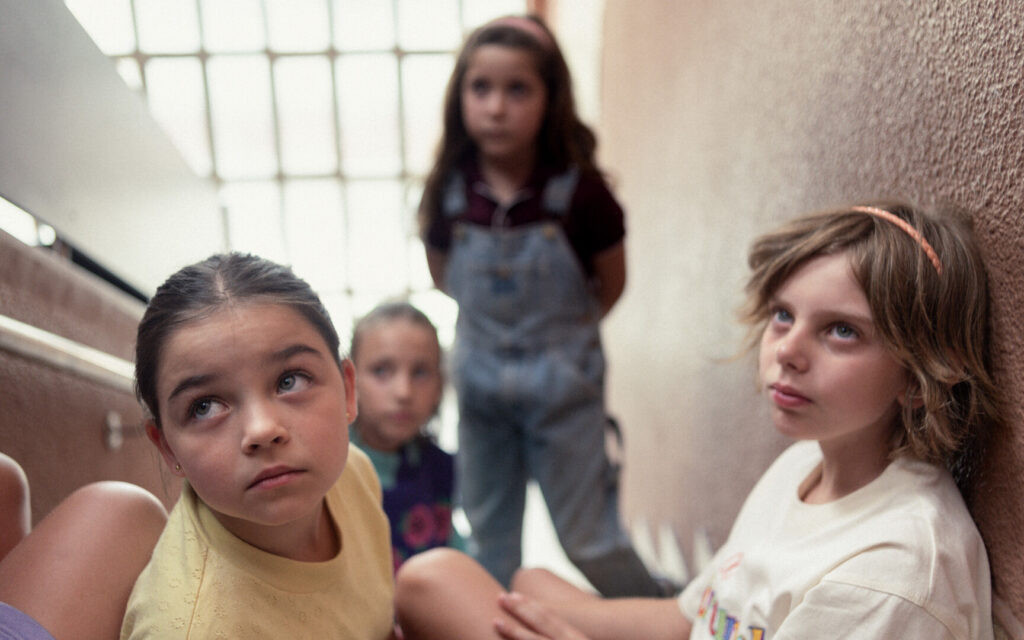
Asensio: He is inspired by a priest from my childhood. I remember his voice sounded like he had just been smoking. Why would a man who is married to God dye his hair? Where does this vanity come from? He must have some secret life behind closed doors. I told the actor Enrique Villén: You love rock and roll; straight from the church, you go home, you take off your cassock, and you blast some rock and roll on your stereo, you dance, and you play your electric guitar, and nobody knows about it. That’s your passion. Being a priest is your job, like a school teacher, and you want to make sure these kids pass the test. That’s your goal.
Did you need to grow up in the Spanish tradition to tell this story?
Asensio: Elena’s feelings are universal, but the specificities are Spanish, indeed. The 80s in Spain were a period of transition, like an awakening in society that wanted to break with the censorship of its recent dictatorial past. There was something in the air; you could feel this freedom with artists and musicians, and with the people on the streets.
News reports about a kidnapping help us to situate the era of the 1980s correctly; at the schoolyard, kids are playing ‘police versus terrorists’.
Asensio: The media coverage of a businessman being kidnapped by a terrorist group in my childhood affected the entire Spanish nation. We understood how the ransom was related to freedom and independence. I grew up next to a neighbourhood where many families lived from the military, and there was a threat of bombs regularly. I vividly remember as a kid walking by a car, thinking, Oh my god, I hope it doesn’t explode.

The moment Elena runs away from home, she gains a different view of the world. Her gaze on small things changes, like a bucket of water or the sand under her feet.
Asensio: The way we see and perceive Elena’s world is exactly how she feels it. When she feels distant from her parents, the camera reflects that through their cut-off silhouettes, out of focus or distorted. When running away, she’s discovering the world by herself. Feeling a spiritual connection with her grandma, she remembers the poem, like a legacy that is being passed on to her. At that moment, we change the film’s aspect ratio to make it feel like everything expands in cinema scope!
This seems to be the year of the goat… I’ve been asking directors remarkably often about goats. Now it’s your turn. Goats seem to have problems with authority.
Asensio: While writing the script, I imagined all those things that goats would do. But our goat did none of them! They are rebellious, but that’s what makes me sympathize with them. My star sign is Aries, the ram; we just go our own way, even if it’s completely irrational. I deliberately used the word ‘rebellious’; if I were to describe myself as ‘stubborn’, too many people would be taking credit. “Ana finally admitted she’s stubborn!” I’m a very passionate person, also as a filmmaker, which comes with a certain intensity.
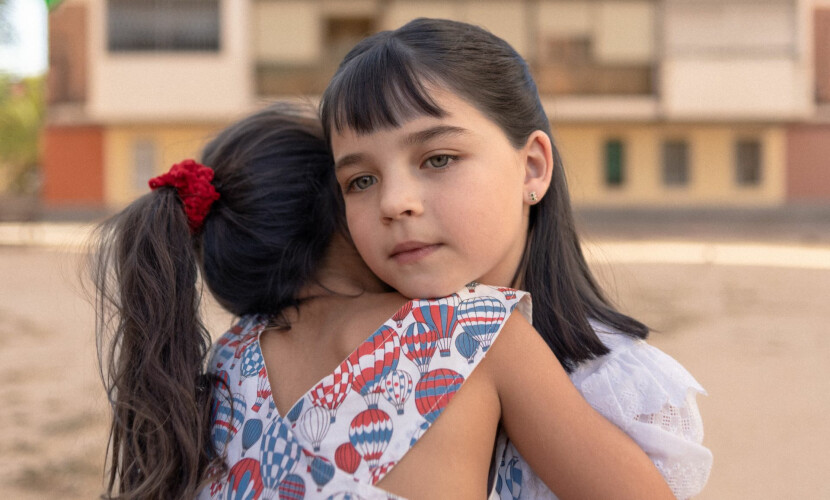
Why did you need a voiceover?
Asensio: It was at the very end of the editing process that I felt like there was something that I wanted to hit, and I didn’t know how. There was an insecurity about being able to get my personal, intimate story across. I tried an improvised voiceover at home, and up till today, I’m not fully sure if that was the right choice. At that moment, it gave me some peace and security that I did everything within my power to reach deeper and make the film as personal as possible. That’s why it’s my own voice that you hear.
That’s not so surprising, given your career as an actress.
Asensio: Acting was my first love, and I pursued it my whole life. Until I realised that this was no longer sufficient to express myself and feel fulfilled. Eight years ago, I wrote and directed my first feature film, and now I’ve made the second one. As an actress, you depend on what comes your way; if you are not among the lucky ones who are offered truly exciting roles, you end up being frustrated. I love acting in projects that I feel like belonging to. If those projects come my way, I’ll fully embrace and enjoy them; if they don’t come, that’s just fine, too.
Gert Hermans
On behalf of the Filem’On Festival