“Trying to touch the flame, as all music should do”
Not everyone in the cinema is a fan of Irish folk music. But from the back row of the cinema, director Lance Daley sees a swaying crowd before him for the final scene of TRAD. The audience has to restrain themselves from clapping and stamping their feet to the rhythm… but in the end, they do it anyway. During their visit to the Zlín Festival, the TRAD crew are the film’s best ambassadors. Everywhere they go, they unpack their drum and banjo to entertain the festival-goers, and as a familiar face from GAME OF THRONES (in which he plays the iconic villain Littlefinger), actor Aidan Gillen is the most sought-after guest at the festival.
Shóna grows up in a family of traditional Irish musicians. Her mother, in particular, is adamant not only about the right musical interpretations, but also about the correct dance steps and traditional dress. Shóna is brimming with talent, but feels stifled by folkloric constraints. Together with her brother Mickey, she joins a group of travelling musicians, under the mentorship of the non-conformist Harky, for a journey full of adventure, romance, and musical exploration.
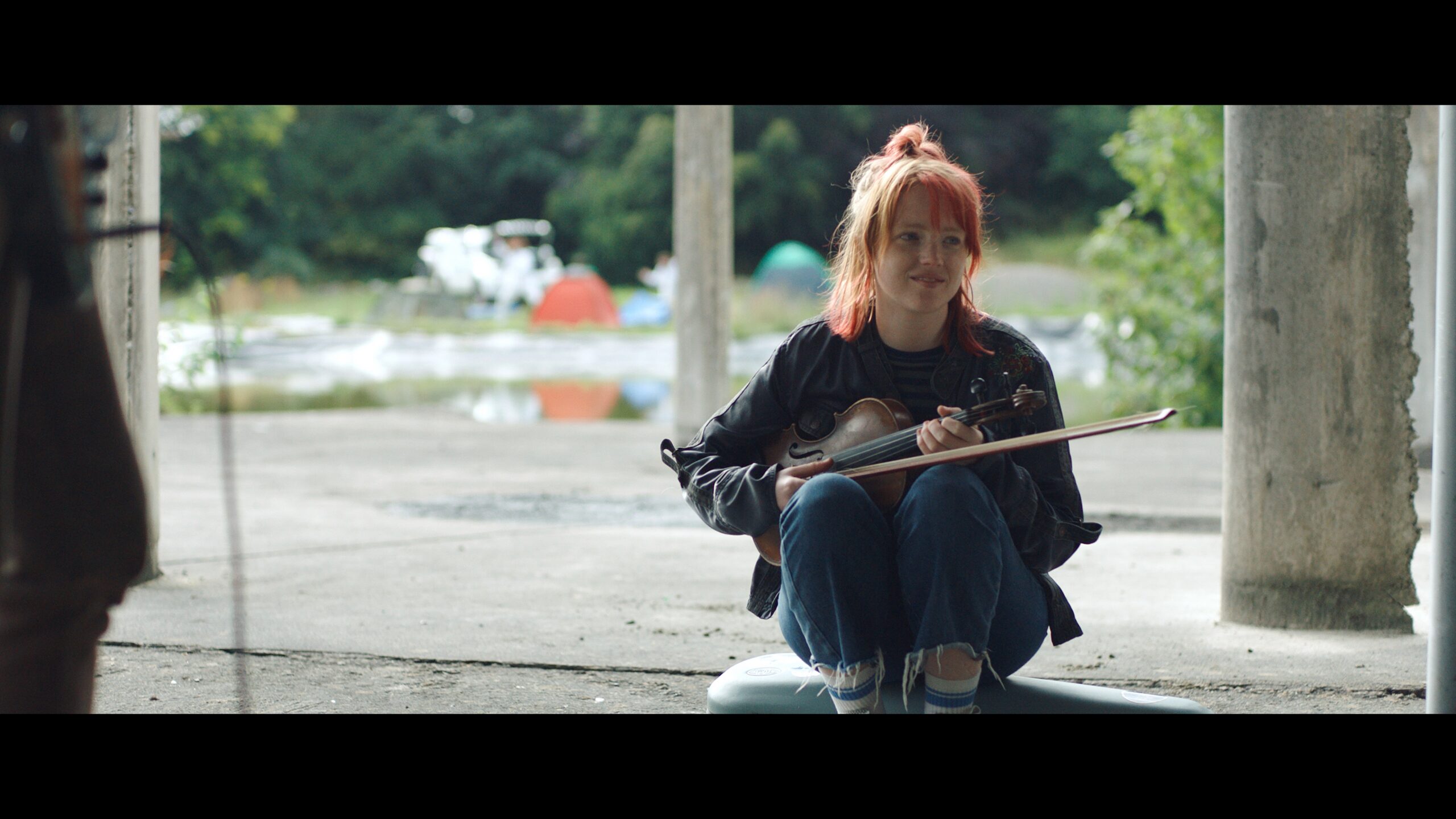
Whenever I watch a film about Irish folklore (and we’ve had quite a few recently), the same question springs to mind: What makes the Irish so special? When Bavarians put on lederhosen, or Tyroleans start yodelling, we think it’s terribly uncool. But when the Irish start blowing their tin whistles, we find it hyper-authentic.
Lance Daly: I think yodelling is cool! But I don’t know if yodelling is a detailed ancient culture being passed down, whereas music is definitely part of Irish culture that has survived. When the Empire affected the language and changed many aspects of Irish culture, the music remained a through-line. Like Shóna says: “I grew up with that old shite; it was bet into me.”
But the shite in TRAD is different. At least, the way it is played is. It’s much wilder and freer.
Daly: These guys are playing around the tune, as if they’re jamming. It isn’t entirely accurate, and it’s not the sort of thing you’d present at a music conference. When some musicians first heard it, they wondered, “What are you doing to The Congress Reel?” That’s the name of the tune they’re playing. Only when they saw the movie did they get the point: young people who know this music might try to change it, but it’s usually so strongly formed over a long time that it changes them. Mickey, playing the whistle and rapping over the song, is trying to find a youthful expression for the same old music.
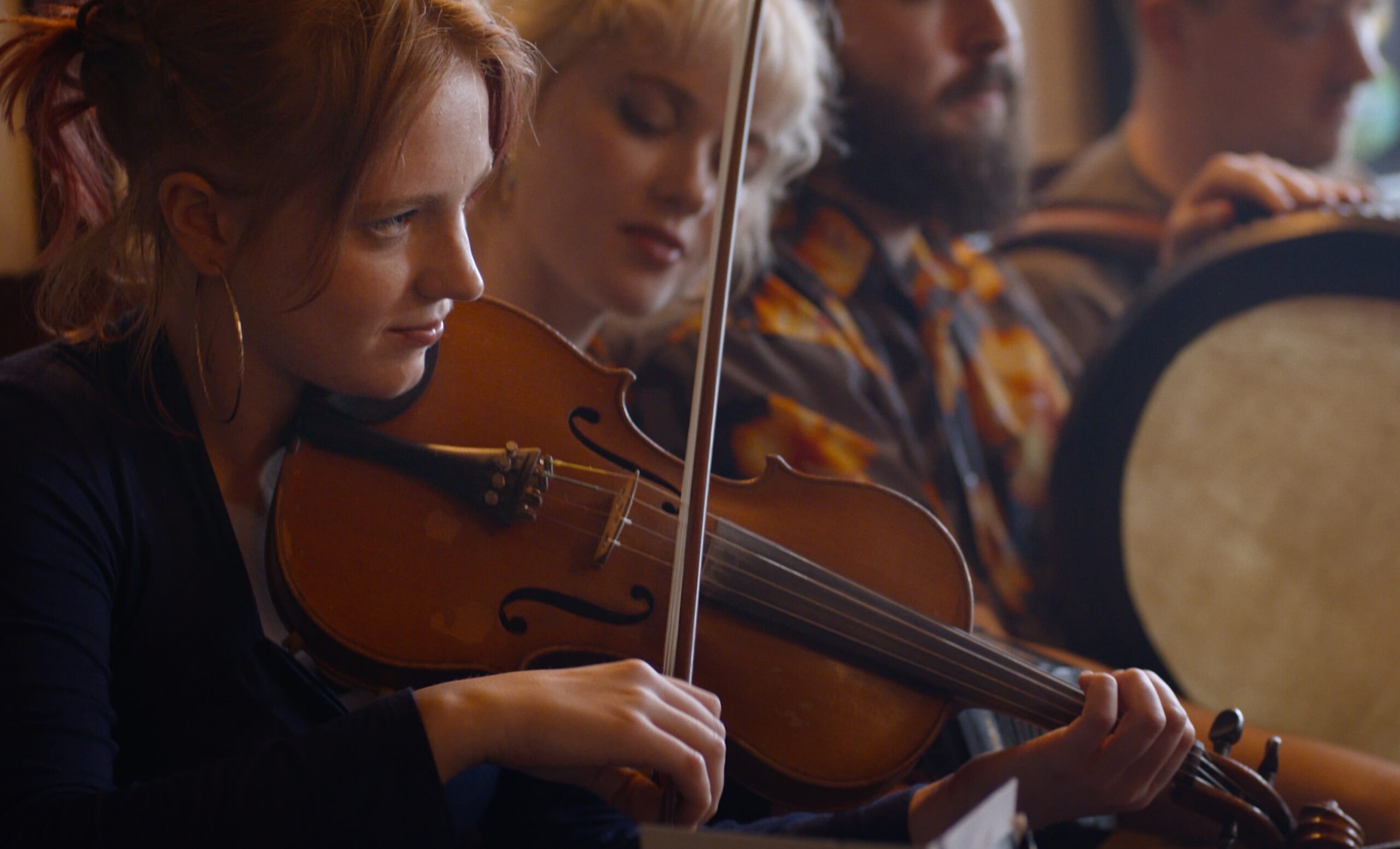
They call it “peak post-modern Trad fusion with an eclectic drip.” I’m sorry I couldn’t memorise it – I had to write it down.
Daly: None of the actors could memorise it. When we were auditioning, every actor said it wrong. Francis O’Mahony, playing Ash, was the first one who came in and said “peak post-modern Trad fusion with an eclectic drip” in one go, and I was like, “You’re hired!” It sounds tongue-in-cheek, but again, they are trying to find a modern expression for something ancient.
What is being referred to with the term diddly-eye?
Daly: That’s a derogatory term for traditional Irish music, referring to the triplets and ornamentation. One of our musicians called it “a colonial put-down”, a mean way for the British to label and dismiss our music – “It’s only diddly-eye.” But the whole film is a conversation about music, and we’re trying to represent all sides of that conversation.
Here’s another musical quote from the film: “Modern music is just people begging for attention. Trad isn’t trying to sell you anything.”
Daly: There are two sides to it. Shóna’s mother represents the side that packages Irish culture for tourists, and then there’s the other side, where people sit around playing the music, trying to touch the flame, as all music should do. When we were making the movie, my son shared that observation with me and offered those lines to Ray: “It’s a way, it’s a path to follow,” which is something people are looking for at that age. But Shóna isn’t planning to go down that path.
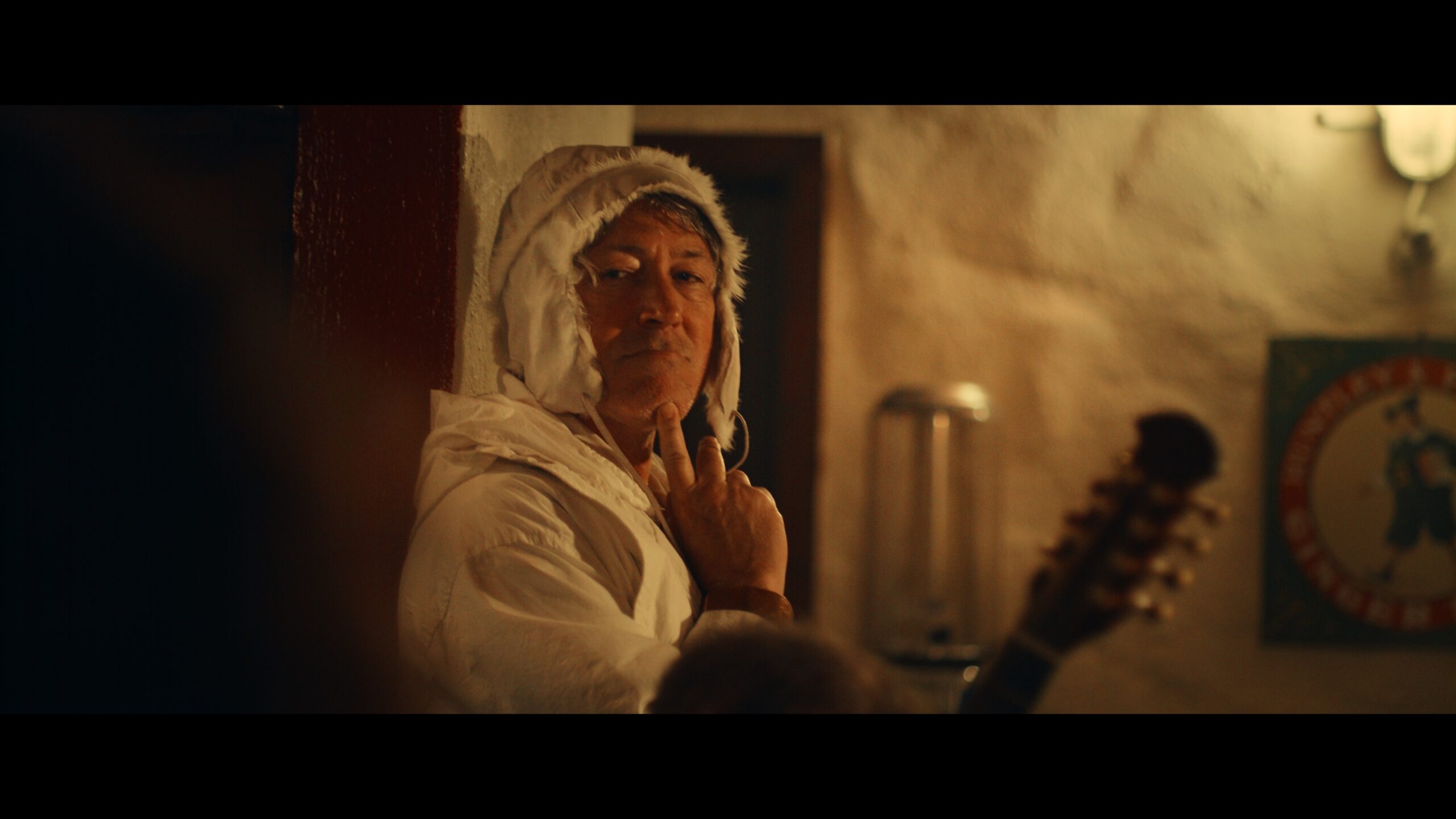
People often use the excuse that they can’t sing because they’re too shy to sing in public. It seems to me that the Irish aren’t particularly shy about singing.
Daly: And they’re not afraid to dance either, but they might need some Dutch courage, though. They’re more afraid to dance and sing without a drink. Drinks are part of the social culture. And there’s something musical in the language anyway, and in the way the ancient stories from Irish mythology are told.
Like the story Ray tells by the fire.
Daly: That’s the great Irish myth called The Táin. The Irish Iliad, so to speak, a mythic epic, written down by monks in the 10th century. That’s the ultimate dream movie that I want to make.
In TRAD, interactions between characters often revolve around glances and stares. It builds up throughout the film, and the final scene turns into one big celebration of…
Daly: …of looking. In 2008, I made a film called KISSES about two kids who run away from home, and it ended with a scene without dialogue; it was just them looking at each other. There’s something cinematically pure about building up a climax with no talking. In a good action movie, the big battle at the end is not just people fighting; it’s a summary of the whole film, and everything that happened between the characters determines who should get the upper hand, and why. I tried to do the same with music; that final scene is a big action scene, with characters playing music against each other instead of fighting.
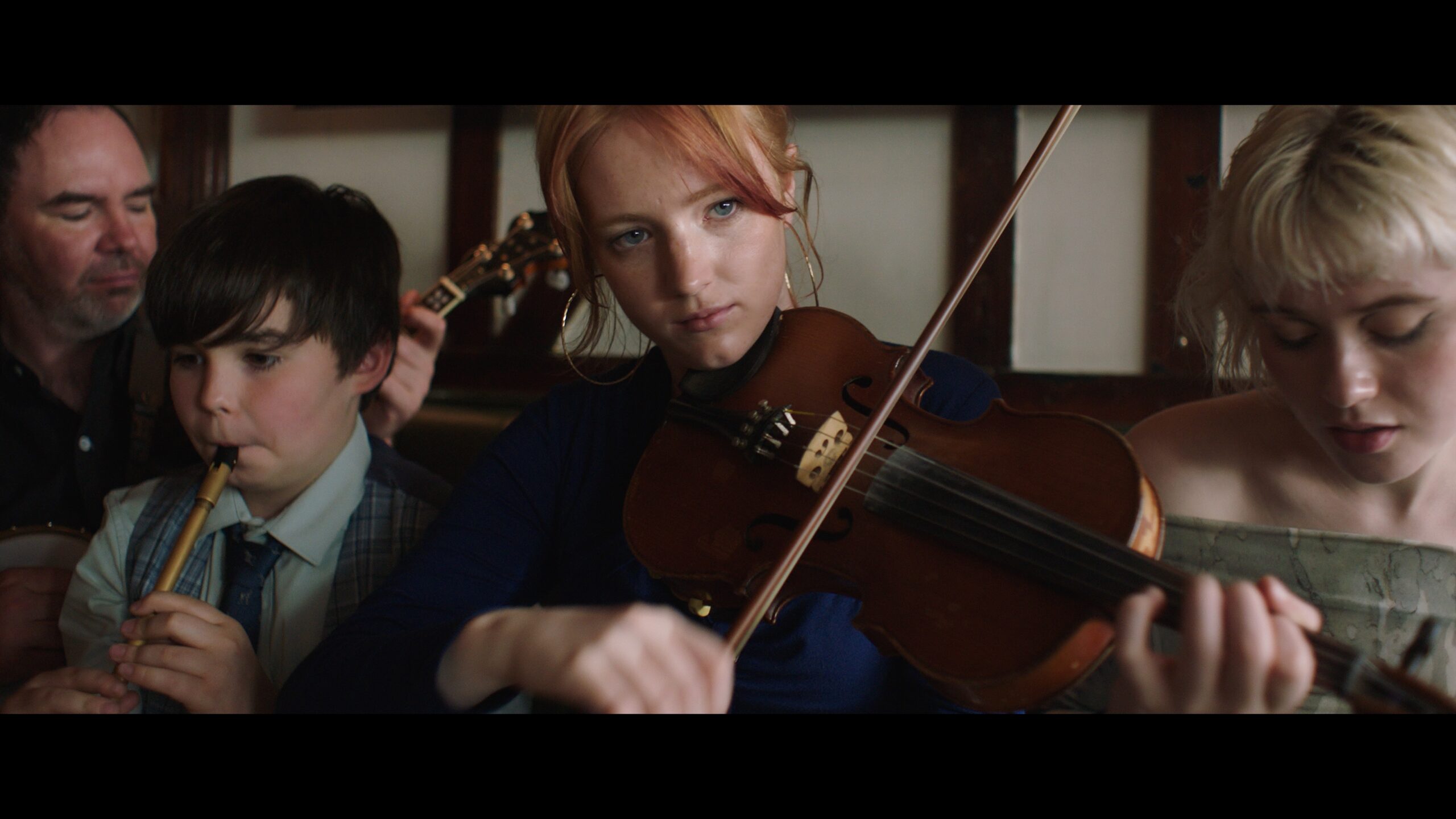
Shóna and Ray both go through a physical change throughout the movie. Ray evolves from a typical teenager with arms too long for his body into a charismatic young man.
Daly: Cahill is actually quite a handsome guy. The spots, the braces, and the crazy hairstyle all help make him more of a character. In the first half, Shóna doesn’t really notice him; he emerges slowly from the group, and then, by the end, he’s fully present in her life.
There is a question I probably shouldn’t ask, if you don’t want every mystery to be revealed: what’s Harky’s game? Is he a pervert? Is he the ultimate anarchist? The film doesn’t give an answer, so I’m not sure if you should.
Daly: His non-conformist persona is a mockery of traditional Ireland and the lives we’re living, not even looking outside our own parish. The Irish want to get away to England or America, but when they’re there, they miss home and dream of returning. Shóna comes from a traditional family, where people do things a certain way, and here’s this lateral thinker coming in, raising suspicion. People like Harky have broken free from narrow-mindedness; they have seen the wider world and made the most of financial opportunities. They don’t go to work every day; they’ve found a different way and are simply being themselves.
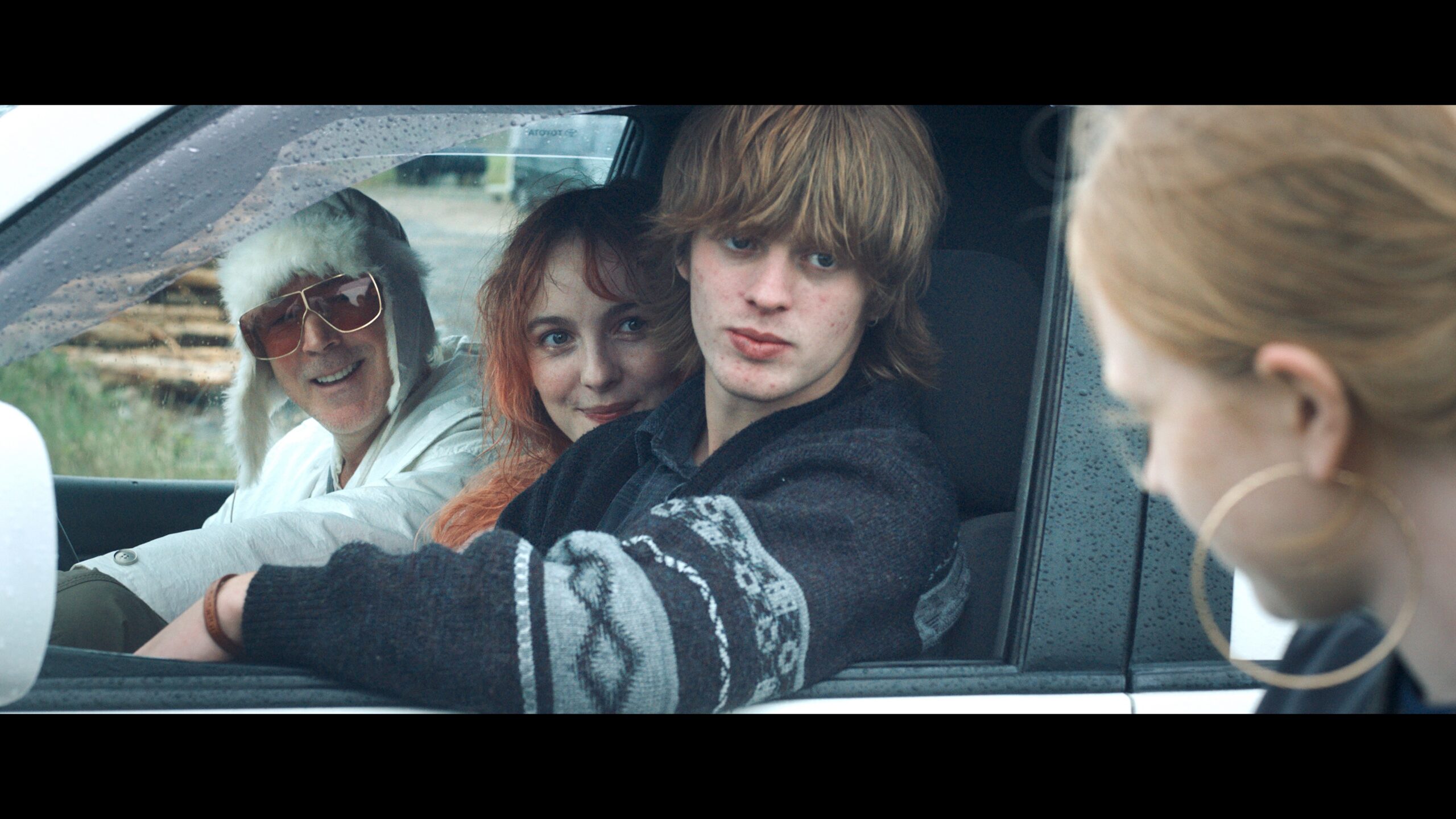
He’s based on a real person, apparently.
Daly: Absolutely, and the man on whom Harky is based built the house where we filmed, gave us his clothes, and actually used to drive that Jeep. People all have the same questions: What’s his name? How did he make his money? They sometimes spot the guy in Dublin and then send a picture to Aidan: “We saw Harky sitting on a bench in the park!”
The actor Aidan Gillen evolved from GAME OF THRONES to GAME OF PHONES, seasoning the film with an anti-phone crusade. Did you expect people to drive home from the cinema and nail their cell phones to the dashboard?
Daly: I thought audiences might dig it. TRAD marks the start of a sort of cultural movement, an epidemic of destroying our phones and being free to play music.
What’s the next step? Everyone dancing naked around the old oak tree?
Daly: That’s a dangerous response because it invalidates the act of destroying phones! I think destroying cell phones is completely valid, and it doesn’t mean that you’re a mad hippie. It’s a good message for a film addressing a young audience. Harky calls it the “insta-shite; It’s not living, it’s not loving, it’s just looking.” Those words speak to a girl who is trying to rethink and re-understand who she is, and nailing her phone to the dashboard is a big part of becoming a new person and making choices.
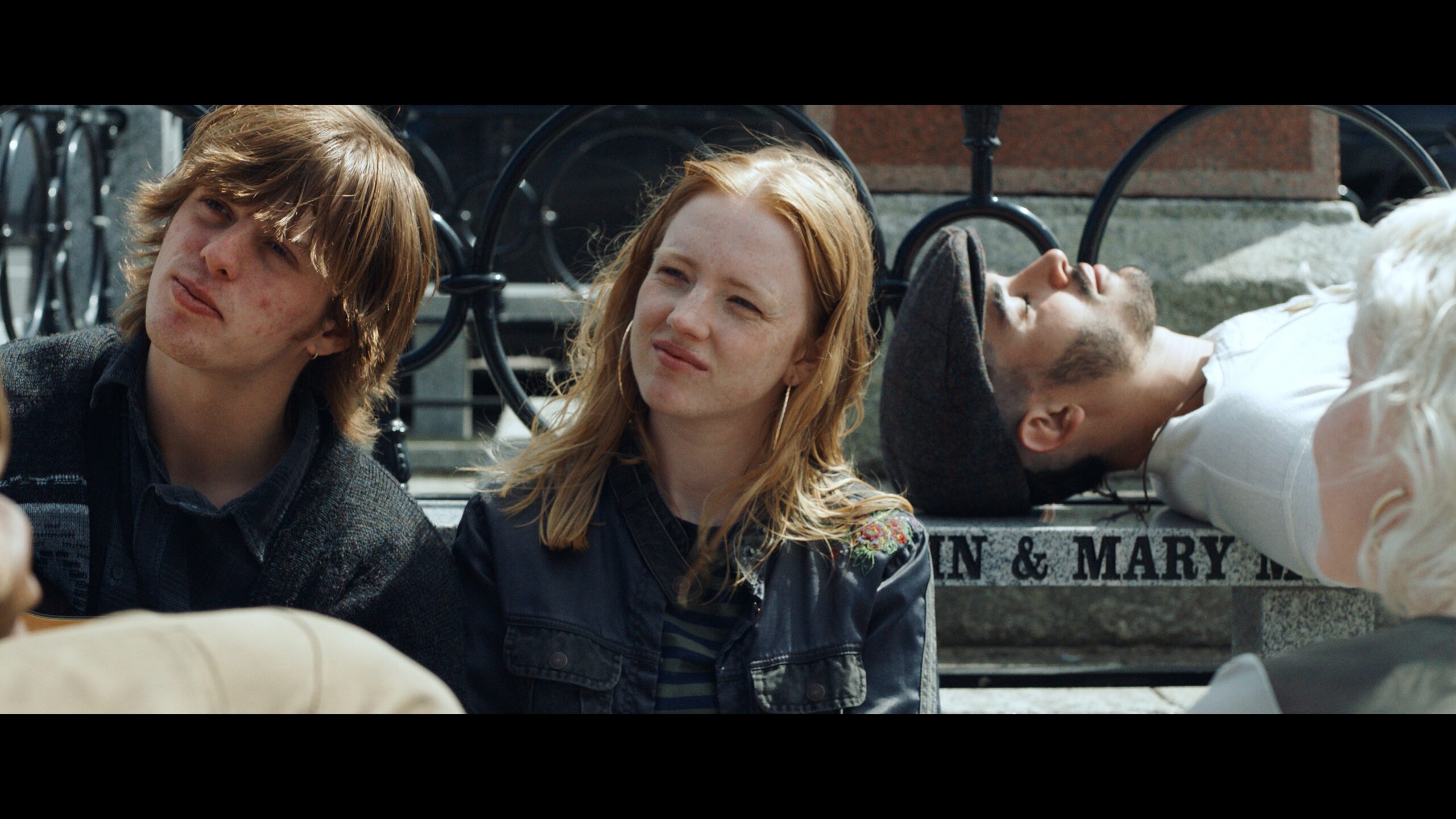
At the festival, I don’t often hear people mention a film about Irish identity; I mainly hear that it’s “the film starring GAME OF THRONES star Aidan Gillen.”
Daly: I’ll tell you something about Aidan. I didn’t feel really supported when I started this project, and I sat down with Aidan, talking about making a movie for €10,000, with 10 people driving around in the back of a van, and he said, “That’s fine; I’m in.” I’m immensely grateful for that! He didn’t call his agent first; he’s just an artist who said, “Let’s do it.” Also, Sarah Greene and Peter Coonan, playing Shóna’s mum and dad, are well-established actors. All three of them said, “Yes, we’re with you,” before I had anything, so that helped me to cobble together what meagre resources we had to make the movie. In the industry, everybody’s transactional, everybody’s asking, “What’s it going to be worth?” It’s wonderful to have just this vocational deal, with people saying, “Call me, and I’ll be there.” That’s top! Now he’s here in Zlín; he doesn’t have to be, but he came over, and he’s sitting in the cinema, watching people and enjoying their responses. He’s just about the work and what the work means and what value the work has beyond the wages you get paid. I’ve made some very ambitious movies, but now and then, I want to do a small, beautiful piece of cinema and don’t have any aspirations beyond that. With TRAD, I was trying to make a movie that not a lot of people are going to see, but it will mean a lot to those who actually do see it.
Copyright: ECFA
Published in ECFA Journal October 2026